


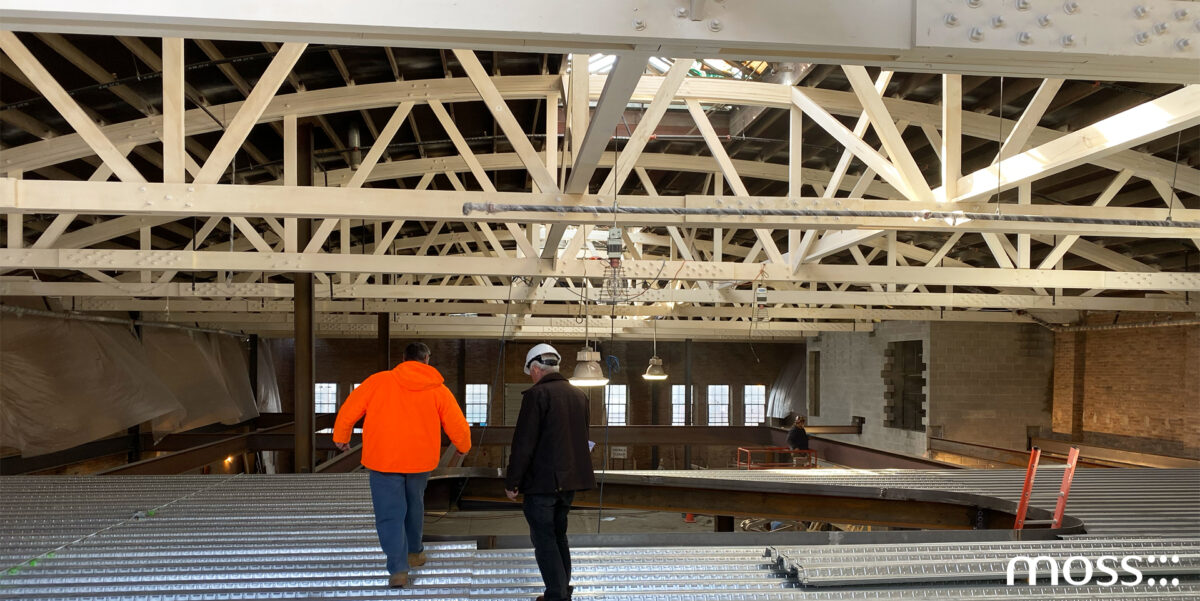
Building or renovating a home in Chicago is a layered process, and choosing an architect as builder can shape that experience more than people realize. In a city like Chicago, where century-old greystones sit beside worker cottages, tight lots require choreography, and cold seasons narrow the windows for exterior work, coordination matters as much as creativity. Every decision affects the next, and any delay can ripple through an entire construction season.
Many homeowners still picture an architecture firm on one side and a separate contractor on the other, passing drawings back and forth and interpreting decisions from a distance. That model works, but it often causes slowdowns due to small miscommunications, unclear responsibilities, and pauses while teams wait for clarification. Chicago’s permitting rules, zoning nuances, and weather constraints tend to magnify those gaps.
An architect-led construction process eliminates many of these roadblocks. When the same team that sketches the first ideas also helps build the home, the work moves with greater clarity, fewer handoffs, and far less downtime. It’s a steadier path from concept to reality, built on continuous communication, detailed construction documents, and a single group that understands both the design and the practical demands of Chicago construction.
This article walks through what an architect-led model means, why it saves time, how it differs from hiring a standalone general contractor Chicago team, and when it’s the right choice for homeowners.
What “Architect as Builder” Actually Means
The phrase architect as builder may sound modern, but the idea has deep roots. For much of architectural history, the person who designed a building also oversaw how it was constructed. Those roles later split into separate professions, with the architecture firm on one side and the general contractor on the other. Both roles are essential, but each interprets the project from its own angle. An architect-led construction model reconnects those pieces.
At its core, architect as builder means the same team that plans and designs the home also guides how it comes together in the field. It doesn’t mean the architect is swinging hammers or pouring concrete; instead, it means they’re leading the construction process, answering technical questions in real time, and ensuring the design intent carries through to the smallest detail. In reality, acting as the licensed general contractor.
In Chicago, that unified approach matters. Older homes, smaller urban lots, and irregular existing conditions often require quick decisions and steady communication. When an architect who already knows the design inside and out is the one resolving construction questions, the project moves faster with fewer pauses and clarifications.

The term architect as builder can describe a few different models:
1. Architect-led design-build
The architect manages the build while vetted subcontractors perform the work. The architect becomes the point of continuity between design and construction.
2. Architecture firm + trusted construction partners
A collaborative team structure where the architect leads decisions and coordination, and a dedicated construction partner handles labor and scheduling.
3. Architect as licensed general contractor
Some architecture firms operate as a licensed general contractor Chicago homeowners can hire directly, taking on full responsibility for the construction project.
All three models share the same goal, which is to bring design, technical details, and construction execution under one umbrella. With fewer handoffs and a single group driving the work, the path from drawing to final result becomes smoother and more efficient.
And in a city where renovations often involve quirks hidden behind plaster, structural surprises in century-old frames, and unpredictable weather, that continuity is convenient, cost-effective, and time-saving.
How Architect-Led Construction Saves Time
Time is one of the most fragile resources when taking on a residential construction project. Delays can stack up quickly, and in Chicago, where weather, permitting cycles, and trade schedules all have minds of their own, even a small pause can shift a project by weeks. An architect-as-builder model reduces those pauses. It shortens the distance between idea and execution by creating a project flow that’s steady, organized, and far more predictable than the traditional design–bid–build sequence.
Here are a few of the ways an integrated architect-as-builder approach moves Chicago residential construction projects forward faster without cutting corners or compromising true craftsmanship.
1. Fewer handoffs, fewer slowdowns
In a traditional setup, an architecture firm completes drawings, hands them to a contractor, and waits for interpretations, questions, or pricing feedback. Each handoff is a pause. Sometimes it’s a day; sometimes it’s three weeks. And during construction, every RFI (request for information) becomes its own mini handoff.
When the same team that designed the home is also connected to the build, those pauses shrink. Questions get answered by the people who already understand the design, and more than often, on the spot. Details don’t need re-explaining. Clarifications happen in hours, not days.
Fewer handoffs = fewer gaps = fewer opportunities for the project to slow down.
2. Clearer, more coordinated construction documents
Construction documents sit at the center of every project, especially in Chicago, where permitting is thorough and contractors rely on accurate details. When the team producing those drawings is also responsible for building from them, the documents tend to be:
- More detailed
- More buildable
- More aligned with local Chicago conditions
- More precise about materials, sequences, and dimensions
This clarity reduces back-and-forth with the city, eliminates unnecessary revisions, and gives subcontractors a roadmap they can follow confidently.
Better construction documents = smoother permitting + fewer RFIs + faster construction.
3. Faster decisions during construction
Every project reaches moments when something unexpected surfaces: a hidden joist condition, an outdated utility line, a wall that was never framed the way the original owner claimed. In older Chicago homes, unexpected surprises are almost guaranteed.
An architect-led approach allows teams to resolve these moments quickly because:
- The design team already understands the goals.
- Cost and craft implications are evaluated immediately.
- Decisions are made with both design intent and construction reality in mind.
Instead of a chain of emails and site meetings, solutions unfold in real time.
This responsiveness is one of the biggest time-savers in a city where winter, delivery schedules, and trade availability leave very little room for long delays.
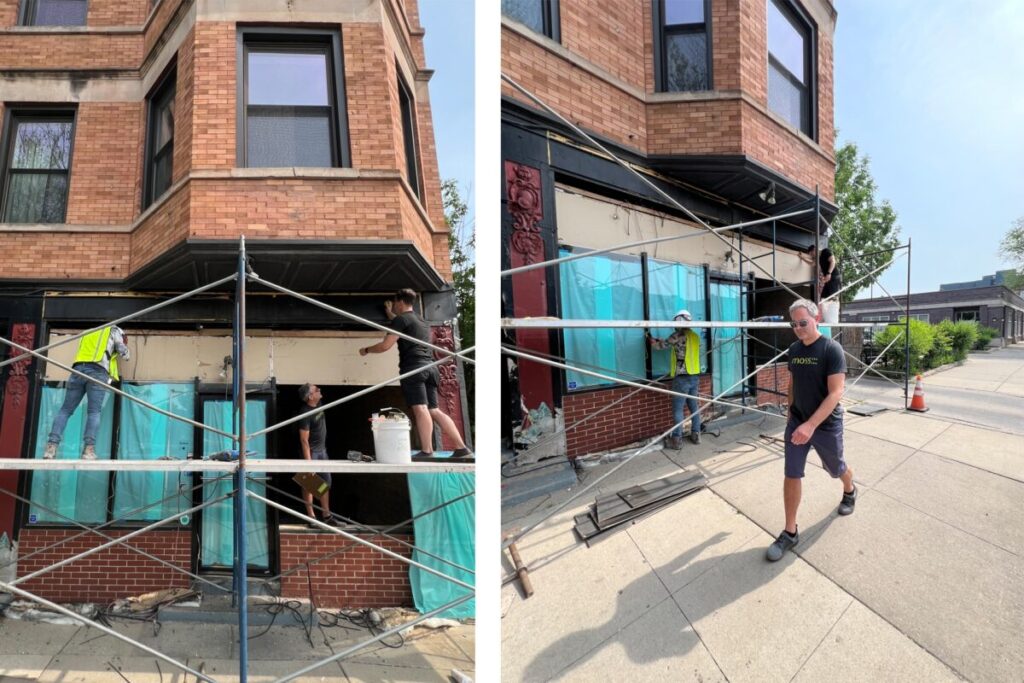
4. Better alignment between design, budget, and schedule
When design and construction live in separate worlds, budgeting usually comes too late. A homeowner may fall in love with a design that needs significant revisions once pricing returns.
An architect-as-builder setup creates early alignment:
- Real-time cost feedback
- Fewer redesign cycles
- More accurate schedules
- Construction sequencing baked into design decisions
This alignment means fewer bombshells and much less time lost revising plans late in the process.
5. More reliable coordination in Chicago’s unique conditions
Chicago homes present challenges that reward integrated teams:
- Tight lots with limited staging areas
- Aging structures requiring careful sequencing
- Neighborhood-specific zoning overlays
- Historic district reviews
- Narrow weather windows for masonry, roofing, or exterior finishes
In this environment, scheduling is a strategy in itself. With unified leadership, the project stays versatile enough to take advantage of good weather, subcontractor availability, and workable times for exterior work.
Integrated coordination = fewer seasonal delays = a project that actually stays on track.
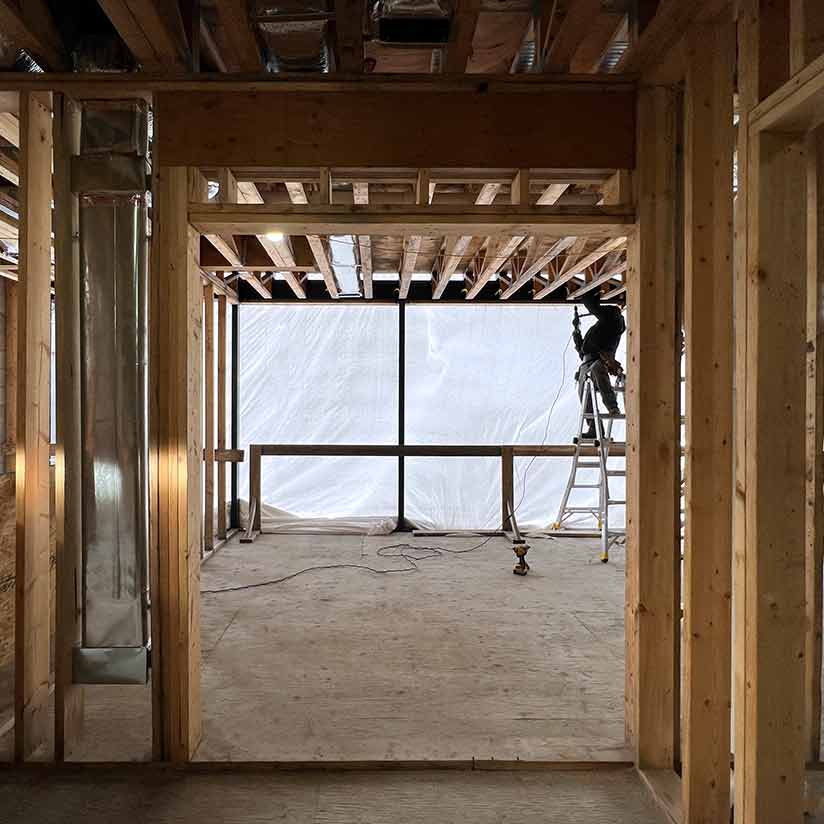
6. Reduced miscommunication during the most fragile phases
Construction is a complex dance of the trades, including carpenters, electricians, plumbers, roofers, masons, and finishers. When communication passes through multiple layers, misunderstandings happen. Even the smallest misinterpretation about framing or waterproofing can take days to correct.
In an architect-led construction model:
- Original designers stay close to construction
- Details are protected
- Goals remain clear
- Tradesmen receive consistent guidance
This reduces the need for rework, one of the most expensive and time-consuming outcomes on any project.
7. A single point of accountability keeps momentum strong
Instead of wondering who is responsible for a delay or who should address an issue, homeowners have one unified team managing the entire arc of the project. Momentum depends on clarity, and nothing supports clarity like a single point of accountability.
When the design, construction documents, and build sides of residential construction in Chicago are aligned, the project moves with purpose instead of waiting for answers to catch up.
What Homeowners Experience With an Architect as Builder in Chicago
For most homeowners, a renovation or new build involves months of decisions, hopes, and disruptions to everyday life. A unified architect-as-builder approach reshapes that experience in subtle but meaningful ways. Instead of juggling multiple points of contact or translating between teams, homeowners move through the process with a clearer sense of who is guiding the work and how decisions are being made.
A single, steady guide through the entire journey
In a traditional architect + contractor model, responsibility shifts from one team to another at various stages. In an architect-led system, the guidance stays constant. The people who listened to early goals and shaped the design are the same ones creating it. Homeowners don’t need to repeat themselves, re-explain priorities, or hope that details don’t get lost during handoffs.
Faster answers, less uncertainty
Questions arise constantly throughout a residential construction project. They can be regarding small clarifications about window placement, finish choices, and structural surprises behind old plaster, to name a few. When design and construction are connected, answers come from the same source that originally shaped the goal. Instead of waiting for messages to bounce between teams, homeowners receive clear direction from one place, often in real time.
A clearer connection between design choices and budget
With an architect-as-builder model, homeowners have a far better understanding of how choices affect cost and schedule. When an idea shifts or a new material is considered, the team evaluating it understands both the design intention and the construction implications. That means fewer budget discrepancies and more empowered decision-making.
Confidence that details are being protected
In older Chicago homes, greystones, two-flats, bungalows, and frame houses, small details matter. Floor framing can be quirky; masonry reveals its age; mechanical routes require creative thinking. Homeowners benefit from knowing the same people who drew the first sketches are ensuring those details are carried out thoughtfully, not interpreted loosely by whoever happens to be on the construction site that day.
An experience built around clarity, not chaos
Renovation can feel chaotic when communication is scattered. But when one team leads the process, the experience becomes much easier to navigate. Homeowners know where to go with questions, how progress is being managed, and what’s coming next. It’s a quieter, more reassuring way to move through a major life investment.
Why is an Architect as Builder Best for Chicago Construction Projects
Chicago is a city where every block tells its own architectural story: greystones weathered by a century of lake winds, brick two-flats tucked along narrow lots, bungalows with low-slung roofs, worker cottages built before modern insulation, and mid-century walkups threaded through old street grids. These homes are beautiful and charming, but they come with eccentricities that make coordination crucial. It’s part of why the architect-as-builder method works so well here. The city itself rewards teams who can think ahead, adapt quickly, and understand the layers beneath the surface.
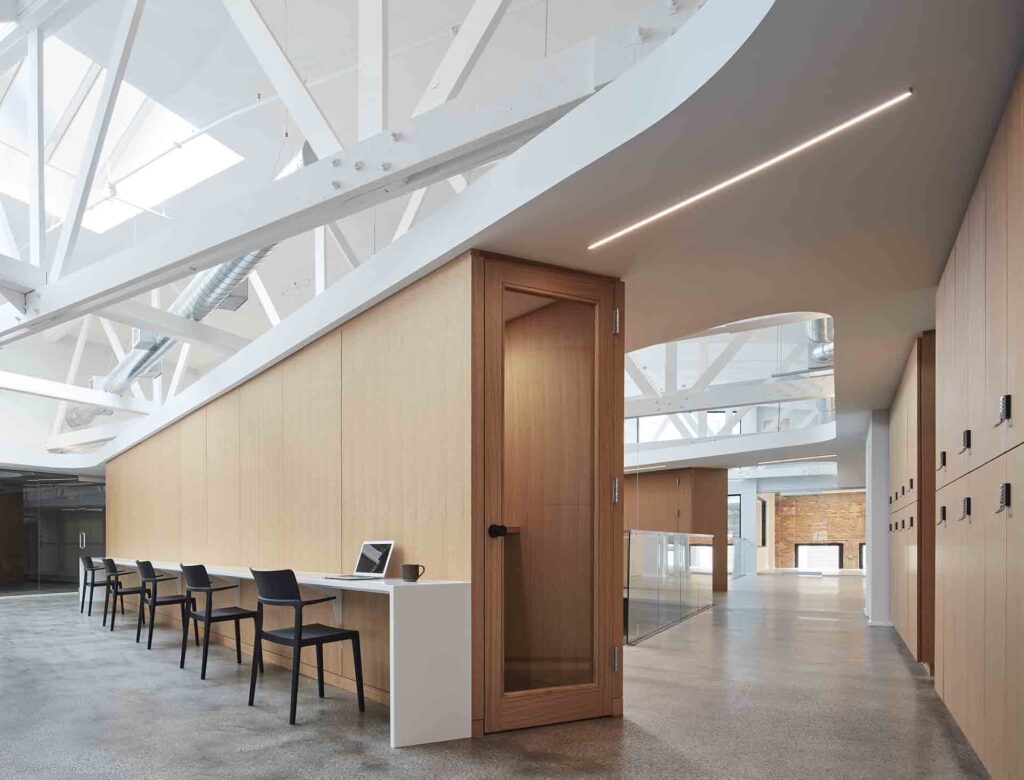
Older homes demand quick, informed decisions
Behind plaster walls, Chicago homes often reveal unconventional framing, outdated plumbing, or patched-in electrical runs. When design and construction live under separate roofs, every new discovery triggers a round of calls and clarifications. With an architect-led approach, the people who designed the plans are also guiding the response. Decisions happen faster, and the team already understands which choices protect the design intent and which ones could compromise it.
Tight urban lots leave little room for error
In neighborhoods like Lincoln Square, Wicker Park, Bucktown, and Lakeview, lot lines run close, and staging areas are limited. Deliveries, scaffolding, and debris management require careful logistics. A design team that also manages construction can sequence the work with a level of precision that’s hard to achieve when multiple teams are coordinating from different vantage points. This minimizes downtime and keeps progress moving even when space is tight.
Chicago construction permitting demands clarity and thoroughness
The city’s permitting system is extremely detailed, especially for additions, conversions, and work in historic districts. Drawings must be coordinated, realistic, and complete. When the people producing the construction documents also understand how those details will play out on-site, the permitting process tends to move along more easily. Issues get resolved before the drawings ever reach the city, reducing costly re-submissions or long review cycles.
Weather timelines are real and unforgiving
Chicago winters don’t negotiate. Exterior work slows, concrete timelines narrow, and masonry requires careful temperature thresholds. A connected team can adjust sequencing quickly to take advantage of good weather, shifting tasks to keep a project moving even when the forecast changes. This is one of the most tangible time-savers of an architect-led model.
Neighborhood identity matters
From historic bungalows in Portage Park to Victorian walkups in Old Town or modern infill in Logan Square, Chicago neighborhoods have strong architectural DNA. Understanding how new construction fits into those contexts, with the right massing, material connections, and scale, is essential both aesthetically and for zoning compliance. Integrated teams carry that understanding through the entire build, ensuring the final result feels rooted in place rather than tacked onto it.
When is an Architect-as-Builder Construction Project the Right Fit
An architect-as-builder approach doesn’t always fit every construction project, but for many Chicago homeowners, it offers a clearer understanding, greater efficiency, and a more connected experience. Architect as builder works especially well when a project involves layers of complexity, meaningful design decisions, or older structures where issues are more likely than not. Here are the conditions where an architect as builder can make a beneficial difference.
Homes that need more than surface-level updates
Gut rehabs, two-flat to single-family conversions, and deep renovations of century-old homes often reap the benefits of a unified team. These projects tend to uncover structural or mechanical systems that weren’t visible on day one. When design and construction guidance come from the same place, unexpected conditions don’t derail momentum; instead, they’re absorbed smoothly and resolved with the homeowner’s priorities in mind.
Additions and second-story expansions
Additions require thoughtful coordination of structural engineering, zoning compliance, waterproofing strategies, and seamless transitions between old and new. An architect-led approach helps align these pieces from the beginning. Instead of separate teams negotiating interpretations, the design intent carries through every phase, making construction more productive and reducing the risk of miscommunication.
Projects that rely on detailed construction documents
When a project hinges on precise drawings and careful detailing—for example, custom millwork, tailored storage solutions, or complex mechanical integrations—clearer alignment between design and construction saves time and reduces rework. The team responsible for the construction documents already understands what each step aims to achieve and can guide subcontractors accordingly.
Tight Chicago lots and tricky urban conditions
Chicago’s narrow sites and dense neighborhoods require careful sequencing, thoughtful staging, and a real understanding of city constraints. An architect-as-builder construction strategy allows for quick responses to concerns like space limitations, utility conflicts, and scheduling challenges without waiting on multiple parties to coordinate.
Homeowners who want fewer moving parts
Renovations require dozens of decisions. When those decisions come from a single team that carries both the creative vision and the technical responsibility, the process becomes more intuitive. There’s less navigating between competing opinions and fewer emails, resulting in more meaningful action.
Projects where the timeline matters
If a family needs to move in by a certain date, if school years or lease timelines loom, or if weather constraints play a role, an architect-as-builder architecture firm can help keep the project on schedule. When a Chicago construction project is architect-led, it simply loses less time to translation, rework, and unnecessary back-and-forth.
The Best Architect-as-Builder Firm for Chicago Construction Projects
Every construction project benefits from clear communication, mindful design, and consistent coordination. moss Design, an award-winning, full-scale architecture firm in Chicago, approaches each new project with the belief that the process should feel connected from beginning to end as opposed to fragmented into separate teams that interpret the work differently. That’s why we operate as both an architecture firm and, for select projects, a licensed general contractor Chicago homeowners can count on for unified project leadership.
moss Design is also distinct in another way. Its team spans every phase of property development. Architects, general contractors, furniture fabricators, and licensed real estate brokers all work under one studio umbrella. This multidisciplinary structure gives us an unusually comprehensive understanding of how a project is envisioned, permitted, constructed, customized, furnished, and even how it lives in the broader context of Chicago’s neighborhoods.
Instead of a one-size-fits-all process, moss Design adapts to each project’s specific demands. This means we can handle all facets, from custom-built cabinetry and structural problem-solving in a century-old greystone to creating a functional home on a tight urban lot.
Our integrated architect-led model brings continuity to every phase of a construction project. During schematic design and design development, we study not just how a space should look, but how it will actually be built. Those insights shape everything from material choices to structural layouts, resulting in construction documents that are detailed, realistic, and deeply aligned with on-site conditions. With fewer assumptions and clearer instructions, we can work with more confidence, and the city’s permitting reviewers see drawings grounded in architectural feasibility.
Ultimately, a construction project moves more smoothly when the team designing your home is also guiding the way it’s built. With one architecture firm shaping every step, the work stays clear, cohesive, and grounded in intention, and the home that emerges reflects that steady hand.

Frequently Asked Questions About Architect-as-Builder Construction Projects in Chicago
What does “architect as builder” mean, and how is it different from hiring a separate general contractor in Chicago?
An architect-as-builder approach means the same team that designs the project also leads or manages the construction. Instead of handing drawings to a separate general contractor Chicago team, the architect oversees how the design is executed on-site. This reduces miscommunication, speeds up decision-making, and maintains the original design intent. In a traditional setup, design and construction operate as two separate entities; in an architect-led model, they move as one.
How can an architect-led construction project streamline timelines compared to traditional design–bid–build?
Architect-led projects move faster because there are fewer handoffs and fewer pauses between decisions. The team already understands the design rationale, so questions get answered quickly during construction. Clearer coordination also leads to more accurate pricing early on, fewer redesign cycles, and smoother permitting; all major time savers in Chicago’s tightly sequenced construction seasons.
What role does an architecture firm play in managing construction documents and contractor coordination?
An architecture firm leading construction is responsible for producing highly coordinated construction documents that guide both permitting and building. These drawings are detailed, realistic, and tailored to on-site conditions. During construction, the firm coordinates with subcontractors, reviews submittals, responds to RFIs, and ensures that details are built as intended. This unified oversight keeps the project moving steadily and reduces the risk of error.
Do architect-as-builder models help reduce change orders or redesign delays during construction?
Yes. When design and construction are integrated, many common causes of change orders are eliminated before they appear. The team producing the drawings already understands sequencing, structural limitations, and site conditions, so fewer surprises arise in the field. And when unexpected conditions do surface, especially those common in Chicago’s older homes, decisions can be made quickly, without waiting for multiple parties to weigh in. That keeps redesigns and delays to a minimum.
What should homeowners look for when choosing a Chicago general contractor offering architect-led services?
Homeowners should look for a team with experience in both design and construction, ideally an architect-led general contractor Chicago homeowners can trust for continuity. Look for:
- A portfolio of integrated design–build work
- Clear, detailed construction documents
- Strong communication and steady project management
- Familiarity with Chicago’s permitting and zoning
- Experience with older homes and tight urban lots
- A collaborative, transparent approach to budgeting and scheduling
A firm that brings these strengths together is better equipped to deliver a project that is cohesive, efficient, and true to the original design vision.


