


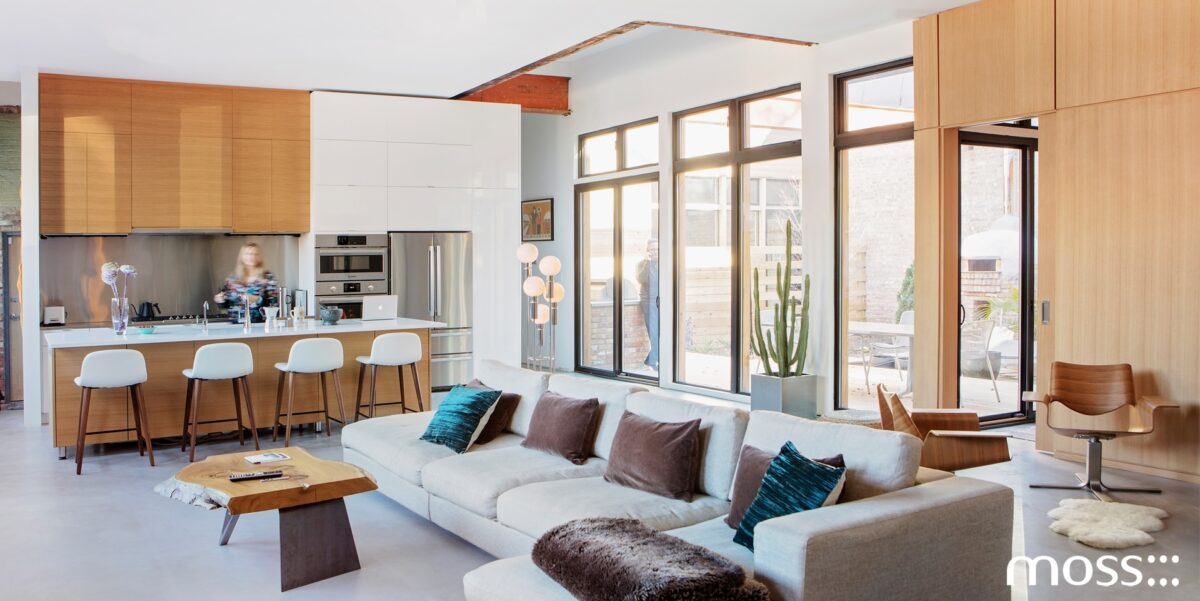
Chicago has long been a city defined by architectural innovation. From the early skyscrapers that reshaped the American skyline as we know it to all the influential design movements that followed, the city remains an active hub for creative building solutions. Today, homeowners who want bright, open, sustainable spaces are turning to modern architecture Chicago as a guiding framework for contemporary living. moss Design, a forward-thinking studio based in Chicago, continues this design legacy by creating warm, light-filled urban homes that elevate both everyday functionality and long-term resilience.
Urban living, particularly in dense neighborhoods, can present challenges like space limitations, shared lot lines, aging structures, and a lack of natural light. But these limitations can inspire ingenious design strategies. With moss Design’s integrative and sustainability-centered approach, modern residences become carefully tuned environments that support comfort, wellness, and meaningful connection to place. Below, we explore key ideas shaping modern architecture Chicago today and how local experts such as moss Design transform these concepts into elegant, livable homes.

The Chicago Context: Why Natural Light Matters
In a city known for its dramatic seasonal shifts and long winters, natural light is not merely a luxury, but a key architectural ingredient. Chicago architects increasingly prioritize daylight accessibility to promote energy efficiency, improve mood, and create homes that feel spacious regardless of square footage. The city’s mix of narrow lots and multi-flat buildings requires creative interventions, such as strategically placed windows, light wells, skylights, and internal glass partitions that distribute light from room to room.
Moss Design embraces daylight as a foundational design tool. Their projects often incorporate operable skylights, high clerestory windows, and south-facing glazing that maximize sun exposure while minimizing energy loss. Through careful site orientation and materials selection, they craft interiors that balance brightness with thermal comfort, a hallmark of Chicago modern architecture.
Open-Plan Living Reconsidered
While open-plan layouts have become synonymous with contemporary residential design, architects modern are refining the concept to better support today’s lifestyles. Rather than creating vast, undifferentiated spaces, moss Designers’ approach to modern architecture Chicago emphasizes fluidity paired with functional zoning. The goal is to maintain visual openness while ensuring that workspaces, living areas, and dining zones feel intentional and well-composed.
Light becomes a boundary-defining medium in these homes. Instead of walls, gradients of light guide movement and establish a sense of progression. Glass dividers, half-walls, shelving systems, and changes in floor elevation preserve openness while introducing structure. These techniques work particularly well in Chicago’s typical residential footprints, where square footage must be used with precision and intelligence.
Material Honesty and Warm Minimalism
Moss Design’s signature aesthetic blends minimalism with warmth, a balance achieved with natural materials and a disciplined design vocabulary. Wood, exposed steel, concrete, and plaster surfaces create tactile richness without visual heaviness. This material approach also nods to Chicago’s architectural heritage, where structural clarity and expressive form have long played essential roles.
Warm minimalism is especially well-suited for light-filled homes. Reflective surfaces bounce daylight deeper into interior spaces, and natural textures soften the clean lines associated with Chicago modern architecture. By prioritizing durability and sensory comfort, these material choices support the studio’s sustainability ethos and reduce the need for replacement over time.
Indoor–Outdoor Integration in Tight Urban Lots
Many Chicago neighborhoods feature compact backyards or modest side yards, which makes thoughtful indoor–outdoor integration both challenging and rewarding. One of the defining features of modern architecture Chicago is the use of transitions via large sliding doors, folding glass walls, terraces, and courtyards that extend living areas outward. Even small outdoor pockets can become lush, light-catching retreats that amplify the feeling of openness inside the home.
moss Design frequently incorporates green roofs, balconies, screened porches, or micro-courtyards into our residential projects. These spaces not only increase access to natural light but also strengthen a home’s connection to nature, an increasingly valued quality in dense urban settings. With Chicago’s growing interest in sustainable living, these transitions support better air circulation, improved privacy, and expanded opportunities for year-round enjoyment.


Sustainable Strategies for Urban Living
Sustainability lies at the core of moss Design’s practice, informing everything from building orientation to material selection and construction methods. The firm integrates passive solar principles, energy-efficient mechanical systems, low-VOC materials, and green building technologies that align with the ethos of contemporary Chicago architects. Light-filled design is inherently efficient: by maximizing daylight, homeowners rely less on artificial lighting and heating, thereby reducing year-round energy consumption.
Other sustainable strategies include:
- Deep insulation and airtight envelopes for lower energy use.
- High-performance windows that optimize solar gain and minimize heat loss.
- Rainwater management solutions that address Chicago’s stormwater challenges.
- Reclaimed and local materials that reduce environmental impact.
These holistic practices solidify moss Design’s position within the evolution of modern architecture Chicago, where sustainability and beauty are inseparable.
Case Studies from moss Design
moss Design’s portfolio offers striking examples of how light can transform urban residences. In several North Side renovations, the firm introduced strategically placed skylights and atriums that draw daylight into previously dark interiors. Other projects showcase creative window compositions that frame neighborhood views while preserving privacy, an essential balance when living on one of the city’s dense blocks.
In one home, moss Design opened up the central staircase to function as a vertical light channel, allowing sunlight to permeate all three levels. In another, they replaced a traditional rear wall with expansive glazing that visually merges the interior with the outdoor garden. These inventive yet grounded solutions demonstrate how architects modern can adapt classic Chicago building types to contemporary lifestyles.
Flexible Spaces for Changing Needs
As remote work and multi-generational living evolve, flexibility has become very valuable. moss Design’s adaptable layouts support multiple uses over time without sacrificing the clarity and calmness characteristic of Chicago modern architecture. Sliding partitions, built-in cabinetry, and multifunctional rooms allow homes to transition effortlessly between work, leisure, and gathering.
Light again acts as a unifying principle: bright home offices improve focus, sunlit living areas encourage social connection, and softly lit bedrooms promote rest. These considerations foster holistic well-being, proving that thoughtful architecture shapes aesthetics around daily life.
A Brighter Future for Urban Homes
In Chicago, modern residential design is deeply tied to experimentation, craftsmanship, and respect for site constraints. moss Design stands at the forefront of this movement, demonstrating how modern architecture Chicago can uplift urban living through intentional light, sustainable materials, and timeless restraint. With an eye toward both functionality and ecological responsibility, the studio continues the city’s proud architectural legacy while meeting today’s homeowners’ needs.
By merging the wisdom of Chicago’s architectural past with contemporary environmental and lifestyle priorities, moss Design transforms ordinary homes into luminous spaces that celebrate life, community, and thoughtful design. Reach out today to learn more about how moss Design can help transform your space.

FAQs
1. What defines modern architecture in Chicago homes?
Modern architecture in Chicago homes is defined by clean lines, functional layouts, minimalist detailing, and a strong emphasis on material honesty. It often blends contemporary aesthetics with Chicago’s urban character, prioritizing simplicity, natural light, and efficient use of space.
2. How do Chicago architects incorporate natural light into urban residences?
Chicago architects maximize natural light through large strategically placed windows, clerestories, skylights, and light wells designed to work within narrow lots. They also use reflective surfaces, open floor plans, and interior glass partitions to distribute light throughout the home.
3. What design elements are common in Chicago modern architecture?
Common elements include open floor plans, indoor–outdoor connections, floor-to-ceiling windows, and sustainable materials. Many homes also feature flat or low-pitched roofs, integrated outdoor terraces, and flexible-use spaces suited to compact urban lots.
4. How can modern residential architecture improve energy efficiency in dense urban neighborhoods?
Energy efficiency is enhanced through high-performance insulation, passive solar orientation, energy-efficient glazing, and green roofs that reduce heat gain. Architects also integrate smart-home systems, sustainable materials, and tight building envelopes to reduce long-term energy use.
5. What should homeowners look for when hiring architects experienced in modern Chicago design?
Homeowners should seek architects with a strong portfolio of modern urban projects, familiarity with Chicago zoning and building codes, and a clear design philosophy centered on light, sustainability, and functional living. Strong communication skills and experience navigating city permitting are also essential.


