This isn’t a room of corks and folk art. It’s an architecturally designed space, a modern home wine cellar design that functions as a climate-controlled habitat for wine and a refined extension of urban living. Completed as part of a modern basement transformation, this solar-powered cellar demonstrates how the right design, from envelope performance to material and lighting details, elevates a creepy basement into an inviting, somewhat swanky subterranean experience.
The custom residential wine cellar design shows what happens when architectural intention meets precision design. More than a generic storage room, it transforms the basement into a functional and elegant space with polished concrete floors, walnut wall panels, custom wine racking, and a glass-framed enclosure. Integrated lighting and high-performance climate systems were carefully coordinated to ensure long-term durability and proper wine preservation. This project shows what’s possible when design is intentional rather than decorative.
A Solar-Powered Modern Home Wine Cellar
A well-designed modern wine cellar is more than just a storage room; it’s a space that should age as beautifully as the bottles within it. Our “bottom-up”, sustainable approach utilizes the earth’s natural thermal mass and high-performance insulation to create a stable microclimate. By opting for timeless materials like walnut millwork, tempered glass, and polished concrete, we avoid trend-driven finishes that quickly feel dated.
This subterranean wine cellar emphasizes flexibility in layout and custom racking systems with wall-mounted pegs and floor-to-ceiling columns. The racks allow the collection to grow and evolve because a bottle of wine is actually alive. By focusing on good design, durability, and energy efficiency, the cellar remains a functional architectural centerpiece for as long as the building holds up.

A modern home wine cellar designed as part of a complete basement renovation, featuring a glass enclosure, custom walnut cabinetry, travertine back panels, and integrated LED lighting.

Lighting as Architecture
Lighting in this project is part of the architecture, not an accessory (though, strangely, a leg lamp was briefly considered). Instead of relying on decorative fixtures, light is integrated directly into the architecture; it’s concealed, calibrated, and deliberate. Cove lighting softens the edges and sets an ambient tone. Subtle edge lighting within the wine racks adds a controlled glow, allowing the materials and geometry to remain the primary focus. Cove lighting softens the edges and sets an ambient tone.
In the gym and steam shower, color temperature shifts to match the mood and use, moving these spaces beyond function into the realm of the senses. Integrated LED lighting and concealed flanges minimize visual noise, keeping the lighting almost unnoticed. It reinforces the idea that light should feel present without drawing attention to itself.
Within the wine cellar, integrated lighting remains intentionally restrained and works directly within the racking system. The goal isn’t to spotlight the wine like a display case, but to let light be part of the experience and preserve the calm, subterranean atmosphere.

Materials and Detailing Inside the Basement Wine Cellar
Walnut wall panels and cabinetry provide material warmth and establish a consistent interior framework, contrasted by minimalist black-metal wine racks. Travertine is introduced at the cabinet backsplash and carries through to a freestanding tasting table fabricated from the remaining slab. The stone’s soft earth tones, natural veining, and tonal variation create a layered, mineral quality that feels subterranean.
Integrated LED lighting within the racking system evenly illuminates the bottles without heat gain, while a full-height glass enclosure maintains visual transparency and defines the cellar as a distinct architectural volume.


Early sketch of a custom travertine table for the wine cellar, alongside a close-up of the stone that defines the piece
Bringing Daylight Into The Basement Gym
Bringing natural light into a basement presents challenges and requires careful coordination between the structure and the floor assembly. Rather than relying solely on artificial lighting, we created a light well that captures daylight from the street-level storefront window above and draws it down into the basement below.
To further distribute daylight, we created an opening in the gym ceiling to capture light from the office above, paired with a tempered-glass floor system at the upper level. Engineered for load-bearing performance, the glass diffuses light while maintaining privacy, allowing daylight to filter down into the gym below.

The basement gym was designed to be both functional and visually connected, with natural light introduced through a custom light well and structural glass flooring above.


Sliding wood-paneled pocket doors allow the gym to be closed off when needed, maintaining flexibility and privacy within the modern basement layout
Flexible Design With Sliding Wood-Paneled Doors
To create a flex-space gym, custom walnut sliding pocket doors stack neatly into the wall system, creating an unobtrusive opening that maintains airflow and visual connection to the lounge. When open, the gym feels part of the larger basement rather than a closed-off room, bringing in light, and a more motivating space when cranking out some reps.
When closed, the pocket door system conceals equipment and restores a calmer lounge setting. Opaque glass panels integrated into the wood doors allow light to pass through, keeping the space connected without sacrificing separation.
Entertaining Spaces Beyond the Wine Cellar
Beyond the glazed wine cellar, the basement opens into the lounge. With flexible seating, this is where friends gather, share tasting notes, listen to music, and occasionally break into a dance party. Views into the cellar keep the collection on display while the space stays casual, social, and unpretentious.
Just outside the cellar, custom walnut cabinetry and a leathered quartzite counter form a compact wet bar with an integrated sink. A flush-mounted wine fridge keeps bottles chilled, and plenty of cabinet space for glassware, and coffee and tea service.
We designed the room to shift with the moment. Once the playlist cools, the room becomes a luxury guest suite, secluded from the main residence above. Radiant heat under the polished concrete floors keeps the space comfortable during cold months. Guests can wake up refreshed, brew coffee at the stocked coffee station at the wet bar, get in a workout, and end the day the same way it started – back in the lounge.

Spa Bathroom Design With Material Continuity
Following a workout, the sequence is simple: steam first, bubbles second (quantity proportional to how much you “bring it” in the gym). The spa bathroom has a fully enclosed Brizzo steam shower where you can immerse yourself in steam room luxury. You can tailor the steam experience by selecting colored mood lighting, further elevating the sanctuary vibe.
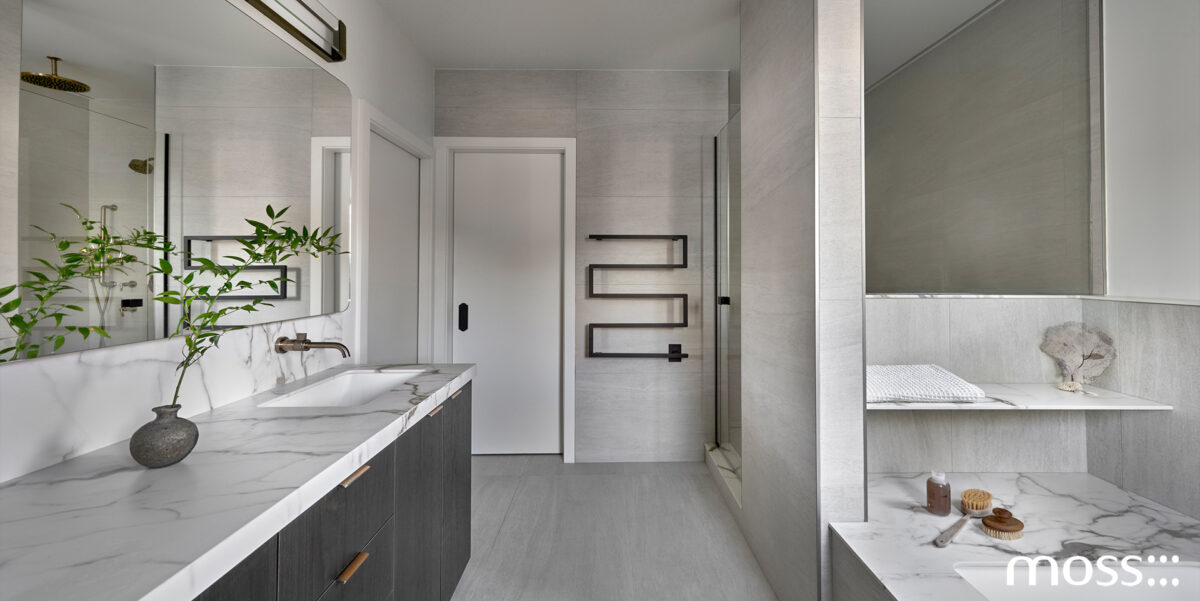
The Japanese-inspired Toto washlet elevates well-being, recognized for its superior hygiene thanks to advanced water cleansing and self-cleaning features. A custom vanity top crafted from the remaining leathered quartzite used at the wet bar reinforces material continuity and keeps the basement feeling unified.

A mood-lit steam shower paired with a walnut vanity, topped with a custom quartzite vanity repurposed from leftover wet bar counter material, carrying material through the basement.