Each design project is unique, but the process of design here at moss follows a well defined path.
Here’s what you can expect from each stage, from Program and Field Measuring, through Schematic Design, Design Development, and Construction Documentation, and on to Permits and Construction Administration. Between design meetings, we’re working on your project at every phase.
This series of posts will explore our approach to the design process and give you an idea of how we might handle a future project of yours.
Schematic Design: The first phase of Design
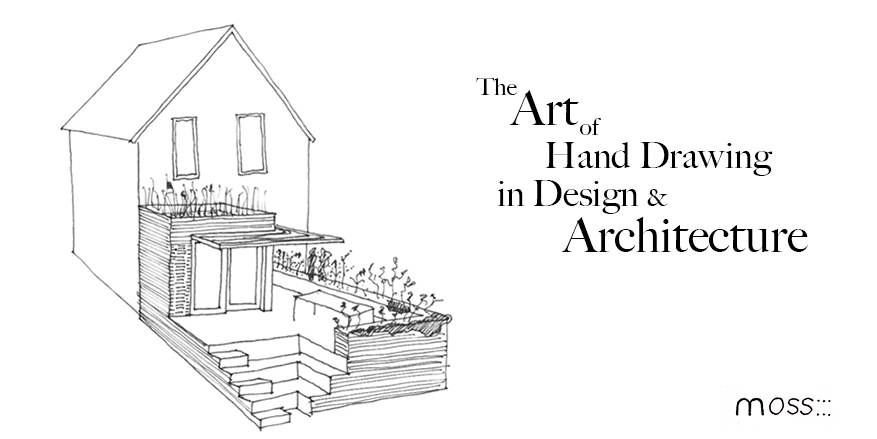
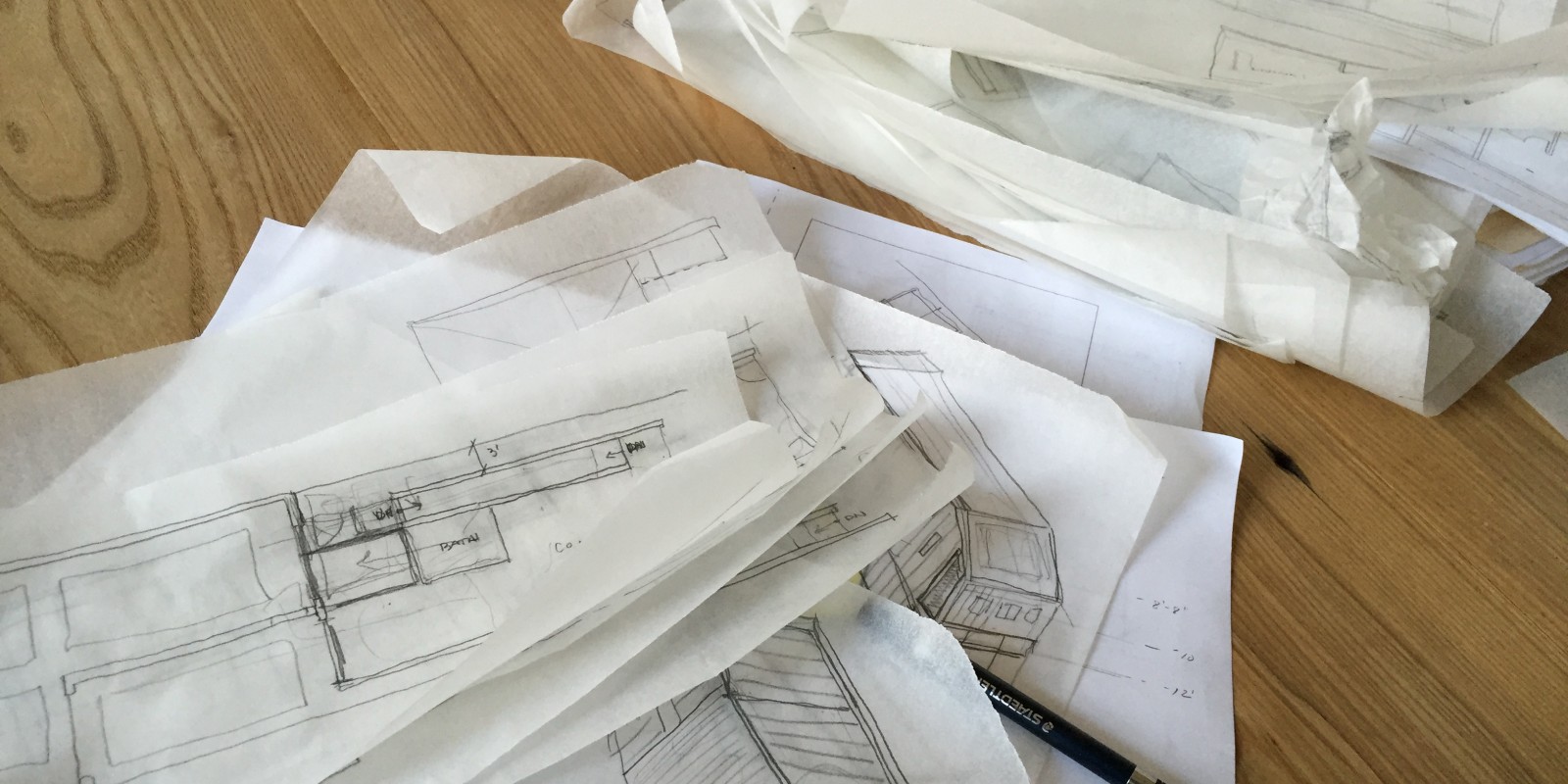
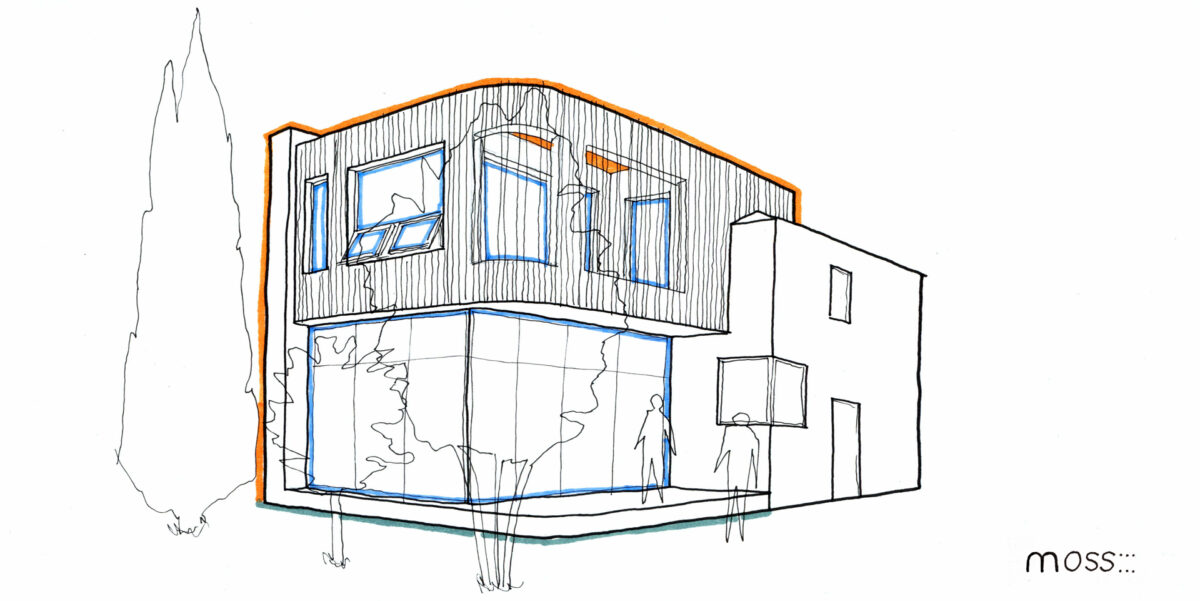
During our schematic design process, we brainstorm the clients’ needs to solve problems they may not yet have identified. We research zoning or building requirements that may affect the design. We scour the internet – Houzz, Pinterest, and favorite material and products websites – for images that suggest ideas. We also rely heavily on sketching – interior perspectives, outside facades, and floor plans.
To illustrate the schematic design process, we’ll show content created for two recent projects – a house on Carmen Avenue and a new restaurant and specialty food market in Andersonville – which are slated for construction in the near future.
Image Inspirations
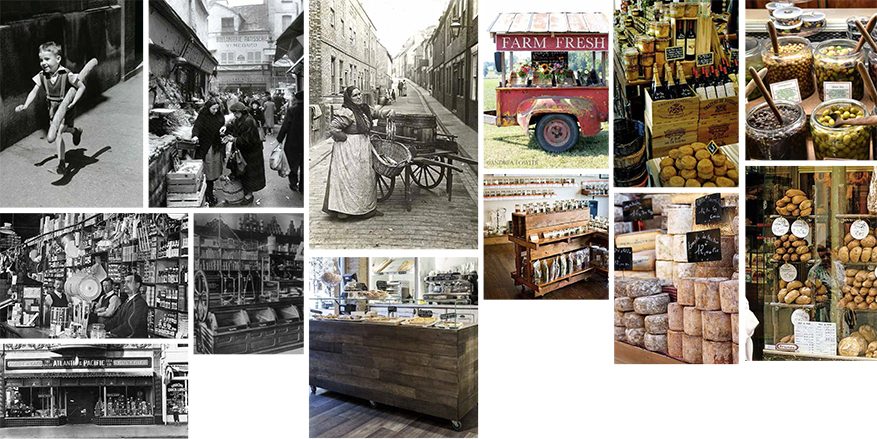
Each project begins with a Pinterest board that the client and moss team add to, capturing annotated ideas from similar projects or totally different applications, which we can include in our design as it moves forward. Some images capture a material or a building element, others simply evoke an emotion. These are the jumping-off points for our design research into the Andersonville specialty food market.
Floor plans
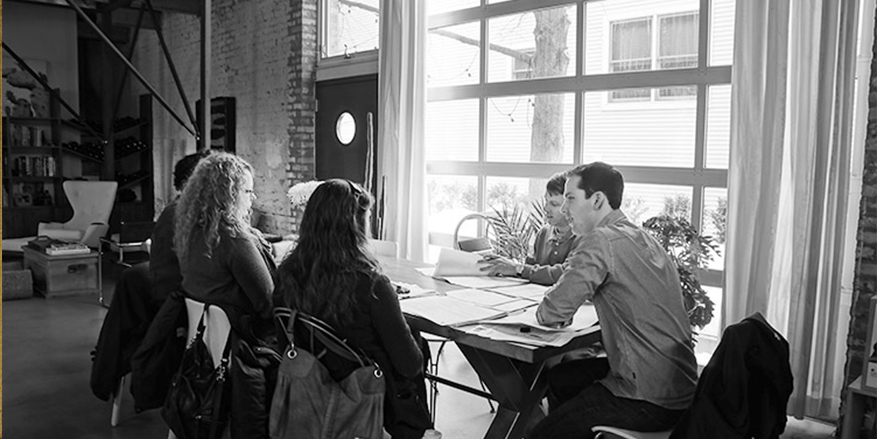
The backbone of any design package is the floor plan. Getting to the right one usually requires an iterative process, and schematic design is one of the most collaborative periods for the moss team. Even if only one or two members of our team will eventually oversee a project, we often have an all-hands charrette to work out the initial layout options.
A Charrette is a short, intense design period with a time limit after which all the entries are gathered and judged. The practice dates back to THE french school of design, the Ecole des Beaux Artes, where students would work on their designs until the last possible moments, following along after they had been collected for judging and carried away on a little cart – a charrette – to correct the last few details.
Working together, we identify the best elements of each and pare the options down to a handful (two to five) that we want to clean up and present to the client.
Below are several (of many more) floor plan options for the Carmen Avenue House.


Concept Sketches
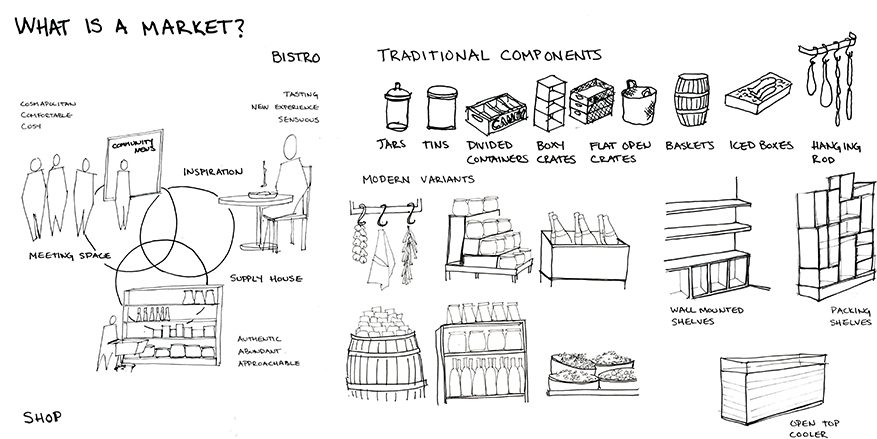
For some projects, particularly commercial/residential projects, it isn’t enough to simply decide what the project should “look like” and start firing away with interior aesthetics. Instead, we think about the space’s overall theme and brainstorm both novel and traditional components that might contribute to the project.
For the Andersonville market, we brainstormed all the various program elements visually before starting with sketches for individual elements of the design.
For residential design, we often explore small areas, “moments” of design as we develop from concept to full design. This idea, of a sunken living room at backyard level going up to the existing first floor level, was one of the defining concepts of the Carmen Avenue house.

Interior Sketches
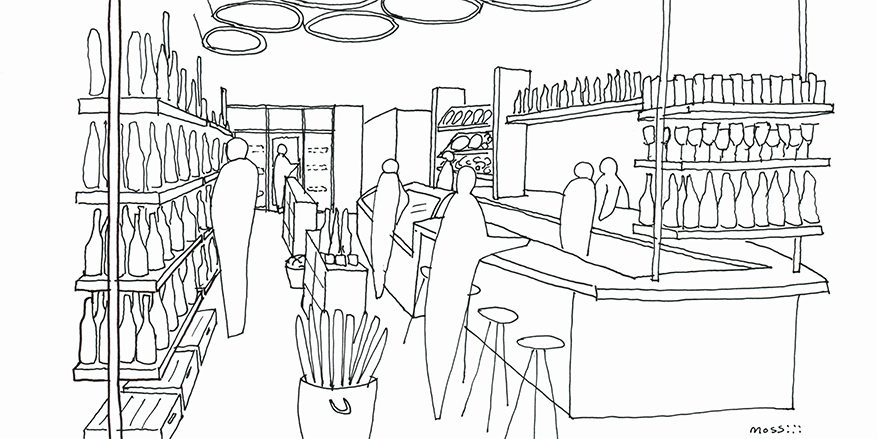
Once we know which concepts we are trying to capture, we can consider the project’s appearance. In Schematic Design, this is best handled through sketching interior perspectives, both simply and in detail. We may sketch at several scales to address the overall feel of an interior space and also the detailed construction of newly built-in elements.
As with the floor plans, there will generally be several distinct design options at this phase. Here are two visions of the food retail area for the restaurant/shop.

Design Miscellany
Each project requires its own suite of communication tools to find the best design solution. We sometimes need to branch out into other media to properly convey a design, below is a flip book made to show how several different versions of an addition would encroach on the the back yard space in the Carmen Avenue house. We’ve also used small models and three-dimensional computer renderings.

Moving forward from Schematic Design
Once we know what our clients respond to best from the initial design phase, we can return to our modern drawing board – the computer – and begin to translate the project into AutoCAD.
Next step … Design Development.