In today’s design landscape, some of the most forward-thinking, award winning architects are drawing inspiration not just from each other, but from ecosystems. From self-cooling buildings to structures that mimic forests, the growing interest in biomimetic architecture is reshaping how we define innovation in design. For a firm like moss Design in Chicago, this approach offers a powerful framework for creating spaces that are beautiful and deeply intelligent.
In this article, we’ll discuss what makes biomimetic design so valuable to the field of architecture and share how moss Design’s focus on sustainable architecture incorporates the core beliefs of biomimicry organically into every residential property we build.
What Is Biomimicry and Why Does It Matter?
At its core, biomimicry is the practice of studying nature’s strategies and applying them to solve human challenges. In architecture, this evolves into biomimetic design, where buildings are designed to emulate natural forms, processes, or ecosystems. Rather than simply copying aesthetics, this approach focuses on performance. For example, while a honeycomb is aesthetically pleasing, the hexagonal structures are super lightweight yet incredibly strong.
As architects and builders work to reduce their contribution to global carbon emissions, sustainable design practices have become part of the responsibility that comes with shaping the built environment.


Nature as the Ultimate Design Mentor
The natural world has had billions of years to refine and perfect its systems, which is why architecture inspired by nature often yields smarter, more efficient solutions than conventional design methods.
Biomimetic strategies typically operate on three levels:
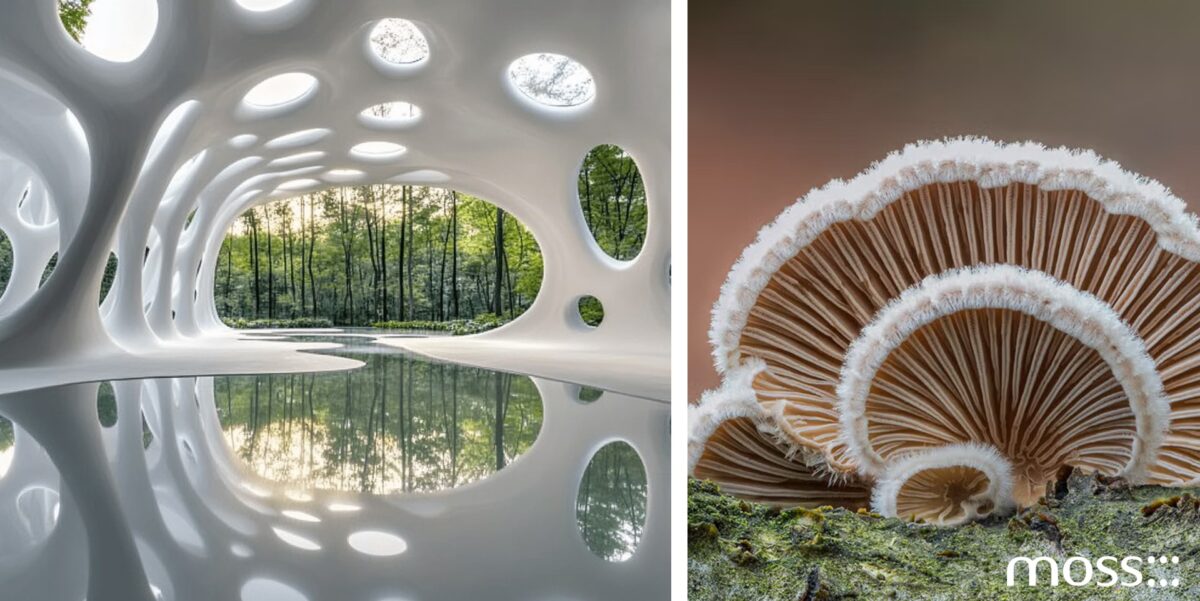
- Form: Mimicking shapes like shells or honeycombs
- Process: Emulating natural behaviors like ventilation or growth
- Ecosystem: Designing buildings that function like living systems
This layered approach is what separates superficial nature-inspired architecture from truly transformative design that enhances how we use a particular space.
Iconic Examples of Biomimetic Architecture
Some of the world’s most recognized projects demonstrate how award-winning architects are applying biomimetic principles.
1. Eastgate Centre, Zimbabwe
One of the most iconic buildings inspired by nature, the Eastgate Centre was inspired by termite mounds, using passive cooling to regulate temperature without traditional HVAC systems. The results are dramatic reductions in energy consumption and operational costs.
2. The Eden Project, UK
Modeled after soap bubbles, its elegant geodesic domes create efficient enclosures with minimal materials.
3. Bullitt Center, Seattle
Designed to function like a forest, the Bullitt Center generates its own energy, captures rainwater, and processes waste onsite: a superb example of sustainable architecture.
All of these projects highlight how biomimetic thinking goes beyond aesthetics to deliver measurable performance gains.
Key Lessons for Modern Residential Design
For firms like moss Design in Chicago, the principles behind biomimetic architecture translate seamlessly into residential projects. Some ways we can apply these principles to our home designs are:
1. Designing for Passive Performance
Nature doesn’t rely on mechanical systems that can fail, but instead plans around form and orientation. Homes can do the same by optimizing sunlight, airflow, and thermal mass. In this way, nature-inspired architecture isn’t just lovely to look at, but very practical. Strategic window placement, shading systems, and material selection can significantly reduce energy demand, saving the homeowner a lot of money over time.
2. Embrace Material Efficiency
In nature, no material is wasted. Structures like bones and tree branches maximize strength while minimizing material use. Applying this principle leads to lighter, stronger, and more cost-effective designs often used by award-winning architects.
3. Think in Systems, Not Components
A forest isn’t just a collection of trees, but an interconnected ecosystem. Similarly, great homes integrate water management, energy systems, and indoor air quality into a cohesive whole. Thinking about your home as a cohesive system that can maintain itself is a cornerstone of sustainable architecture.


Biomimetic Design in Urban Contexts Like Chicago
Urban environments present unique challenges like density, climate extremes, and infrastructure constraints. Yet they also offer opportunities for biomimetic innovation.
In Chicago, architects can draw inspiration from:
- Prairie ecosystems for water management strategies
- Tree canopies for shading and cooling
- Lake Michigan’s microclimate for ventilation insights
By integrating these elements, architecture inspired by nature becomes not just possible, but highly effective in urban residential design.
The Role of Technology in Biomimetic Architecture
Modern tools are accelerating the adoption of biomimetic principles. Computational design, parametric modeling, and advanced materials allow architects to replicate complex natural systems with precision.
For example:
- Adaptive facades that respond to sunlight like flowers
- Self-healing materials inspired by biological processes
- Energy systems modeled after ecosystems
These innovations are helping award winning architects push the boundaries of what buildings can do.

Bridging Beauty and Performance
One of the most compelling aspects of nature-inspired architecture is its ability to merge aesthetics with functionality. Natural forms are inherently appealing because they resonate with human biology, a concept known as biophilia. But beyond visual appeal, biomimetic design ensures that beauty is backed by performance. Every curve, texture, and system serves a purpose. The meeting of form and function is what’s truly unique about architecture inspired by nature and all its inhabitants.
What is Biomimicry Offering That Traditional Methods Aren’t?
As environmental pressures intensify and architects and clients increasingly value sustainability in their design-and-build practices, the need for smarter design solutions becomes urgent. The principles of biomimicry emphasize the proven effectiveness of design through evolution, as well as a focus on symbiotic systems and reduced environmental impact. By drawing inspiration from nature, architects can create buildings that are actively regenerative, representing the next frontier of sustainable architecture.
Embrace the World Around You With moss Design
At moss Design, the goal is not to replicate nature literally, but to translate its logic into livable, modern spaces. By studying natural systems, our team can craft homes that are energy efficient, responsible, and compelling. Our approach and ethos align with the philosophy embraced by today’s leading award winning architects, who see nature not as mere inspiration, but as a blueprint for innovation.
The rise of biomimetic architecture marks a shift in how we think about design. It challenges architects to move beyond form and aesthetics toward deeper, performance-driven solutions.
By asking, “What is biomimicry?” and applying its principles, architects can create spaces that are efficient, resilient, and inspiring. For homeowners and developers in Chicago, this means access to a new generation of architecture inspired by nature, one that reflects both the intelligence of the natural world and the creativity of human design.
And as more award winning architects continue to embrace this approach, the future of sustainable architecture looks smart, sustainable, and more obtainable every day. These ideas continue to inform how moss Design approaches renovation, adaptive reuse, and new construction projects throughout Chicago. Contact us to apply them to your next project.
FAQs
1. What is biomimicry in architecture?
Biomimicry is the practice of studying nature’s systems and applying those principles to architectural design. Instead of simply imitating natural forms, biomimetic architecture uses nature’s proven strategies to improve building performance, efficiency, and sustainability.
2. How do award-winning architects use nature-inspired architecture?
Many award winning architects look to nature for solutions that improve energy efficiency, material performance, and occupant comfort. By applying principles of nature inspired architecture, they create buildings that are both visually compelling and environmentally responsible.
3. What are some examples of architecture inspired by nature?
Architecture inspired by nature includes projects like the Eastgate Centre in Zimbabwe, which uses passive cooling inspired by termite mounds, and the Bullitt Center in Seattle, designed to function like a living ecosystem. These projects demonstrate how natural systems can inspire smarter, more sustainable buildings.
4. How does biomimetic design support sustainable architecture?
Biomimetic design supports sustainable architecture by reducing energy use, improving natural ventilation, optimizing daylight, and encouraging efficient use of materials. These strategies help create buildings that perform better while minimizing their environmental impact.
5. Can biomimetic principles be used in residential architecture?
Yes. Biomimetic principles can be incorporated into residential architecture through passive solar design, natural ventilation, thoughtful orientation, and durable, efficient material selection. These strategies create homes that are more comfortable, resilient, and sustainable over the long term.