Nothing defines a city quite like its architecture. Just as a famous person can be recognized by their silhouette, a city’s skyline makes it instantly memorable, even to those who’ve never set foot there. Climate, culture, history, and lifestyle all shape how buildings look, feel, and function.
At moss Design, our team brings a perspective that goes beyond a single city or region. Our principals have lived in San Diego, and moss Design is licensed to practice architecture in California, meaning our understanding of West Coast design isn’t just academic. We’ve experienced it firsthand: the way the light falls in the afternoon, how indoor-outdoor living shapes a floor plan, and what it means to build in a climate where the weather is as much an amenity as the architecture itself. Comparing California architecture firms, and San Diego architecture firms in particular, with Chicago architecture firms reveals how geography drives design decisions in ways that are both meaningful and sometimes surprising.
In this article, we’ll break down how these regions differ, where they overlap, and what clients and developers should consider when choosing a design direction.
The Big Picture: Coast vs. Midwest Design Thinking
In general, California architecture firms tend to design for openness, flexibility, and environmental integration. In contrast, Chicago architecture firms often prioritize durability, density, and historical continuity.
In coastal Southern California, architecture responds to mild weather, ocean views, and a lifestyle centered on indoor-outdoor living. Meanwhile, Chicago’s architecture is shaped by seasonal extremes, urban density, and a rich legacy of innovation in structural design.
Even within California, San Diego architecture firms often take a more relaxed, coastal approach compared to urban-focused Los Angeles architects, whose work frequently pushes boundaries in scale and experimentation.
Climate as a Design Driver
One of the most fundamental differences between San Diego architecture firms and Chicago architecture firms is how they design around climate.
San Diego: Indoor-Outdoor Integration
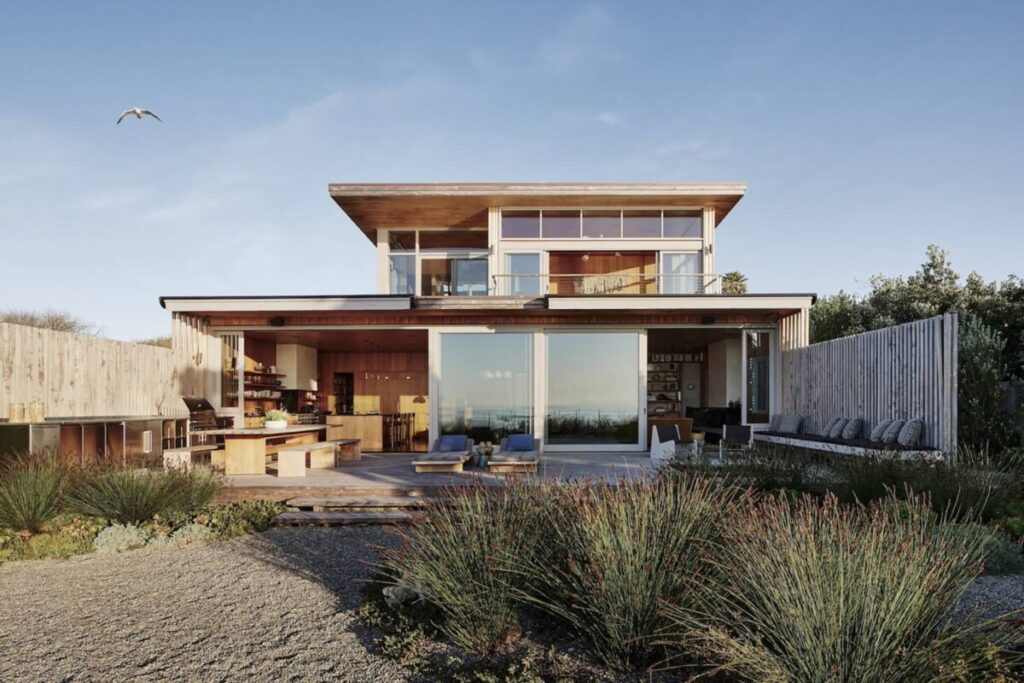
In San Diego, consistent sunshine and moderate temperatures allow architects to blur the line between inside and outside. Homes and commercial spaces often feature:
- Expansive glass walls
- Sliding or retractable doors
- Courtyards and patios
- Natural ventilation strategies
This approach reflects a broader trend among California architecture firms, where buildings are designed to “breathe” and connect with their surroundings.
Chicago: Performance and Protection
Chicago’s architecture must contend with cold winters, hot summers, and strong winds. As a result, Chicago architecture firms emphasize:
- Insulation and energy efficiency
- Durable materials like brick and stone
- Compact forms that retain heat
- Structural resilience
These constraints lead to a very different design language, one that balances beauty with performance and echoes in every project moss Design tackles.

Comparing Architecture Styles: San Diego vs. Chicago
A direct comparison of architectural styles highlights how regional influences shape aesthetics.
San Diego Styles
San Diego architecture firms commonly work within styles that reflect the city’s rich history, Spanish influence, and climate:
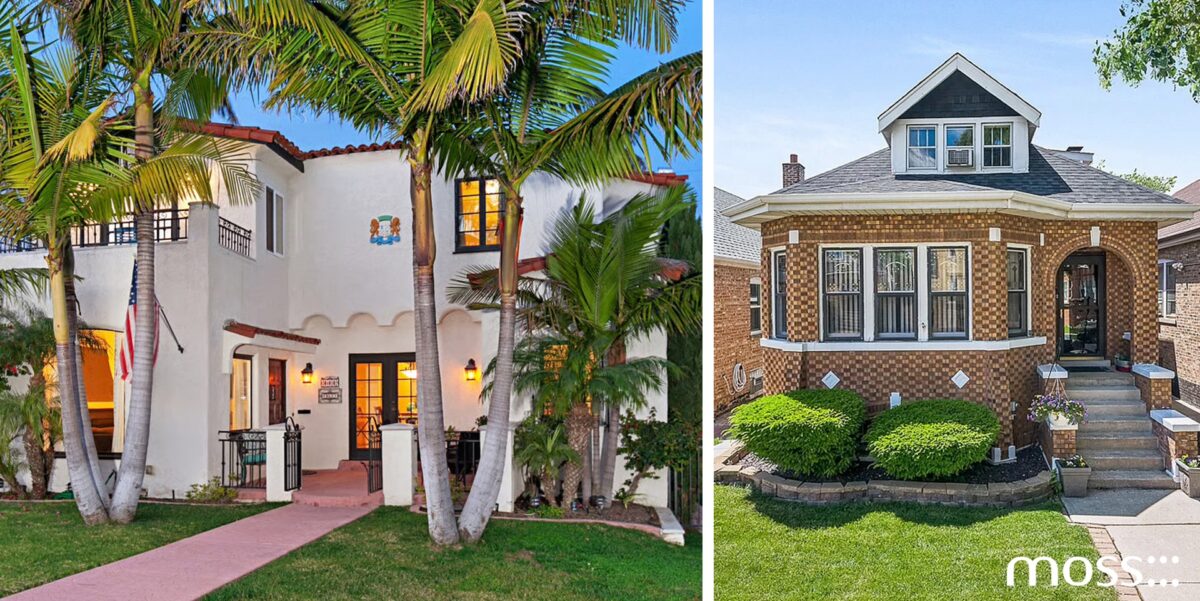
- Spanish Colonial Revival: Stucco walls, red tile roofs, arches, and courtyards
- Mid-Century Modern: Open plans, glass walls, and seamless indoor-outdoor flow
- California Ranch: Single-story layouts with strong connections to outdoor living
- Contemporary coastal: Homes with minimalist detailing
These styles prioritize lifestyle, light, and landscape integration.
Chicago Styles
Chicago architecture firms operate within a much broader and historically layered palette:
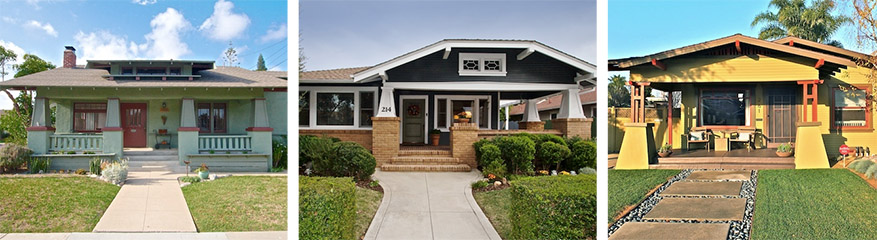
- Chicago Bungalows: Brick homes built for efficiency and affordability
- Two-Flats and Greystones: Multi-unit housing designed for urban density
- Chicago School Skyscrapers: Early steel-frame innovation
- Modern and Contemporary Infill: Clean lines and urban adaptability
Chicago’s architecture reflects waves of immigration, industrial growth, and technological advancement, resulting in a dense mix of styles that share a common thread of sustainability.

Materials and Construction Approaches
Material selection is another area where California architecture firms and Chicago architecture firms diverge significantly.
In San Diego, lighter materials dominate:
- Stucco
- Wood
- Glass
- Concrete with a smooth finish
These materials support open designs and coastal aesthetics.
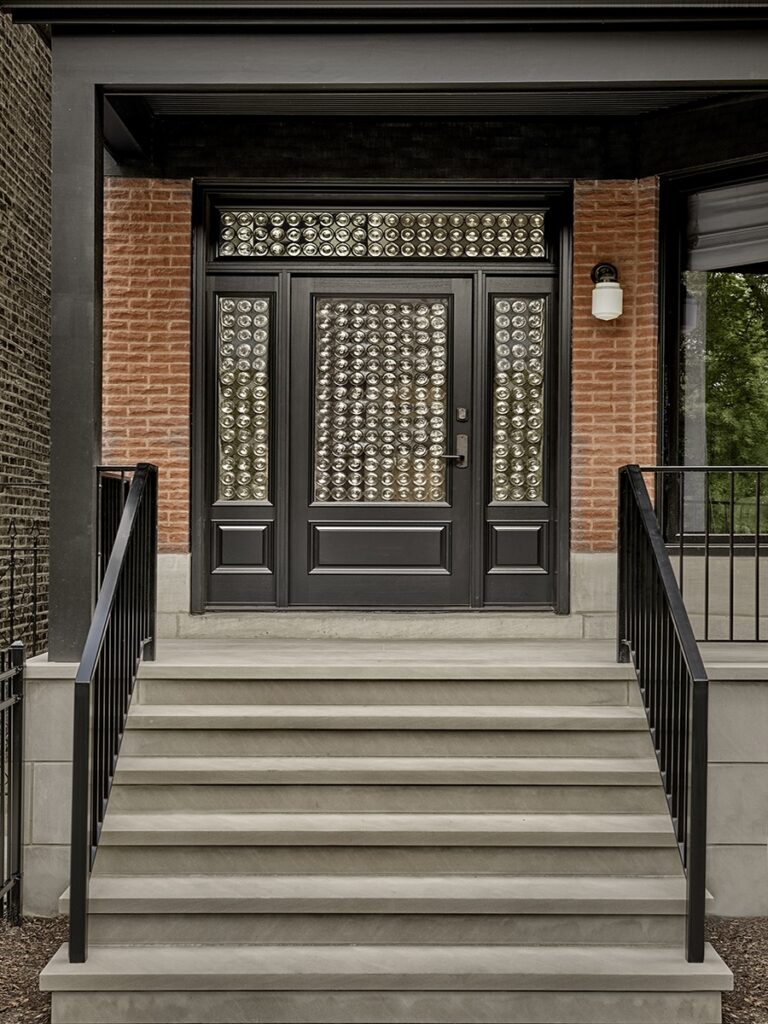
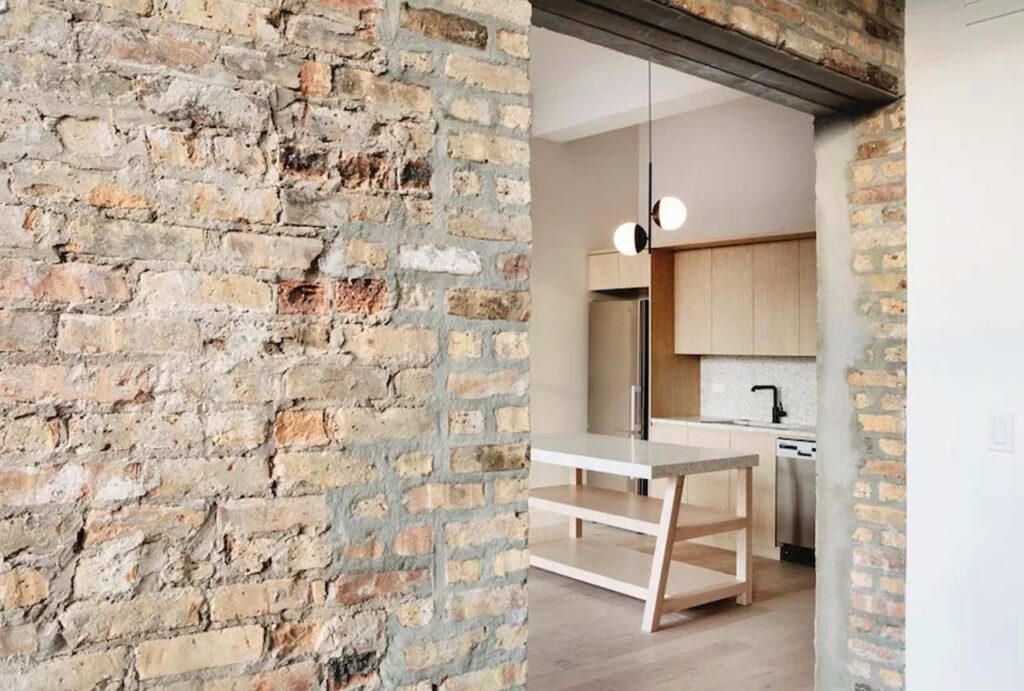
In Chicago, heavier materials are more common:
- Brick and masonry
- Steel framing
- Stone facades
These choices reflect both climate needs and the city’s architectural heritage.
For moss Design, this distinction is a key factor when translating design concepts across regions. What works structurally and aesthetically in California may require significant adaptation in the Midwest.
Urban Density vs. Spatial Freedom
Urban planning and density also shape architectural outcomes.
Chicago: Vertical and Dense
Chicago architecture firms often design within tight urban constraints. This leads to:
- Vertical expansion
- Multi-unit buildings
- Mixed-use developments
- Efficient space planning
The city’s skyline is a direct result of this approach, with a strong emphasis on innovation in tall building design.
San Diego: Horizontal and Open
In contrast, San Diego architecture firms typically work with more horizontal space:
- Single-family homes
- Low-rise developments
- Spread-out neighborhoods
Even when density increases, the design language often maintains a sense of openness.
Influence of Los Angeles on California Design
It’s impossible to discuss California architecture firms without acknowledging the influence of Los Angeles architects. Los Angeles has long been a hub for experimentation, particularly in modern architecture Los Angeles. Hallmarks include:
- Minimalist forms
- Glass-heavy structures
- Integration of technology and sustainability
- Bold, sculptural designs
These ideas often filter down to San Diego architecture firms, though typically in a more relaxed, livable form. While Los Angeles pushes boundaries, San Diego refines them.
Sustainability and Innovation
Both regions are deeply invested in sustainability, but they approach it differently.
- California architecture firms often focus on passive design strategies, solar integration, and environmental harmony.
- Chicago architecture firms emphasize energy efficiency, insulation, and high-performance building systems.
In both cases, modern architecture is evolving toward cleaner, more efficient solutions, but the execution varies based on regional needs.

What This Means for Clients and Developers
For clients working with moss Design, understanding these regional differences can inform smarter decisions.
If you’re inspired by San Diego architecture firms, you might prioritize:
- Open layouts
- Natural light
- Indoor-outdoor transitions
If your project aligns more with Chicago architecture firms, you may focus on:
- Structural durability
- Space efficiency
- Integration with the existing urban fabric
The best projects can blend these approaches seamlessly, bringing California-inspired openness into Chicago’s structured environment.
Bridging the Gap: moss Design’s Perspective
At moss Design, the goal isn’t to choose between regions, but to combine the best of both to create something innovative, fun, and truly special.
By studying California architecture firms and San Diego architecture firms, alongside the legacy of Chicago architecture firms, designers can create spaces that are:
- Context-aware
- Functionally optimized
- Aesthetically compelling
Whether incorporating the warmth of coastal design or the rigor of Midwestern construction, the result is architecture that feels both innovative and grounded.
The West Meets the Midwest With moss Design
The contrast between San Diego architecture firms and Chicago architecture firms highlights the fundamental truth that architecture is deeply local.
From the breezy, sunlit designs of Southern California to the resilient, layered structures of Chicago, each region offers valuable lessons. Influences from Los Angeles architects and modern architecture Los Angeles continue to shape broader trends, but regional identity remains strong.
For moss Design and its clients, the opportunity lies in understanding these differences and using them to create spaces that are not only beautiful but truly responsive to their environment. Contact the team at moss Design today to get started on your project.

FAQs
1. How do California architecture firms differ from Chicago architecture firms?
California architecture firms often prioritize indoor-outdoor living, natural ventilation, and open floor plans that respond to the region’s mild climate. Chicago architecture firms typically focus on energy efficiency, durable materials, and designs that perform well in four-season weather while respecting the city’s dense urban environment.
2. What makes San Diego architecture firms unique compared to other California firms?
San Diego architecture firms often emphasize relaxed coastal living with seamless connections between indoor and outdoor spaces. While they share many design principles with other California architecture firms, they generally take a more residential and lifestyle-focused approach than the bold experimental work often associated with Los Angeles architects.
3. Can Chicago homes incorporate design ideas from modern architecture in Los Angeles?
Yes. Elements commonly found in modern architecture Los Angeles—such as expansive glazing, minimalist detailing, and strong indoor-outdoor connections—can be thoughtfully adapted for Chicago homes. Experienced architects modify these ideas to suit the Midwest’s climate while maintaining energy efficiency and long-term durability.
4. What should I look for when choosing between California and Chicago architecture firms?
The right firm should understand how regional climate, building codes, and local architectural traditions influence design decisions. Whether you’re inspired by California architecture firms or prefer the durability associated with Chicago architecture firms, choose a team that can tailor the design to your site, lifestyle, and long-term goals.
5. How does moss Design combine regional architectural influences?
moss Design draws inspiration from both California and Chicago architecture, blending the openness and natural light often found in San Diego architecture firms with the performance, resilience, and craftsmanship expected in Chicago. The result is architecture that feels contemporary, site-specific, and designed to perform beautifully for decades.