On a quiet stretch of shoreline in northern Michigan, this Michigan lake house renovation rethinks the relationship between the home and the water. The Veranda Lake House opens directly to the lake and sand, with wide views across the water and outdoor spaces that feel more like open-air rooms than backyard add-ons. Designed as a family retreat, it balances comfort and seasonal flexibility for the way our clients want to spend time here.
The project replaces an existing single-story cabin with a new two-story home and an attached gear-storage garage. Now permitted and ready to break ground, we designed the home as fully electric, with rooftop solar panels, radiant-heated concrete floors, and a high-performance building envelope to withstand the lakefront climate.
Designing a Lake House Around the View
The lakefront setting influenced every part of the design. Instead of keeping the best views for just a few rooms, every area connects to the lake in some way. Living spaces open toward the water, staircases are framed by glass, hallways lead your eyes outside, and even the entryway draws you toward the lake’s reflections.
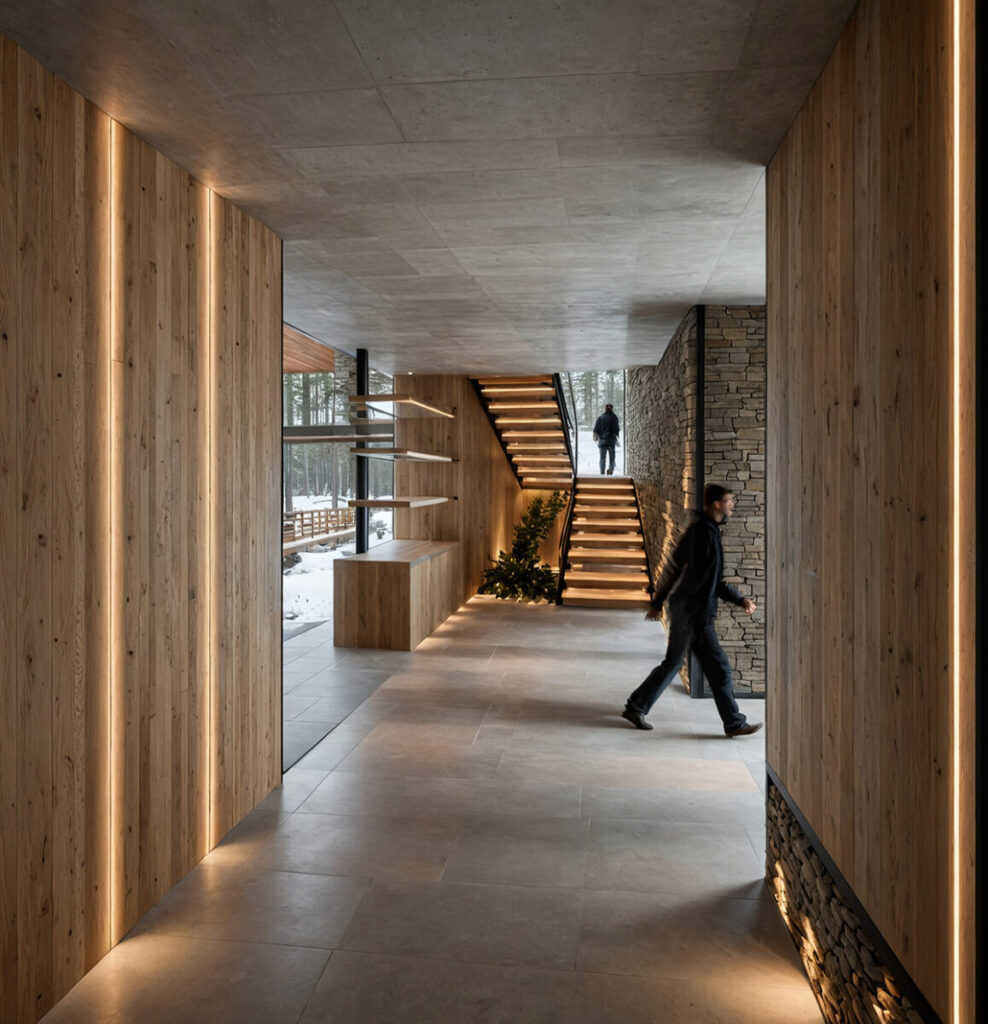
As you enter the house, the open-riser stairs offer views through to the water beyond, immediately pulling your attention toward the lake. Moving upstairs, the perspective gradually widens, linking each step to the outdoors, making the experience of arrival feel more tied to the landscape.
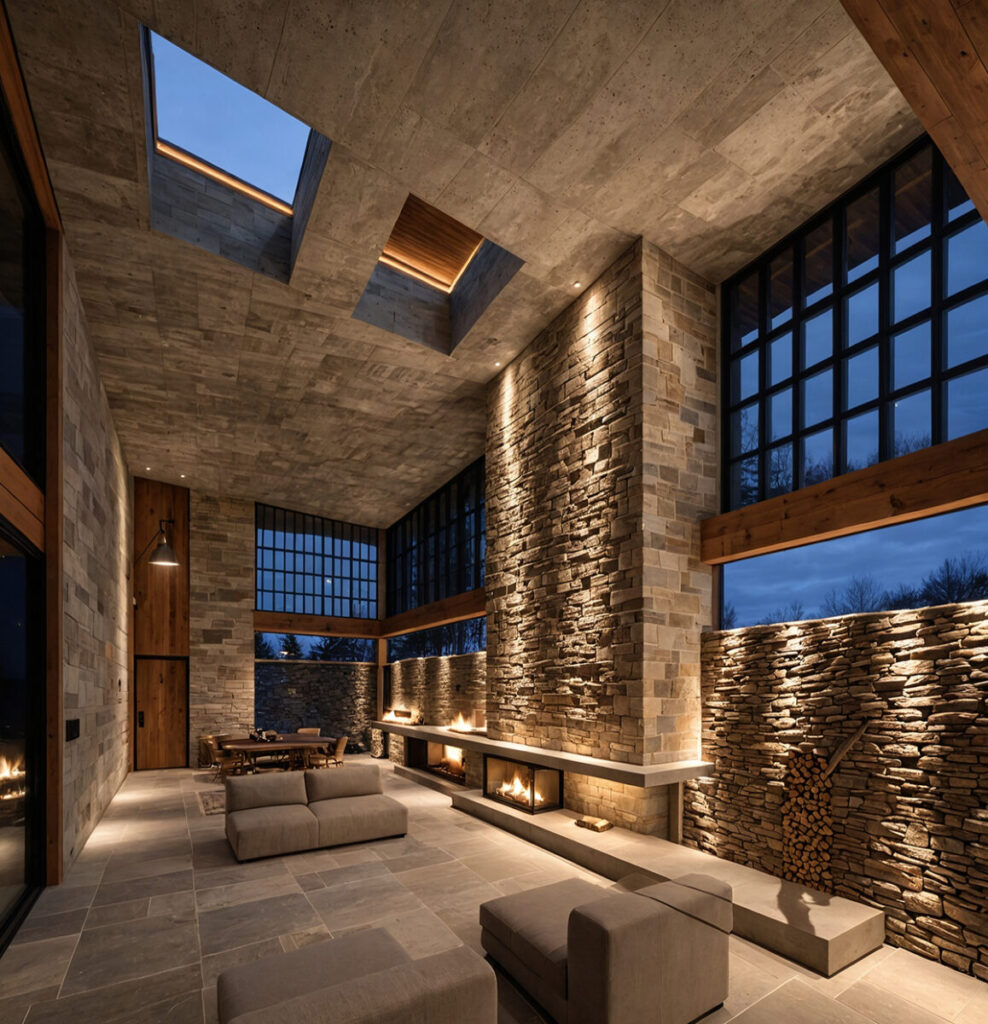
At the center of the house is a two-story glassy volume that houses the kitchen, dining area, and family room with a wood-burning fireplace. Above, on the second level, walkways cross above and look down into the open spaces below. This openness helps sunlight filter through wide windows and roof openings, bringing light deep into the home.
Designed for Life at the Lake, Year-Round
Like many lake houses, the Veranda Lake House is designed to feel comfortable year-round. At times, it’s a quiet retreat for its owners. At other times, it becomes a home where friends can spend time together without feeling crowded.
A separate guest wing provides privacy for guests without feeling too disconnected from the rest of the house. This layout works for the owners when they visit solo and then accommodates more people during holidays and summertime.
When cold weather hits, heat rises through the concrete floors thanks to the radiant heating system underneath. A wood-burning fireplace in the living area keeps the space warm and inviting, no matter the season.
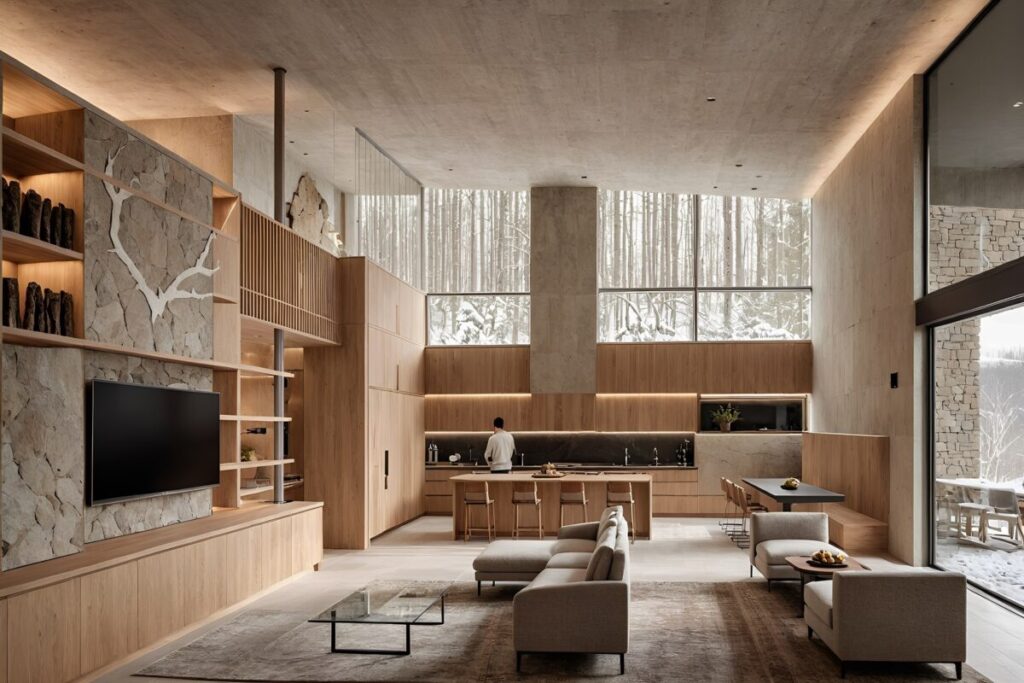
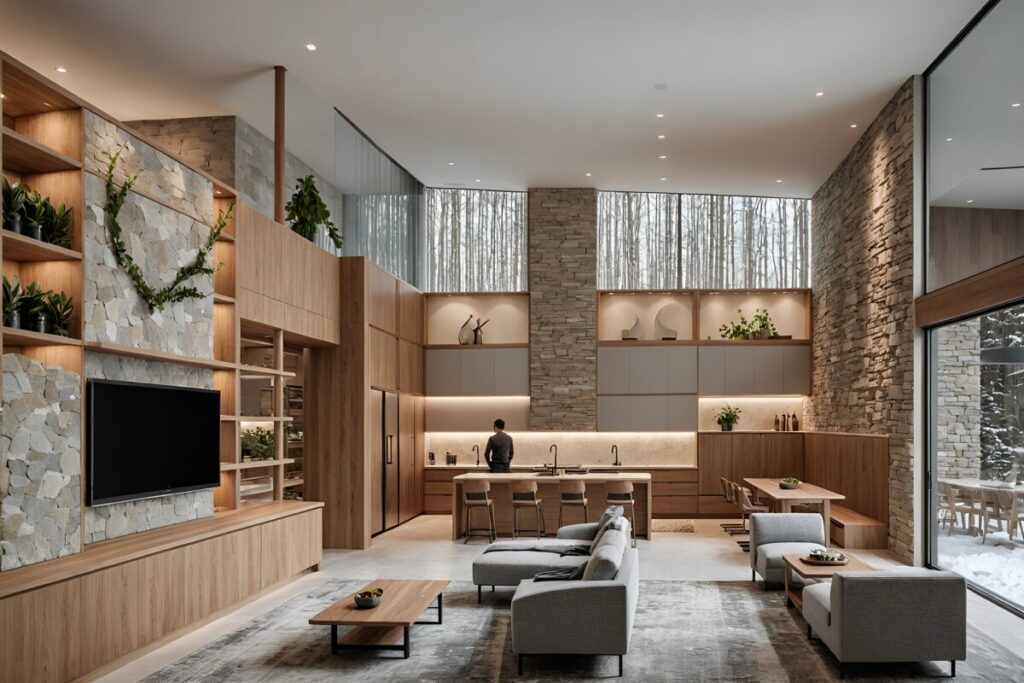
Renderings illustrating material options for the kitchen and living room
The Veranda as an Outdoor Living Room
One of the defining elements of the project is the lakeside veranda. This area is designed more like an outdoor living room than a typical deck or patio.
Large sliding glass doors link interior rooms to the veranda, so indoor and outdoor spaces blend together during warmer months. Built into that shaded space is seating arranged near an outdoor fire pit, along with a table set up for alfresco meals and Aperol spritz hour among the trees, plus cooking gear built right into the structure.
The outdoor kitchen includes a barbecue, a smoker, and Parrilla — an Argentine-style adjustable wood-fired grill designed for open-fire cooking and hanging out.
Just past the covered sheltered lounge is a cedar hot tub and an outdoor shower that ties right into the lakeside vibe. The materials reflect the natural surroundings, bringing the outdoors even closer.
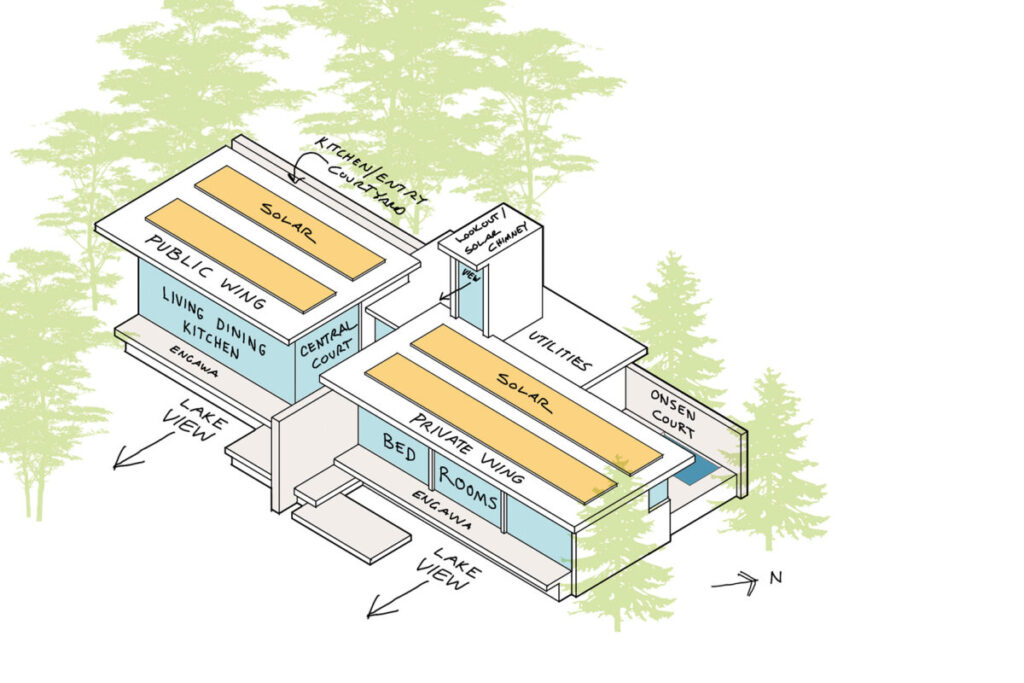
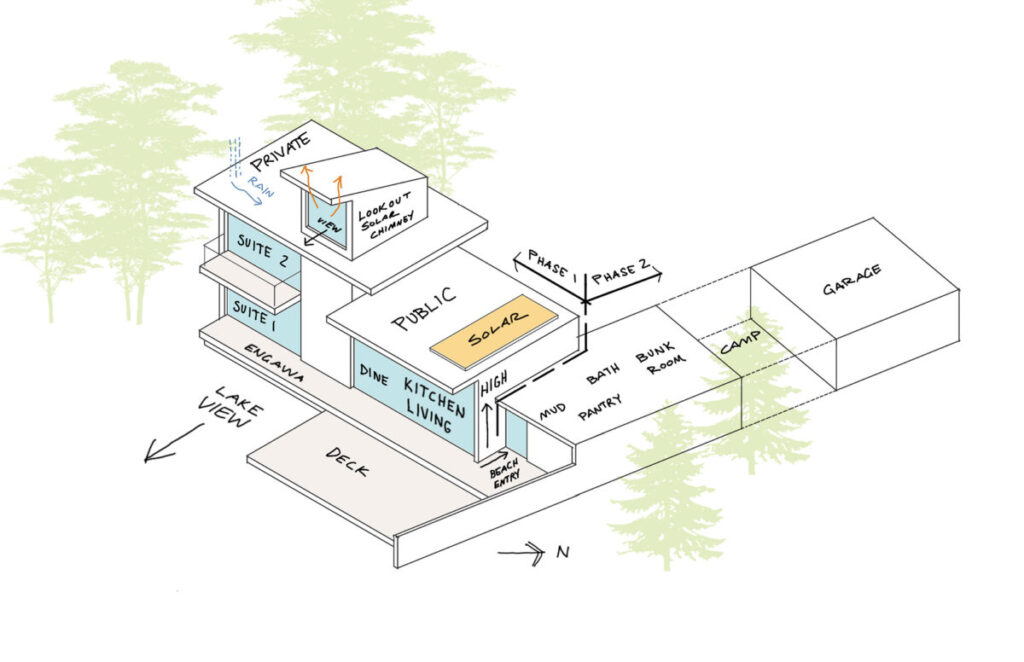
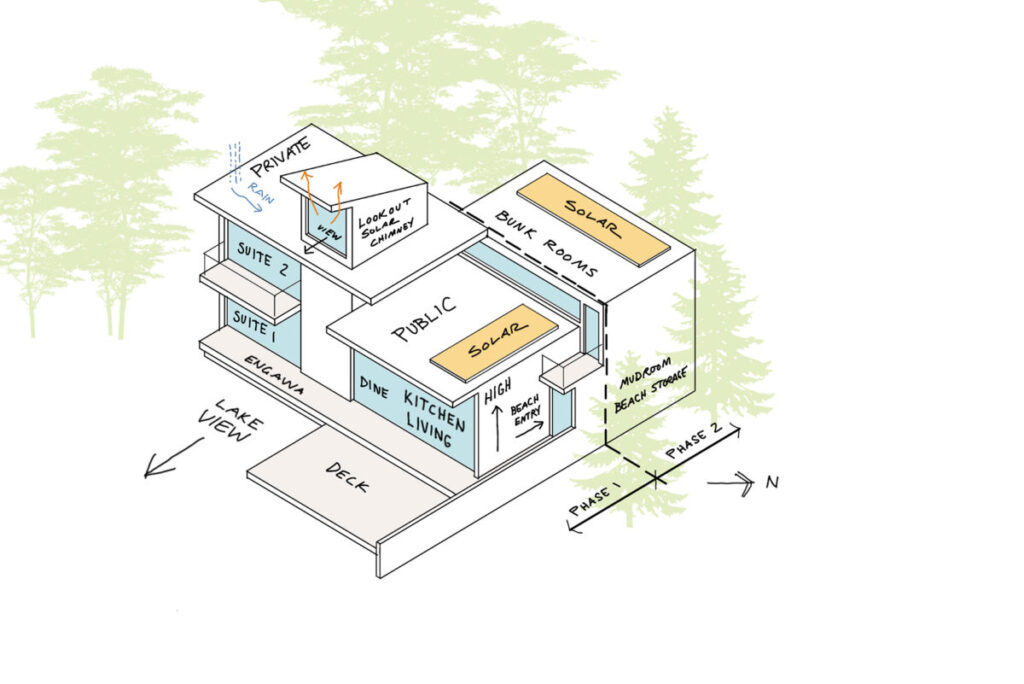
Massing studies developed during the schematic design process, exploring different approaches.
Engawa and Japanese Architectural Influences
To honor the family’s Japanese heritage, we incorporated several architectural elements inspired by traditional Japanese building techniques. Where the walls meet the floors, you can see touches inspired by old Kyoto temples. Light moves across the rooms, as it does in homes with tatami mats, and the spaces flow from one to the next, like a path through a Zen garden. Even the eaves slope gently downward, reminiscent of the roofs on old tea houses.
A Japanese-style engawa (縁側/掾側) wraps along the lakeside portion, creating a transition between the interior and the beach landscape. Traditionally, an engawa acts as a circulation space and threshold, neither fully indoors nor outdoors, and here it becomes an architectural edge connecting the home to the shoreline.
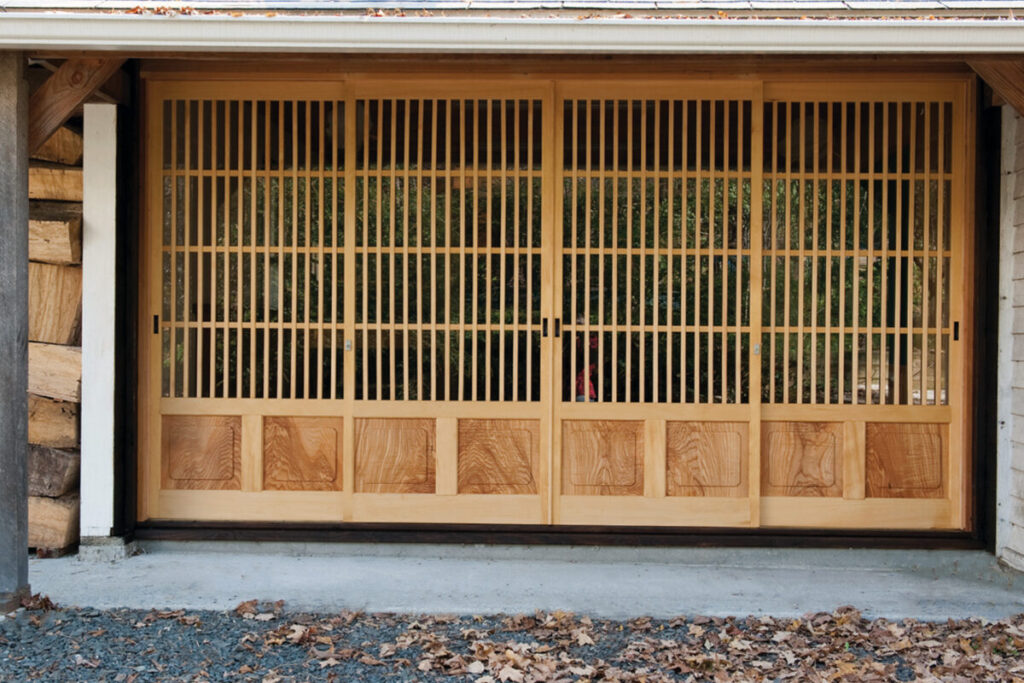
Exposed wood beams reference the craftsmanship and precision of Japanese joinery, and several windows are shaded with custom wood lattice screens inspired by Kōshi-do (格子戸). The screens help reduce the heat during warmer months and add texture to the exterior facade.
Inside, the cedar screen pattern repeats with guardrails, cabinetry, and millwork throughout.
Materials Designed for Northern Michigan Winters
Material choices focused heavily on resilience, longevity, and low maintenance in a harsh lakefront climate.
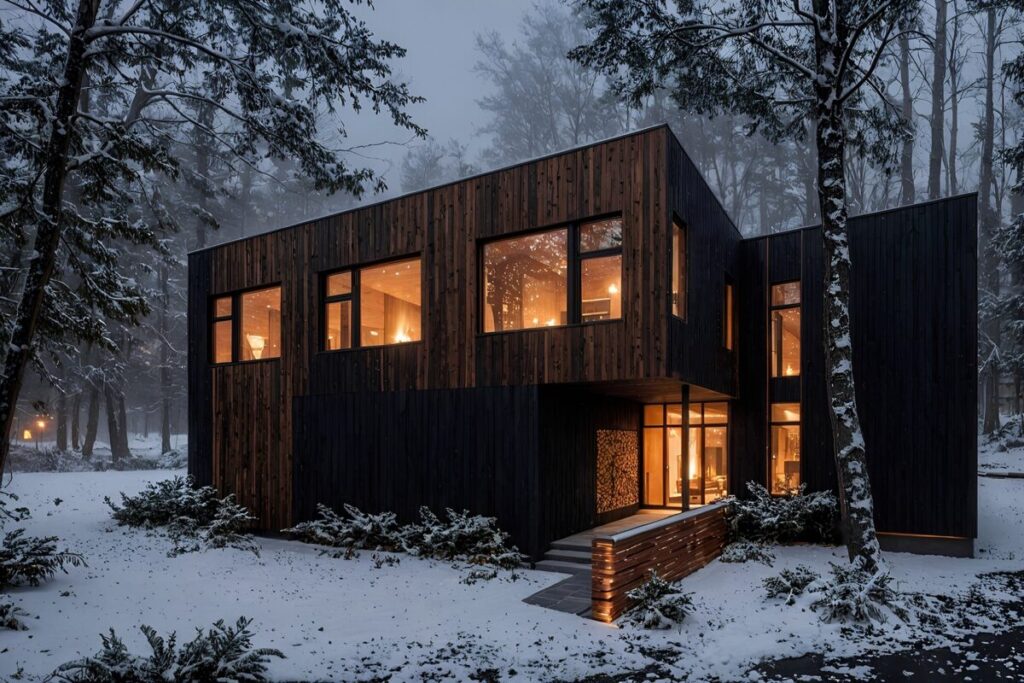
The primary structure is clad in weathering corten steel, while the main wall surfaces combine charred wood siding (shou sugi ban) with aluminum composite panels. Together, the materials create a durable exterior that withstands snow, moisture, freeze-thaw cycles, and heavy seasonal exposure.
Locally quarried stone forms the backdrop of the outdoor living room, anchoring the fireplace and outdoor kitchen and connecting the project to regional materials and craftsmanship.
Inside, rift-sawn white oak millwork adds warmth and natural texture. Large pocket doors allow rooms to open up or close off as needed, and built-in cabinetry provides storage.
When sunlight intensifies, the Japanese wooden lattice door known as Kōsh-ido (格子戸) helps shade the glass. The slatted wood screens soften direct sunlight, allow air to circulate, and provide privacy while still allowing openness and an outdoor connection.
Sustainability and All-Electric Design
Sustainability was considered early on in the design process. Designed as fully electric, the house operates without gas, relying instead on high-efficiency heat pumps, radiant-heated floors, and rooftop solar panels to reduce energy use over time.
We approached material selection with the same long-term perspective. Durable, low-maintenance finishes were chosen to extend the life of the home and reduce the need for future replacement. Locally sourced stone brings a sense of place while reducing the environmental impacts associated with transporting materials over long distances.
Site Planning Along the Shoreline
Building along the lakefront involved more than designing the house. Because the property falls within the shoreline jurisdiction area, the project required careful coordination of grading, erosion control, beach access, septic design, and well placement.
We made every site decision with the lake in mind, balancing access and views with responsible stormwater management, slope stability, and long-term shoreline stewardship. As construction nears completion, new landscaping and a crushed gravel driveway will help tie the home more closely to its setting.
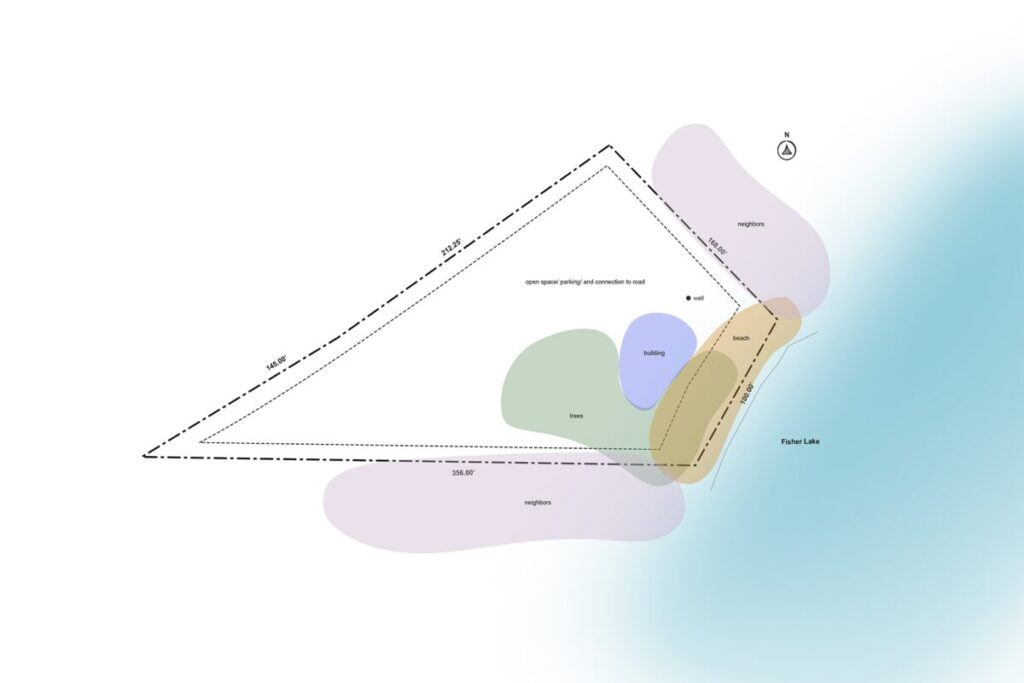
Site analysis – how the landscape shaped the design
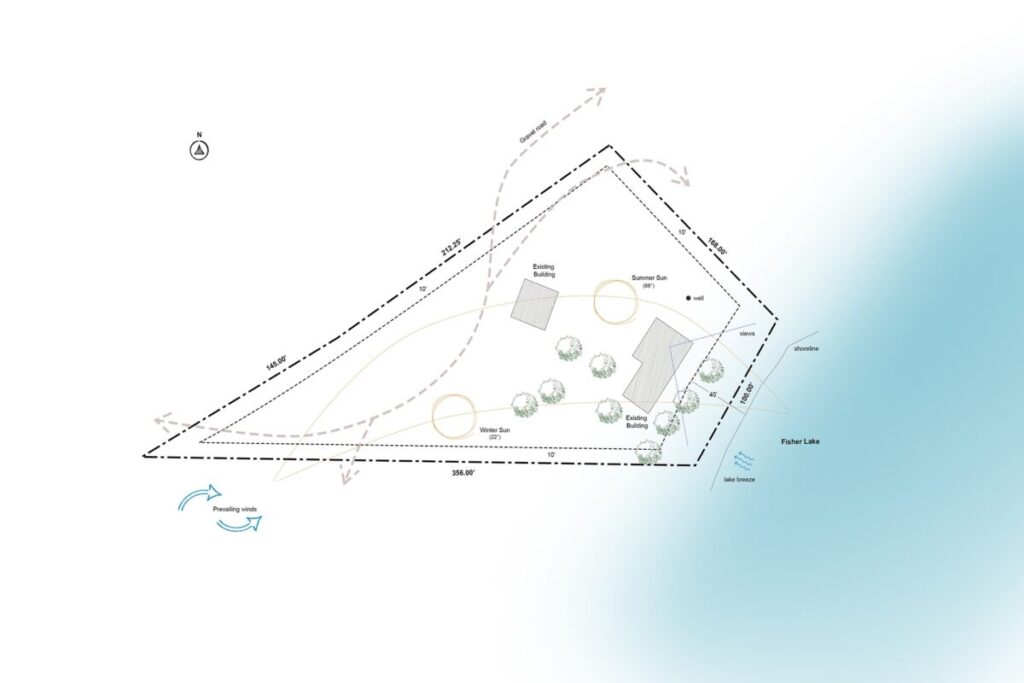
A Modern Lake House Designed for the Landscape
The Veranda Lake House was shaped by its setting at every scale. Each decision, from the outdoor spaces and materials to the energy systems, was made with the climate, the landscape, and the lakefront setting in mind. The goal was to design a home that feels connected to the lake and its environment year-round.