For the pilot who has spent years driving forty-five minutes to the airport before dawn, the concept of a hangar house is less a luxury than a logical conclusion. Walk through the kitchen, open the door to the bay, and your aircraft is right there with no tie-down fees, no courtesy car, and no wasted Saturday morning on the expressway.
For the right client, an airplane hangar with living quarters is the most rational home they will ever own.
With that being said, airplane hangar house design is one of the most architecturally demanding. A residential airplane hangar requires a licensed architect to reconcile a clear-span aviation structure with a comfortable, code-compliant residence, two very different building types. And this is on a single lot within a community that has its own operational rules, runway access standards, and aesthetic guidelines.
Do all this well, and the result is a home that is genuinely unlike anything else. Do it without that expertise, and you are looking at a structure that fails as both a hangar and a house.
At moss Design, we bring licensed architectural and design experience to hangar house design projects across Chicago. This guide covers what the design process actually involves, from site and airpark constraints through building code, structural strategy, and the residential design moves that make an airplane hangar house feel like a home.
What Is a Hangar House and Who Builds One?
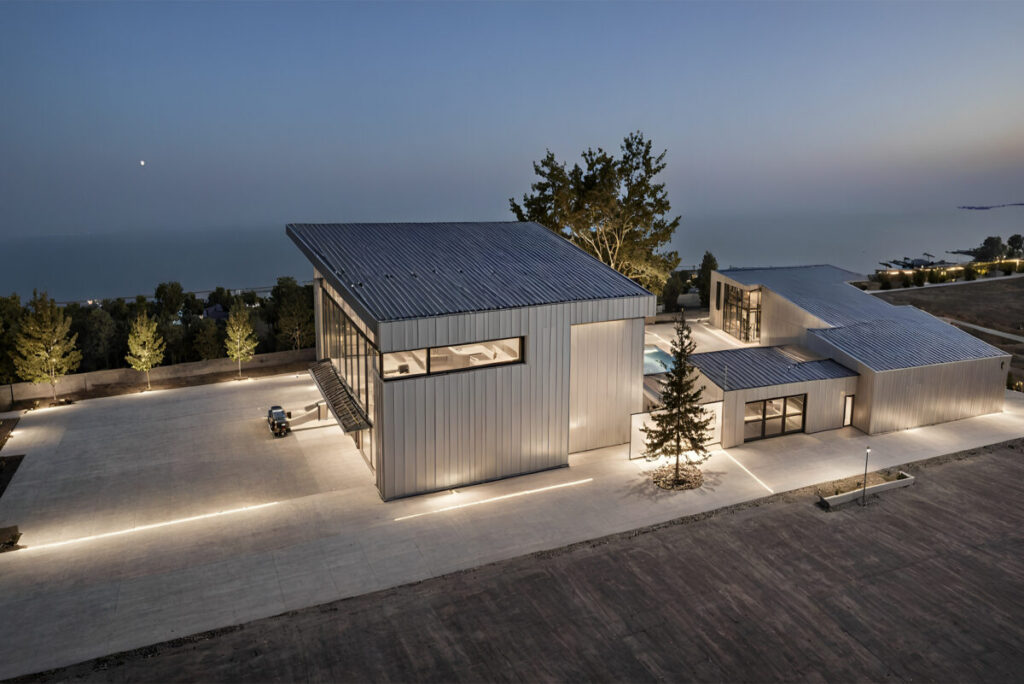
A hangar house, also called a residential airplane hangar, a fly-in home, or an airpark home, combines aircraft storage with full residential living quarters on a single property within a private airpark community. Its configuration ranges from a conventional house with an attached hangar (structurally similar to a deep three-car garage) to a fully integrated structure where the living program wraps around or sits above the aircraft bay.
Those with a deep, ingrained love of aviation find this the ultimate level of airplane ownership intimacy. With home and hangar merged, the line between indoor living and aircraft storage seamlessly disappears.
The client profile for a residential airplane hangar is typically a private pilot, often a successful professional, who wants to eliminate the friction between daily life and flying. Communities built around this idea exist across the country, including right outside Chicago.
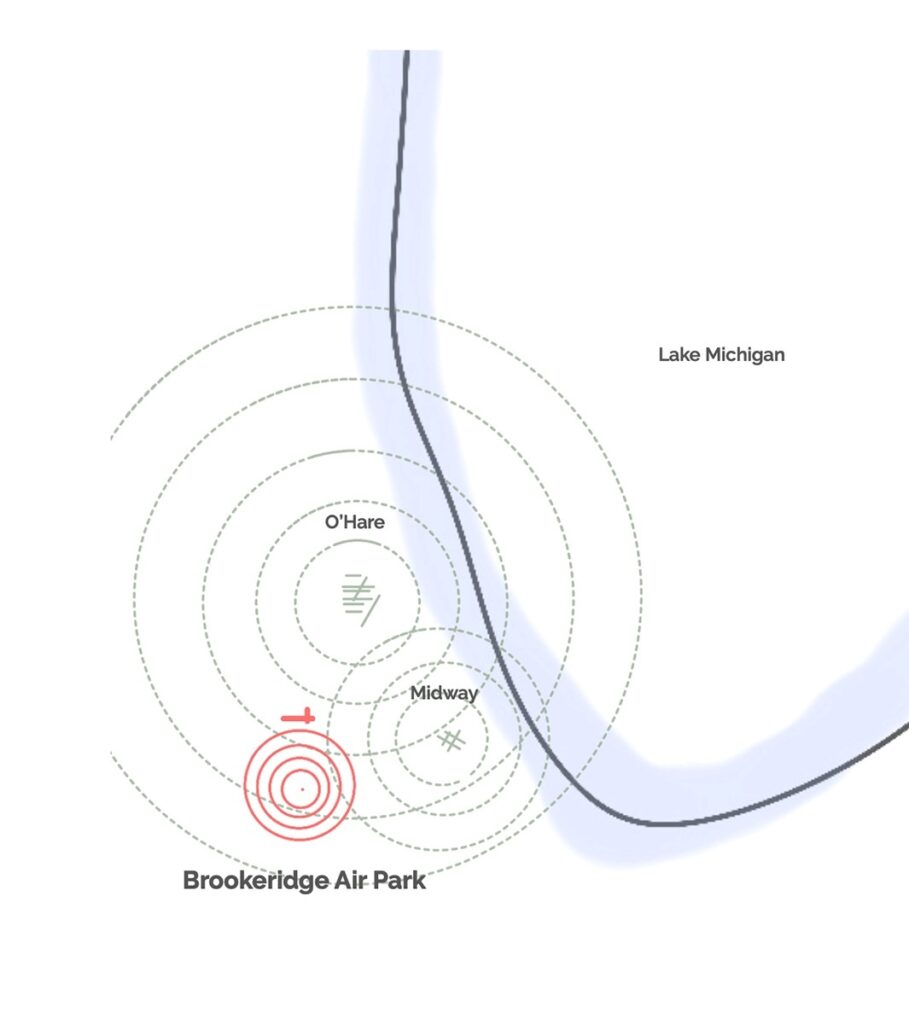
Brookeridge Residential Airpark in Downers Grove, Illinois, just 25 miles from downtown Chicago, offers pilots the ability to walk directly from their homes into their hangars. No more time spent driving to and from an airport. Brookeridge maintains both paved and turf runways, an instrument approach, and fuel facilities, making it a genuine operational base for serious aviators and an ideal setting for a well-considered hangar home design.
Airpark Rules Come Before Hangar Home Design
The single most common mistake in airplane hangar house design is beginning with a floor plan before reading the airpark’s covenants, conditions, and restrictions. Every residential airpark operates under its own set of rules governing lot coverage, hangar door type, minimum house square footage, exterior materials, taxiway setbacks, and landscaping near runways. These are binding design constraints that shape every decision in hangar construction.
Some airparks require a minimum residence size before issuing a private airplane hangar permit. Others dictate that specific door styles be used across all hangars for visual consistency, a requirement that can mean a $15,000 to $20,000 difference in door cost depending on the specified mechanism.
Vegetation height limits near taxiways are enforced for aircraft safety, not just aesthetics. Fencing on the runway side of a property may also be prohibited entirely.
Understanding the full Declaration of Covenants, Conditions, and Restrictions (CC&R), airport operations manual, and the local building department’s interpretation of hangar and residential code is where any competent aircraft hangar design project begins. This research is the foundation of the project.
Building Code: What the IBC Requires for a Residential Airplane Hangar
A residential airplane hangar attached to or located on the same lot as a dwelling is governed by the International Building Code (IBC) as a special occupancy type. The requirements are specific, and they carry real implications for hangar home design.
A hangar shall not be attached to a dwelling unless separated by a fire barrier with a fire-resistance rating of not less than one hour. That separation must be continuous from the foundation to the underside of the roof, and unpierced except for doors leading to the dwelling unit. Doors into the dwelling must be equipped with self-closing devices and have a noncombustible raised sill not less than four inches in height. Openings from the hangar directly into a sleeping room are not permitted.
Floor Plan Shaped by Building Code
This last point shapes the floor plan of any airplane hangar with living quarters more than any other single code requirement. You cannot connect a hangar bay directly to a bedroom. The transition from the hangar to the living space must pass through a general-purpose room, hallway, mudroom, or kitchen. That transition zone, which most experienced designers treat as a programmatic opportunity rather than a code compliance exercise, is one of the most interesting spaces in a well-designed hangar house.
The code also requires that electrical, mechanical, and plumbing systems within the private airplane hangar be independent of those in the dwelling. Heating equipment must be placed in a room separated by two-hour fire barriers with exterior or vestibule access. Floors must be graded and drained to prevent the accumulation of fuel. These requirements drive real structural and MEP coordination decisions that need to be resolved at the design development stage, not in the field.
Working with an architect who also holds a general contractor license, as moss Design does, closes the gap between what the drawings show and what gets built during residential airplane hangar construction.

Designing an Airplane Hangar With Living Quarters
The aircraft determines the hangar house’s structure. This is the governing principle of aircraft hangar design, and it must be established before the residential airplane project is laid out.
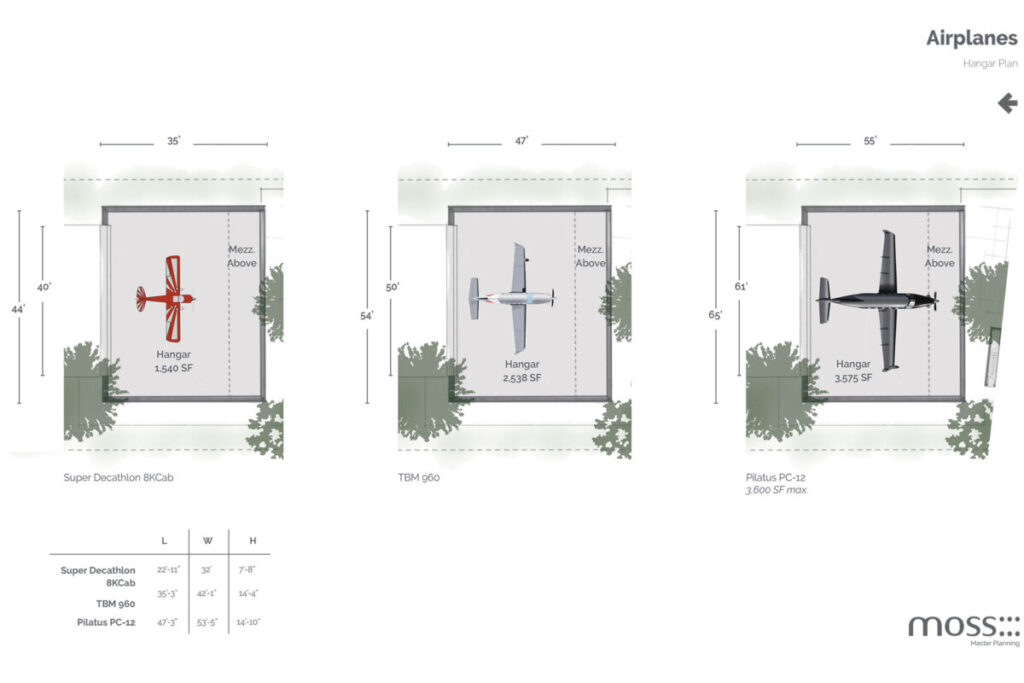
Single-engine aircraft typically require 40- to 60-foot clear spans, while twin-engine aircraft usually need 60- to 80-foot clear spans. Corporate jets often require spans of 80 to 120 feet or more. Multiple aircraft may even need spans exceeding 150 feet.
Door height, door width, and apron turning radius are sized to the specific aircraft being housed, rather than to a generic airplane hangar template.
The structural system for the hangar bay typically involves steel rigid frames or post-frame construction that can achieve those clear spans without interior columns. The residential portion can use conventional wood framing or light-gauge steel.
The critical detail is how these two systems meet at the fire-rated separation wall, which must run continuously from the foundation slab to the underside of the roof. Getting this junction right in the structural drawings prevents expensive field changes during hangar construction.
Slab elevation also matters in residential airplane hangar design. The hangar floor is typically kept low and sloped for drainage. The residential floor is typically elevated above the hangar slab, sometimes by a full story, with living quarters above the bay, and sometimes by just a step-up threshold at the transition.
Both configurations for designing a hangar house work architecturally; they produce very different floor plans and structural approaches, and the right choice depends on the site, the lot’s relationship to the taxiway, and the client’s airplane hangar with living quarters.
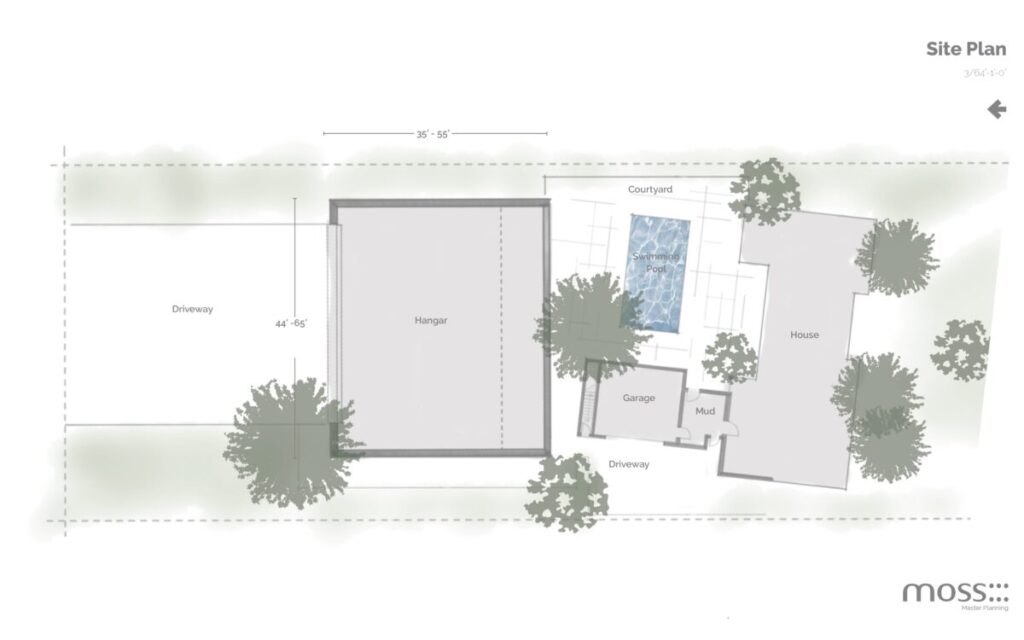
Project site and hangar plan studying multiple hangar configurations based on the aircraft types the client intends to house
Hangar Home Design: Making the Residential Side Feel Like a Home
A technically correct airplane hangar house that feels cold and industrial is a design failure. The residential project in any airplane hangar with living quarters deserves the same level of architectural care as any custom home, which means designing for how the occupants actually live, not retrofitting whatever square footage was left over after the hangar bay was dimensioned.
Trying to retrofit a hangar into a generic house plan is expensive and frustrating. A hangar home should reflect the owner’s lifestyle and aviation passion while remaining a warm, welcoming space for the whole family, including those who may not fly.
In practice, good hangar home design means carefully thinking through the transition zone. The door from the private airplane hangar opens into a space with potential. Perhaps it’s a mudroom, workshop, or a pilot’s lounge that decompresses the industrial character of the bay before the occupant reaches the kitchen or living room.
Natural light is often in short supply on the hangar side of the building; compensating with clerestory windows, skylights, or a courtyard on the residential side makes a substantial difference in how the home feels day-to-day.
Ceiling heights, material continuity between inside and outside, view corridors to the airfield, and the placement of living spaces relative to taxiway noise are all design moves that distinguish a resolved airplane hangar house from one that was simply permitted.
Our residential architecture services walk through each phase of the process, from site analysis to move-in, for exactly this kind of custom residential airplane hangar project.
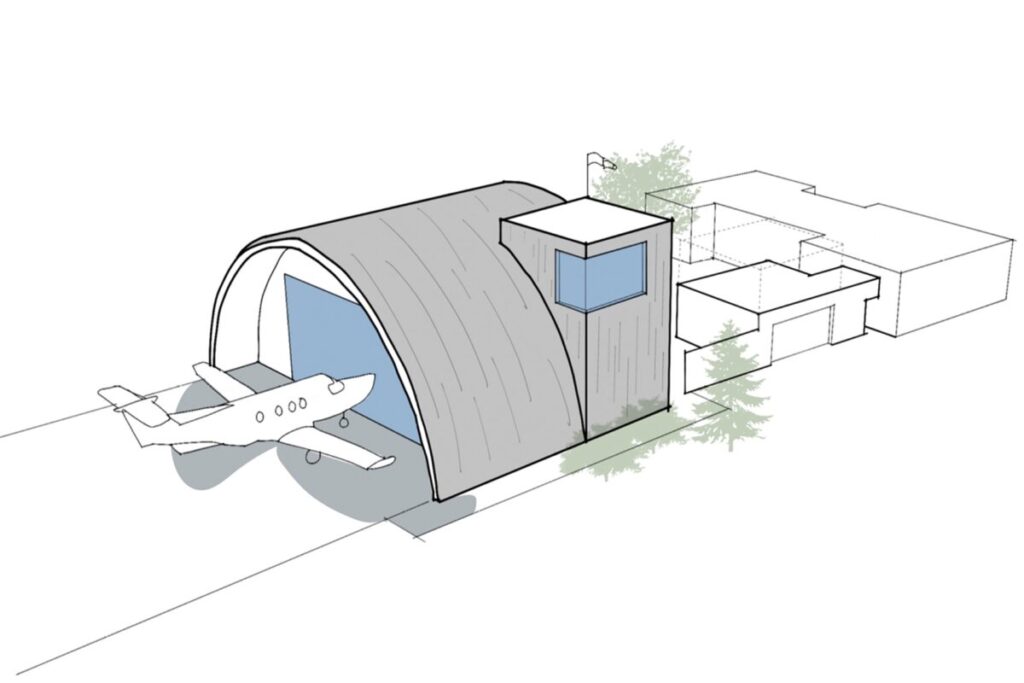
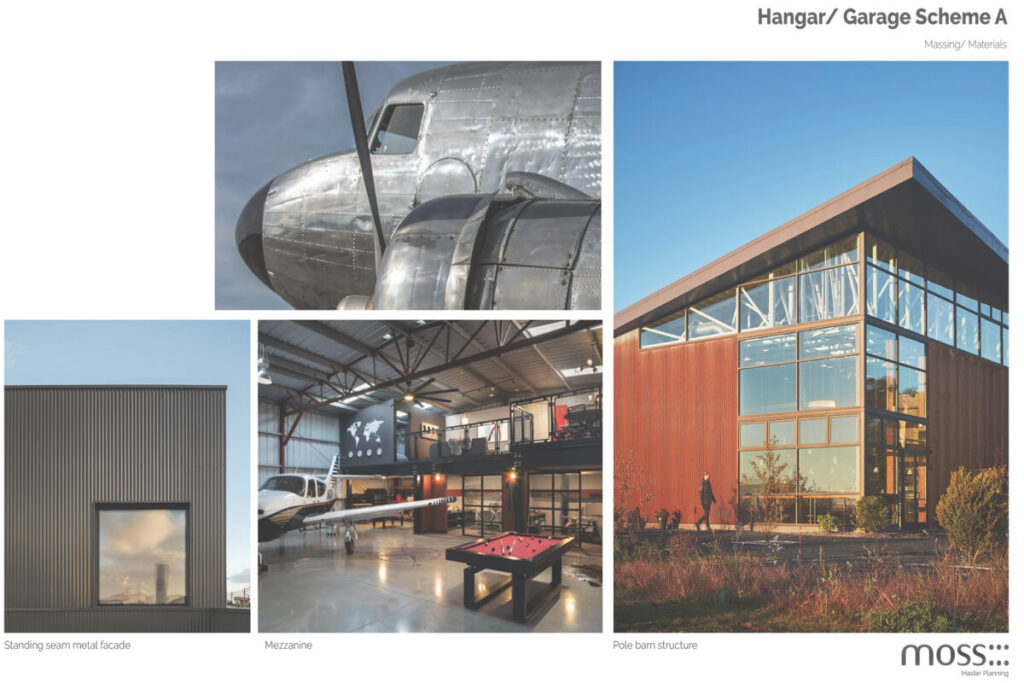
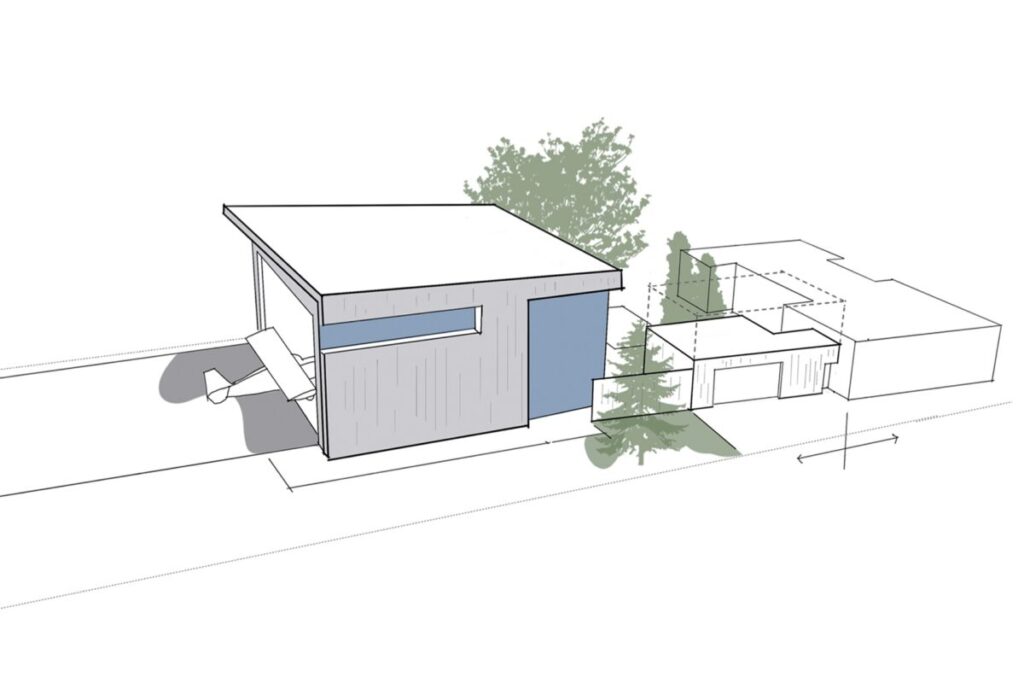
Massing schemes developed during the master planning phase to study scale, form, and site relationships for the client
Building An Airplane Hangar House Near Chicago
For anyone considering a residential airplane hangar project in the Chicago metro area, Brookeridge Airpark in Downers Grove represents one of the most accessible and well-established fly-in communities in the region.
With proximity to downtown Chicago, established operational infrastructure, and an active pilot community, Brookeridge is the kind of setting where well-executed hangar-home design adds genuine long-term value to the owner’s daily life and the community as a whole.
The design and permitting process for any airplane hangar house in an airpark begins with three parallel tracks: the airpark’s own approval process, the local building department’s review, and the FAA considerations that apply if the airstrip has federal funding obligations.
Managing all three simultaneously, with a single team that understands how aircraft hangar design decisions affect each track, is where working with an integrated architecture and construction firm pays for itself.
Ready to Design Your Airplane Hangar House?
A well-designed airplane hangar with living quarters is one of the most specific and satisfying architectural programs a residential client can pursue. It asks for rigorous technical thinking and genuine design ambition in equal measure, and it rewards both with a home that no standard subdivision will ever replicate.
We are a multiple award-winning architecture and design firm based in Chicago. Our team manages residential airplane hangar projects from concept through completion. This process includes site analysis, airpark coordination, building permits, structural design, and hangar construction, all handled by a single group of architects who understand both sides of the bay door.
Reach out to moss Design if you’re thinking about an airplane hangar with living space. We’re happy to talk it through.