As the needs and desires of homeowners evolve, modern residential architecture firms are evolving too, prioritizing how the home performs as much as its aesthetics. Utilizing passive design strategies helps today’s families build a home that maximizes comfort, efficiency, and sustainability without relying solely on mechanical systems. When it comes to residential architecture, passive strategies are particularly valuable in climates like Chicago, where seasonal extremes require thoughtful, responsive design.
At its core, passive design refers to architectural techniques that leverage natural elements like sunlight, wind, thermal mass, and insulation to regulate indoor environments. Rather than depending on HVAC systems alone, these strategies work with the local climate to maintain comfort year-round. If you’re a homeowner who has been searching for “residential architects near me,” understanding these principles is a great place to start when taking on the daunting task of researching all the top architects in Chicago.
Below, we’ll explore key passive strategies used by modern architects like moss Design to help you get a clearer picture of the home you’ve been dreaming of designing.
1. Solar Orientation
One of the foundational passive strategies in residential architecture is solar orientation, which is the positioning of a home to maximize beneficial sunlight while minimizing overheating. At Chicago’s latitude, the sun sits lower in winter and higher in summer, creating opportunities for seasonal optimization.
Modern residential architecture firms like ours try to carefully orient living spaces toward the south to capture winter sunlight, a sustainable way to reduce heating costs. At the same time, we can use overhangs or shading devices to block the high summer sun and help prevent the space from feeling too warm.
For homeowners looking for residential architects for their next project, this strategy translates into tangible comfort in the form of brighter interiors in winter, cooler spaces in summer, and lower energy costs.
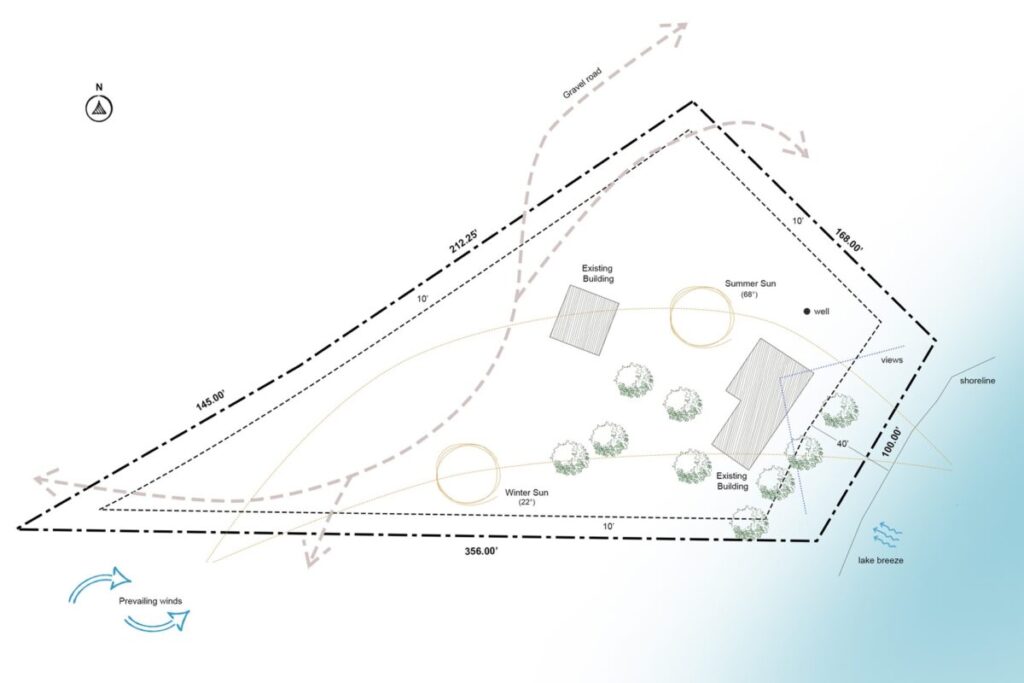
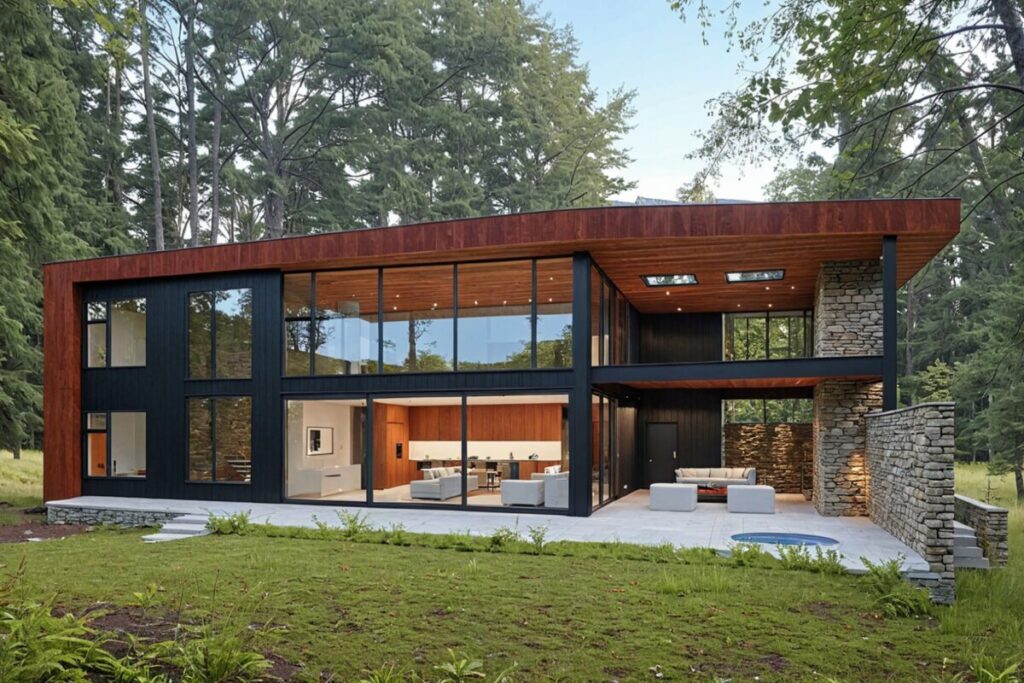
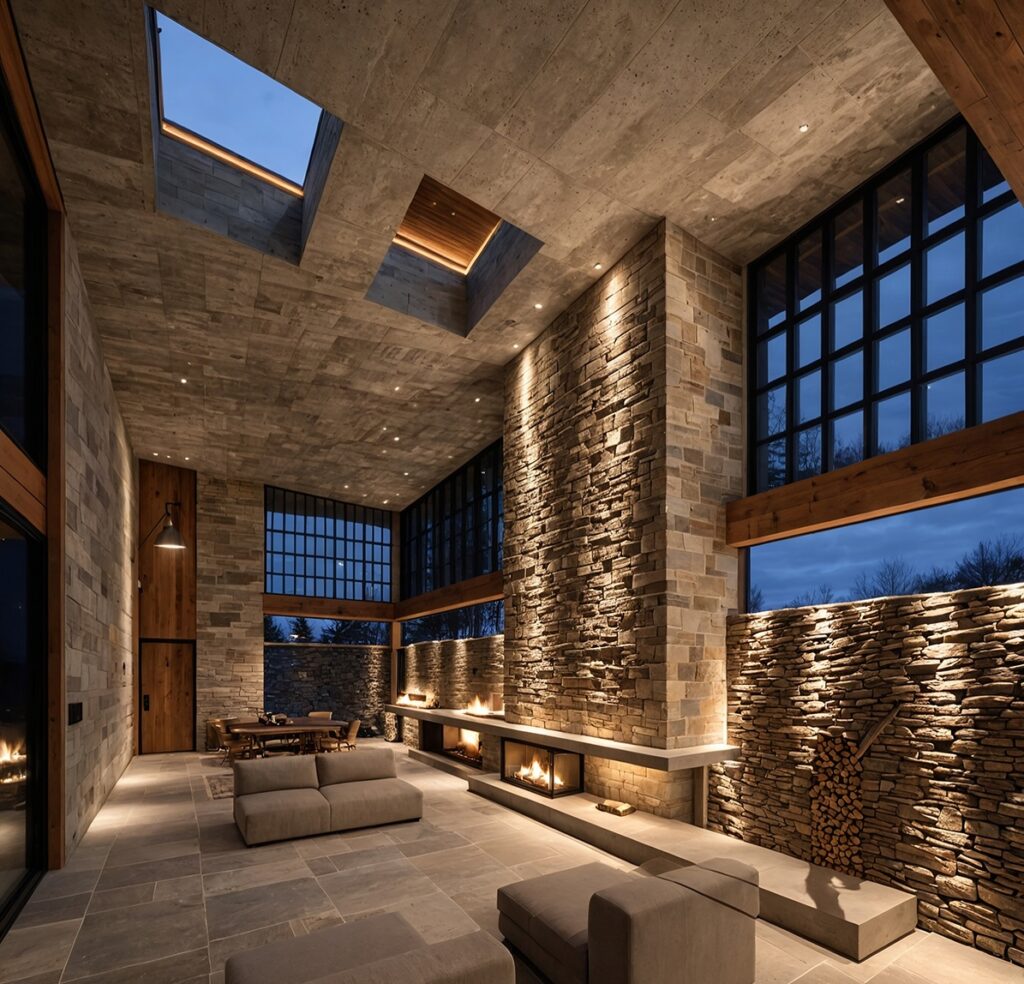
Site analysis for a lakeside residence mapping sun and wind patterns, with exterior and interior renderings below.
2. High-Performance Insulation
Another essential passive strategy is creating a robust thermal envelope. This includes walls, roofs, and floors designed to minimize heat transfer. Chicago modern architecture has to consider the city’s wild temperature swings and seasons, making insulation crucial to maintaining consistent indoor temperatures.
Leading modern residential architecture firms specify advanced insulation materials and construction techniques that reduce thermal bridging, which are areas where heat escapes more easily. Continuous insulation, airtight construction, and high-performance windows all contribute to this system. When researching “residential architects near me,” homeowners should look for expertise in envelope design. Skilled modern architects understand that a well-insulated home not only improves comfort but also reduces reliance on mechanical heating and cooling systems.
3. Natural Ventilation
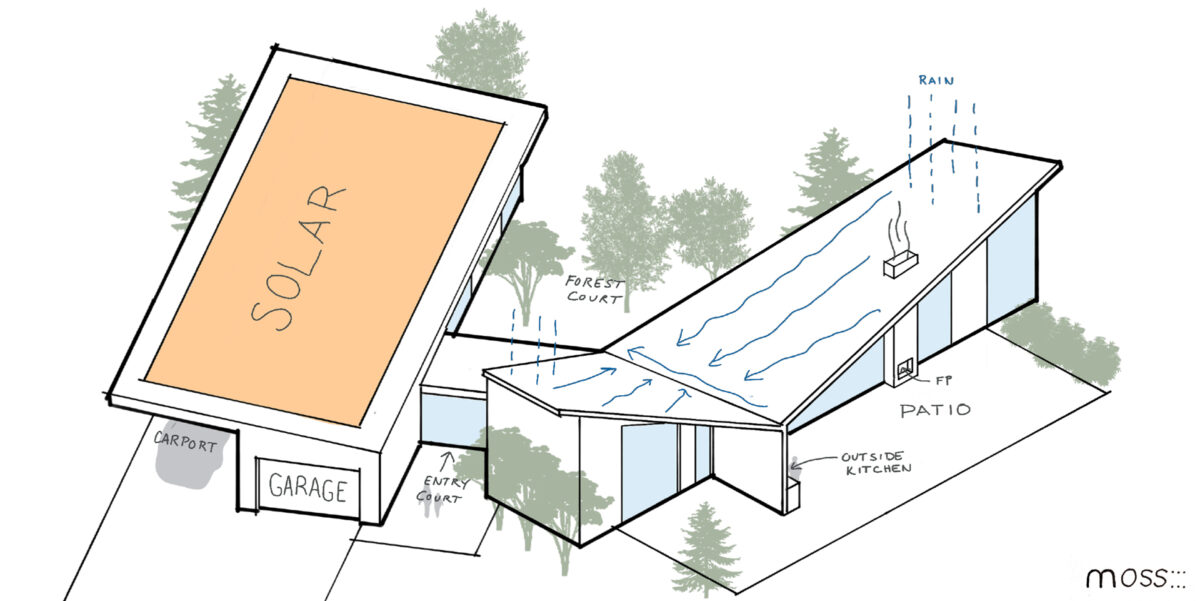
Natural ventilation is a passive strategy that uses airflow to cool and refresh interior spaces. By strategically placing windows, vents, and openings, modern residential architecture firms can create cross-ventilation paths that draw in fresh air and expel warm air. In residential architecture, this might involve aligning windows on opposite sides of a home or incorporating operable clerestory windows to release rising heat. In Chicago, where summers can be humid, this strategy can significantly enhance indoor comfort without overusing air conditioning.
Homeowners seeking top architects in Chicago often prioritize this feature for its simplicity and effectiveness. Thoughtful ventilation design is a signature of Chicago modern architecture, blending comfort with energy efficiency.
4. Thermal Mass
Thermal mass refers to materials that absorb, store, and slowly release heat. Common examples include concrete, brick, and stone. In passive residential architecture, these materials help regulate indoor temperatures by smoothing out fluctuations.
During the infamous Chicago winters, thermal mass absorbs heat from the sun during the day and releases it at night, keeping interiors warmer. In the summer, it helps stabilize temperatures by absorbing excess heat. Modern residential architecture firms integrate thermal mass into floors, walls, or feature elements to enhance performance without sacrificing aesthetics. For those researching residential architects, this strategy demonstrates how material selection plays a critical role in comfort.
5. Shading Systems
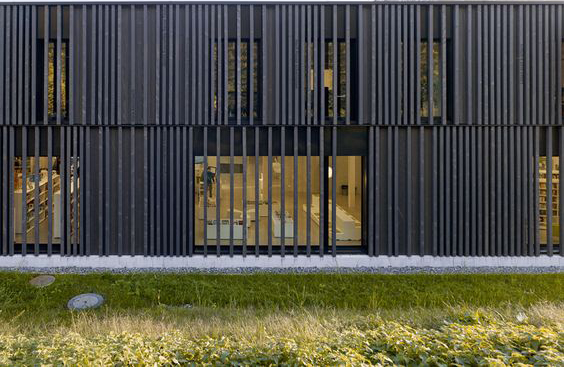
While sunlight is beneficial, too much can lead to overheating. That’s where shading systems can be really helpful. These include architectural elements like overhangs, louvers, pergolas, and even landscaping.
In Chicago modern architecture, shading is often designed as an integral part of the building’s form. Modern architects use precise calculations to determine the optimal size and placement of shading devices based on seasonal sun angles.
For homeowners stuck in a constant Google search of “residential architects near me,” this level of detail can help solidify your decision when narrowing down firms. Effective shading reduces cooling loads and enhances visual comfort, making it a cornerstone of passive residential architecture.

6. Window Design and Placement
Windows are one of the most influential elements in passive design. Their size, type, and placement can dramatically impact energy performance and comfort. Modern residential architecture firms prioritize high-performance glazing, including double or triple-pane windows with low-emissivity coatings. In addition, window placement is carefully considered to balance daylighting with heat gain and loss.
In residential architecture, south-facing windows are often maximized for winter solar gain, while east and west exposures are minimized or shaded to reduce overheating. For those seeking top architects in Chicago, expertise in window design is a clear indicator of a firm’s commitment to passive strategies.
7. Site Integration: Working With the Environment
Passive design doesn’t stop at the building structure; it also includes the build site. Modern residential architecture firms analyze factors like topography, vegetation, and prevailing winds to inform design decisions.
For example, trees can provide natural shading, while landscaping can direct airflow or reduce heat buildup around the home. In urban settings, thoughtful site planning can mitigate the heat island effect common in cities like Chicago. This holistic approach is a defining characteristic of Chicago modern architecture. Homeowners looking for residential architects who understand the nuances of site integration will benefit from more comfortable and resilient homes.
Why Passive Strategies Matter in Chicago
Chicago’s climate presents unique challenges: cold winters, hot summers, and significant temperature swings. Passive strategies enable modern residential architecture firms to address these conditions efficiently and elegantly. By reducing reliance on mechanical systems, these approaches not only lower energy costs but also improve indoor air quality and overall comfort. For homeowners exploring “residential architects near me,” prioritizing passive design is a smart investment in long-term performance.
Selecting among the top architects in Chicago involves more than reviewing portfolios. It requires understanding how a firm approaches performance and sustainability. Firms like moss Design exemplify how modern architects can integrate passive strategies into every aspect of residential architecture. Whether you’re building a new home or renovating an existing one, working with experienced professionals ensures that these strategies are implemented effectively. The result is a home that feels comfortable year-round, responds to its environment, and reflects the best of Chicago modern architecture.

Design an Intentional Home with moss
Passive design is a fundamental shift in how modern residential architecture firms approach building design. By leveraging natural forces and thoughtful planning, these strategies create homes that are both beautiful and highly functional. For homeowners, finding residential architects who understand passive strategies like our team at moss Design can provide a valuable framework for evaluating a firm’s design expertise. From solar orientation to thermal mass, each element plays a role in shaping a more comfortable, efficient living space. When it comes to Chicago modern architecture, where the elements are as extreme and surprising as its sports and opinions on hot dog toppings, the adaptability and practicality of passive design are utterly essential. Contact moss Design today to take the first step on your next idea.