Designing a lake house in Michigan is one of the most rewarding and demanding challenges in luxury residential architecture. The payoff is extraordinary, featuring floor-to-ceiling water views, afternoon breezes off the lake, and a connection to the natural landscape that inland sites can rarely offer.
However, that same landscape comes with real constraints. Fluctuating water levels, prevailing winds, freeze-thaw cycles, and shoreline setbacks require a level of site-specific thinking that goes far beyond what a standard residential design demands.
Getting it right means working with luxury residential architecture firms that understand the Great Lakes environment from first principles, not just from photographs.
At moss Design, we’ve designed and built along Lake Michigan’s eastern shore from the dunes of southwest Michigan to the bluffs of the Leelanau Peninsula.
This post examines the architectural decisions that matter most when building a Michigan lake house and why each should be shaped by the site’s specific conditions. Not pre-determined by a plan book.
Why a Lake House in Michigan Demands a Different Design Approach
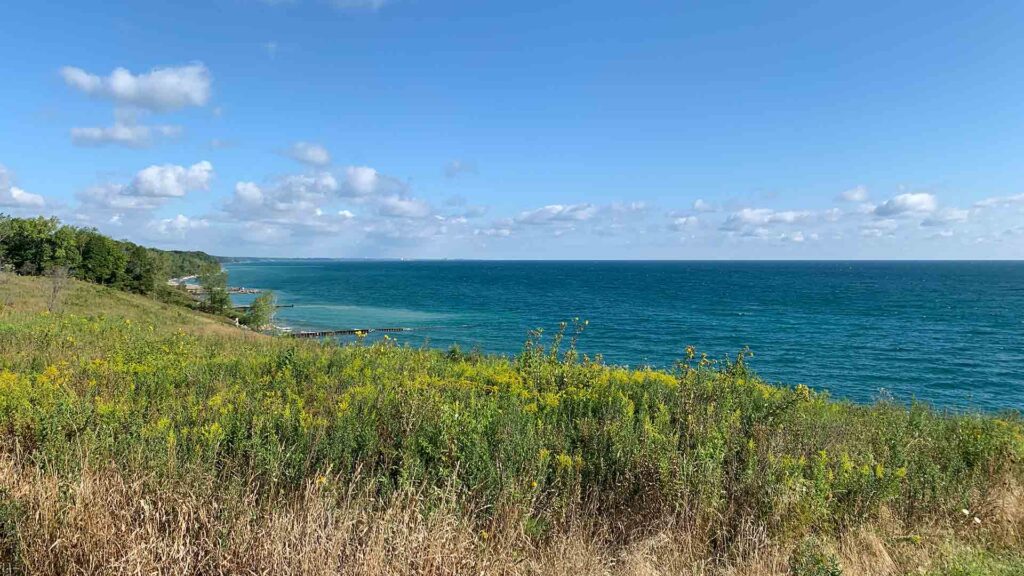
Michigan’s Great Lakes shoreline is a living, shifting edge condition. The past decade has seen substantial variability in water levels across the Great Lakes, including record lows in 2013 and rapid rises since 2014 that set new record highs. For anyone planning a lakefront home, this is a foundational design constraint.
NOAA’s coastal management programs work with federal, state, and local governments to address challenges presented by fluctuating water levels, including erosion, flooding, and habitat loss.
Understanding these dynamics early in the design process, before a single line is drawn, separates a resilient home from one that requires costly remediation after the first high-water season.
Treating the floodplain review as foundational, not as a late-stage permitting formality, is the approach experienced luxury residential architecture firms take on every lakefront project. The shoreline setback requirements vary by county and municipality across Michigan, and in some cases, work near the water requires additional state review.
Starting with a thorough site analysis, including topography, bluff stability, and adjacency to the ordinary high-water mark, sets the entire project up for success.
Residential Design for Lake Michigan Views: Orientation, Framing, and Sequence
Lead with Orientation, Not Just Windows
The instinct on a lakefront site is to put glass everywhere. The better instinct is to be precise about where and why. Orientation is the first move in any lake house design. Studying the region’s natural systems and mapping patterns like wind frequency and direction, sun path, and seasonal temperatures helps orientation, one of the most important decisions in passive building design.
For most Michigan lake houses on the western shoreline, the water sits to the west. That means the primary living spaces should face the lake, but south-facing glazing still plays a critical role in passive solar gain during the winter months. Ample south- and west-facing windows provide comfort and passive heating in winter, while a solid, nearly windowless north facade avoids heat loss in the cold months.
Frame Views, Don’t Just Open Them
The most memorable lake houses don’t treat views as a commodity to be maximized by square footage of glass. They curate them. Views can be wide when you want openness, tightly framed when you want calm, and filtered when privacy or solar control matters more.
In a well-sited lake house, there’s a dialogue between the interior and the exterior, and the home flows seamlessly between both. Every part of the home has a view of the water.
Achieving that quality requires the deliberate sequencing of a compressed entry that opens into an open living space, a hallway that frames a sliver of the horizon, and a sleeping room with a low sill that captures only the waterline. These are the moves that make a home feel architecturally refined rather than simply transparent.
For clients pursuing custom home design services, this view-sequencing conversation is one of the most creatively rewarding parts of the early schematic design phase.
Designing for Wind: Cross-Ventilation, Passive Cooling, and the Building Envelope
Michigan lake houses benefit from prevailing lake breezes in ways that urban residential projects cannot. The challenge is capturing that natural cooling effectively while also protecting the building envelope from the wind-driven rain and humidity that those same breezes carry.
Studies of prevailing winds can determine window placement to take advantage of natural ventilation, making it possible to design a home with no air conditioning at all. The strategy involves positioning openings to create cross-ventilation across primary living spaces. Cool air enters through lower, lake-facing openings, while warm air exits through higher windows on the opposite facade.
Protecting the Envelope Against Wind-Driven Moisture
Although natural ventilation and envelope resilience require careful detailing, they’re not a contradiction. Lakefront homes are exposed to more wind-driven rain, more humidity cycling, and more severe freeze-thaw stress than inland sites. Rainscreen assemblies, disciplined flashing at every penetration, and material compatibility across cladding systems are where the building’s performance and longevity are truly determined.
This is where working with residential architects who also hold a general contractor license becomes a meaningful advantage. The gap between what a drawing shows and what gets built in the field is where most envelope failures begin.
Our team at moss Design structures the full design/build process for residential clients, including the construction administration and permitting work that keeps lake house projects on track.
Designing for Water: Shoreline, Drainage, Roof Form, and Materials
On a lakefront site, the roof is actually the water management system. Butterfly roofs can direct drainage away from the foundation and into gravel beds and a dry well cistern for later use in irrigation, funneling water away from vulnerable shoreline bluffs during heavy storms.
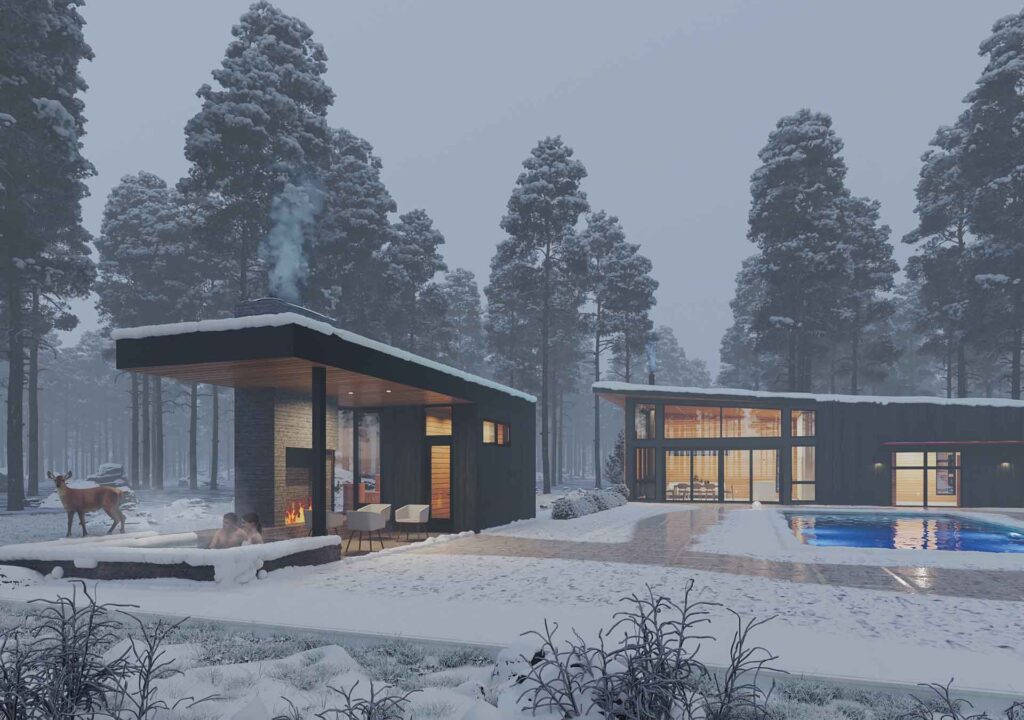
Dramatic roof overhangs serve a second function: they extend the usable outdoor season. A covered terrace on the lake-facing elevation turns what would otherwise be an unusable space during spring rain or summer heat into one of the most occupied parts of the home. Roof geometry, overhang depth, and canopy placement should be designed for how the home will actually be lived across all four Michigan seasons rather than just the calendar week of peak summer.
Durable, Regionally Honest Materials for a Lake House in Michigan
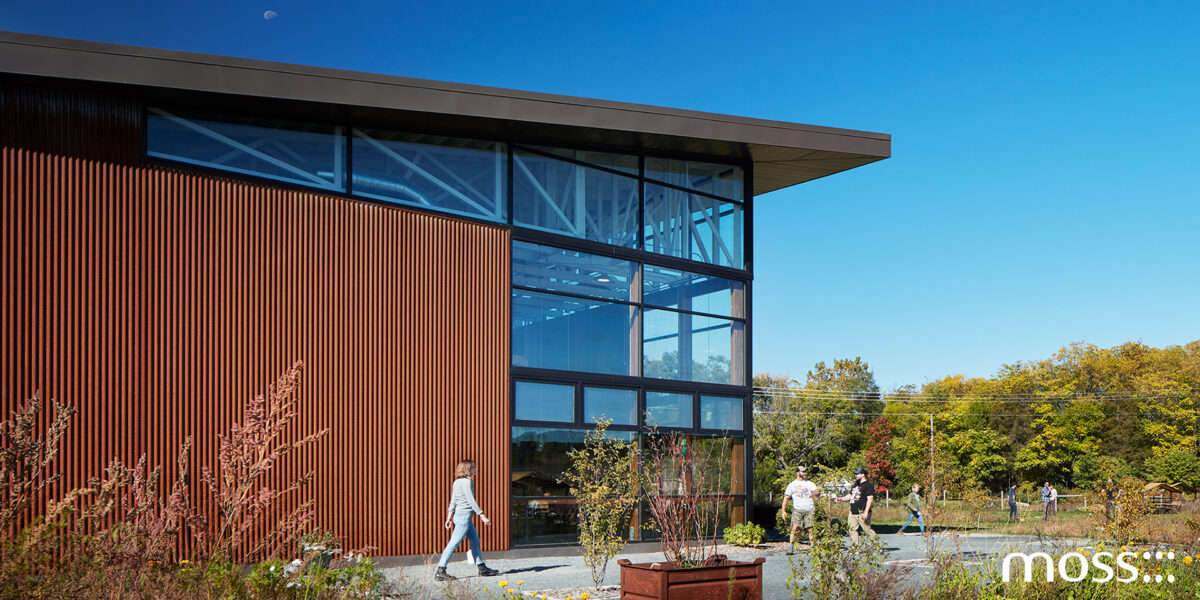
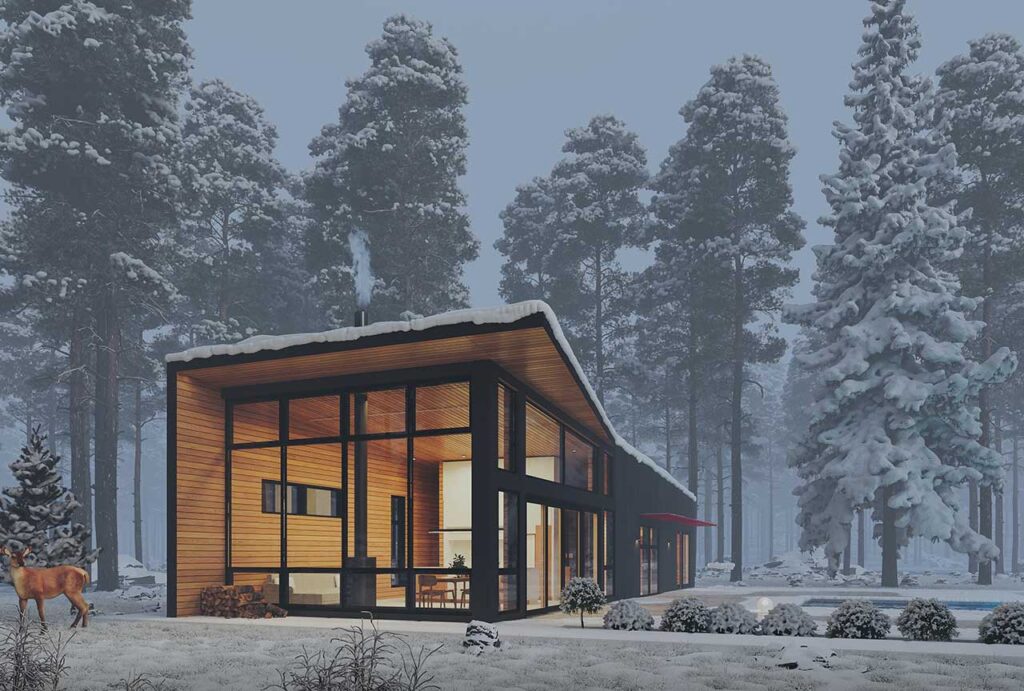
Material selection for a Michigan lake house should be driven by a high-humidity, freeze-thaw environment and regional authenticity. Charred wood siding (shou sugi ban), naturally resistant to rot and insects, has become a considered choice for lakefront projects. An exterior clad in shou sugi ban boards, combined with a geothermal heating and cooling system and locally sourced materials, produces a home designed to stay snug through Michigan winters.
Native vegetation integrated into the landscape design plays a structural role, too. A carefully selected palette of native plants can highlight views while also managing stormwater runoff, reducing the erosion pressure on shoreline bluffs without the cost and ecological disruption of hardscape armoring.
Permitting, Setbacks, and the Regulatory Landscape For a Lake House in Michigan
Michigan shoreline projects operate within a layered permitting environment. Local zoning setbacks, county regulations, Michigan DEQ review, and, in some cases, Army Corps of Engineers coordination can apply depending on the location and scope of work. Shoreline stabilization, dock structures, and work within the regulated floodplain each carry their own requirements.
The right time to engage these regulatory questions is before schematic design is complete. Experienced luxury residential architects treat the regulatory review as design input, not as a constraint to navigate around. Understanding what is and isn’t permissible on a given parcel shapes everything from foundation strategy to deck placement to the grading of the site.
Our work on the North Shore lakefront homes explores how these same principles apply on the Illinois side of Lake Michigan, where IDNR permitting adds another layer to the process.
Sustainability and Custom Home Design Services
The most sustainable lake house in Michigan isn’t the one with the most certifications. It’s the one that was designed for its site. Correct orientation, natural ventilation, passive solar gain, and durable envelope assemblies reduce energy loads before any mechanical system is even selected. Using less by designing better is our philosophy for every moss Design residential project.
If you’re exploring custom home design services for a Michigan lake house and want to understand what a site-specific, sustainable approach looks like in practice, our residential architecture services guide walks through every phase of our process, from site analysis to move-in.

Ready to Design Your Lake House in Michigan?
Designing a lake house in Michigan is a deeply personal undertaking, one that demands creative range and a grounded understanding of how a building interacts with its environment. A vacation retreat home deserves luxury residential architecture firms that bring both creative ambition and real building knowledge to the table. Designers who understand the forces acting on the site: wind, water, light, and seasonality, paired with material strategies that age well and make the home beautiful, durable, and worth returning to year-round.
moss Design is a licensed architecture and design/build studio working across Michigan, Illinois, and California. We take on residential projects from concept through construction, with a particular familiarity with Great Lakes waterfront conditions.
Contact us if you’re considering a lake house; we’re always open to a conversation.