An architect in Zimbabwe needed an office building that could stay cool without air conditioning. The solution came from observing termites, which keep their mounds at a steady 87 degrees even when outside temperatures range from 35 to 104 degrees. They achieve this through a network of air channels that generate natural convection currents.
That observation led to the Eastgate Centre in Harare. The building uses 90% less energy for cooling than conventional structures of its size, all because someone paid attention to how nature solves problems.
This is what biomimicry is all about. It’s not making buildings look like nature. It’s learning from 3.8 billion years of evolution to transform the way we design, innovate, and solve problems.
What Is Biomimicry in Architecture?
Biomimicry comes from the Greek words “bios” (life) and “mimesis” (to imitate). According to the Biomimicry Institute, it means studying nature’s time-tested patterns and strategies, then adapting those solutions to human design challenges.
While nature-inspired architecture might incorporate organic shapes for aesthetic purposes, biomimetic design goes deeper by inspiring us to ask ourselves how nature would solve our specific problem.
Nature has already figured out how to create structures that are strong yet lightweight, buildings that heat and cool themselves, materials that self-repair, and systems that produce zero waste. Every organism has survived by evolving efficient solutions to its specific challenges, such as structural integrity, climate control, resource efficiency, and adaptation.
The difference between decoration and true biomimicry is function. A building with leaf-shaped windows isn’t necessarily biomimetic. But a building that harvests and distributes water the way leaves do? That’s architecture inspired by nature in the truest sense.
Nature’s Masterclass on Sustainable Architecture Design
Check out the Namibian water-harvesting beetle. Living in one of Earth’s driest deserts, it survives by collecting water from morning fog. Its shell has bumps that attract water and valleys that repel it. Droplets collect on the bumps, grow larger, then roll down the waxy channels straight into the beetle’s mouth. Architects applied this strategy to buildings in water-scarce regions, creating sustainable architecture that harvests atmospheric moisture without energy input.
Interestingly, pinecones offer another example of sustainable architecture inspiration. Their scales open in dry conditions to release seeds and close when wet to protect them. No sensors, motors, or power needed. The scales contain cells that expand and contract at different rates based on humidity.
Architects use this principle to create building facades that open and close in response to temperature and humidity, controlling airflow and light without mechanical systems. This biomimetic thinking leads to buildings that adapt like living organisms, making them more cost and energy-efficient.
Award-Winning Biomimetic Design and Architecture Inspired by Nature
The Beijing National Aquatics Center drew inspiration from soap bubbles, which naturally arrange into the most efficient geometric patterns. The architects used this geometry for the facade, reducing steel use by 30% compared to conventional designs.
Winner of the prestigious Royal Institute of British Architects (RIBA) Stirling Prize and selected by Architectural Digest as one of the World’s Most Iconic Buildings, The Gherkin in London was inspired by how glass sponges pull water in at the bottom and push it out at the top to extract nutrients. The 40-story building replicates this in its ventilation system, using half the energy of a typical office tower.
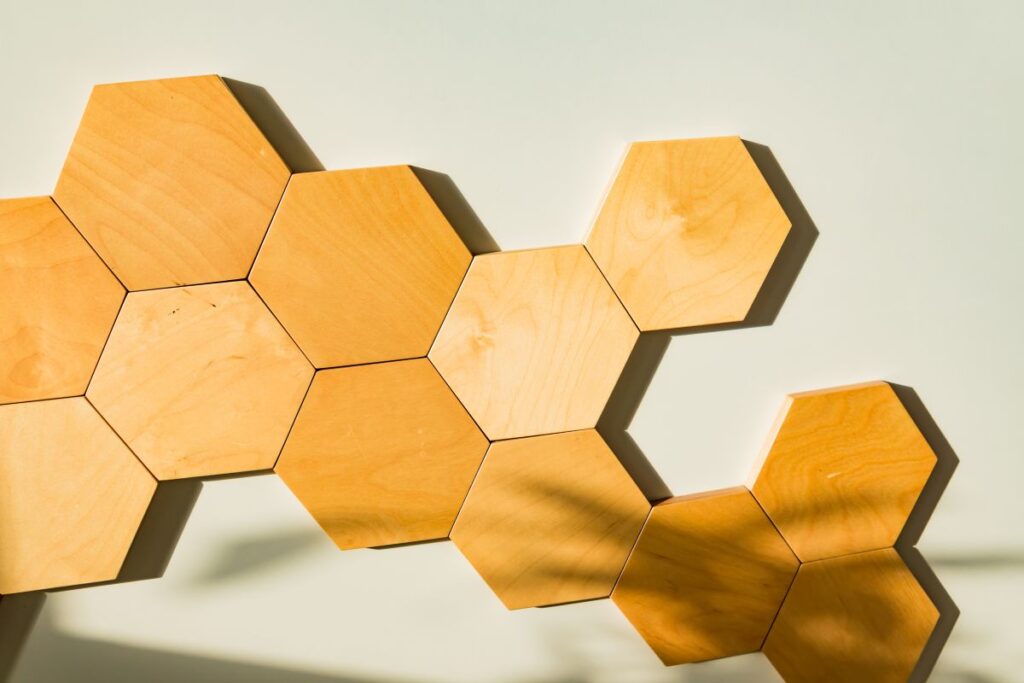
The Eden Project created the world’s largest greenhouse using geodesic domes inspired by soap bubbles, with hexagonal shapes that distribute stress efficiently.
Qatar’s Cacti Building mimics how cacti close their pores during the day. The building’s sun shades open and close in response to heat, reducing cooling loads. The Pearl River Tower borrowed principles from sea sponges to improve water and energy efficiency.
These buildings prove that biomimicry means better performance, lower costs, and more sustainable architecture.
How Biomimetic Architecture Solves Real Problems
When designing a home in the Chicago area, you face specific challenges: winter temperatures below zero, summer heat and humidity, and the need to manage rain and snow. One thing people like about nature-inspired architecture is that it offers different approaches than traditional solutions.
Termite mound ventilation principles inform whole-house airflow strategies that reduce HVAC loads. Termites don’t actively pump air. They design tunnel geometry so that natural temperature differences create continuous circulation. Homes can use similar passive strategies by carefully placing vents, incorporating thermal mass, and optimizing interior layouts.
Lotus leaf surfaces repel water and stay clean because of microscopic structures that prevent dirt and water from adhering. This has led to self-cleaning exterior materials. For Chicago homes dealing with winter salt spray and summer pollen, this sustainable architecture makes practical sense.
Root systems also demonstrate efficiency in distributing resources. This has inspired more efficient plumbing and heating systems. Some radiant heating designs now mimic branching patterns of tree roots, optimized by evolution for even distribution.
The Science Behind What Is Biomimicry
Biomimicry works because evolution is a 3.8-billion-year-old design process. Every living thing represents thousands of iterations of trial and error. Organisms that survived found truly effective solutions.
Nature’s answers tend to be efficient and well-suited to local conditions. The biomimetic nature-inspired architectural approach first defines the design challenge.
Then, it finds organisms that solve similar problems to help understand the principles behind their solutions.
Finally, after the design challenge has been identified and organisms dealing with similar problems are researched, designers of nature-inspired architecture abstract those principles into sustainable architecture.
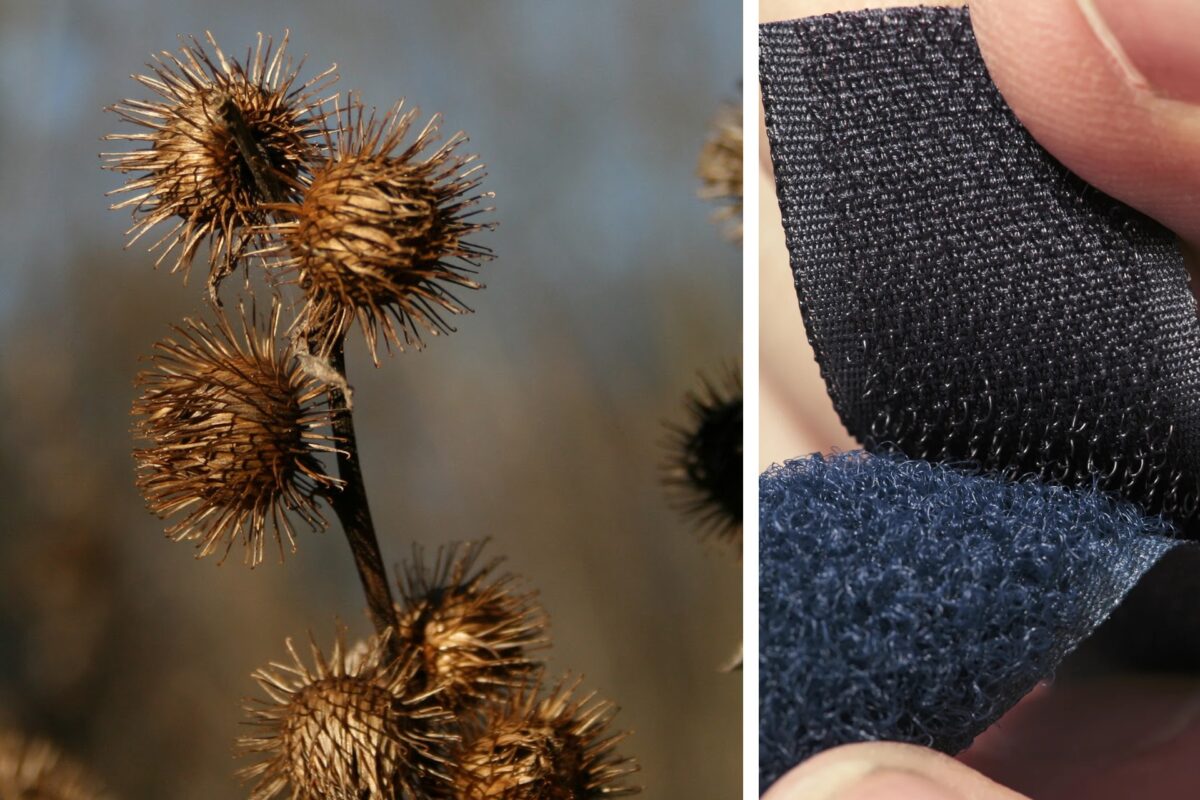
Biomimetic Strategies for Chicago-Area Homes
Chicago’s climate presents specific opportunities for nature-inspired architecture. Cold winters need excellent insulation and efficient heating, while humid summers require moisture management and cooling strategies.
Polar bear fur is translucent and hollow, trapping air for insulation while allowing sunlight to reach the bear’s black skin, where it is converted into heat. This principle has led to innovative window designs and solar wall systems.
Prairie grasses survive Chicago winters by going dormant and storing energy in deep root systems. Some sustainable architecture applies this principle through adaptive building envelopes that can close up during extreme weather, reducing exposure to wind and temperature.
Woodpecker skulls absorb impact through spongy bone and oriented grain structures that dissipate force. This has inspired the development of shock-absorbing materials that better withstand stress cycles from seasonal freeze-thaw.
The Future of Nature-Inspired Architecture
As materials science advances, our ability to implement biomimetic strategies into sustainable architecture improves. We’re developing concrete that heals its own cracks (inspired by bones), building envelopes that respond to conditions as skin does, and studying how mussels create strong underwater adhesives.
Morphing structures that change shape based on conditions, inspired by how plants move throughout the day, are moving from research to actual buildings. They feature facades that fold like origami, shutters that curl like leaves, and shading systems that track the sun like sunflowers.
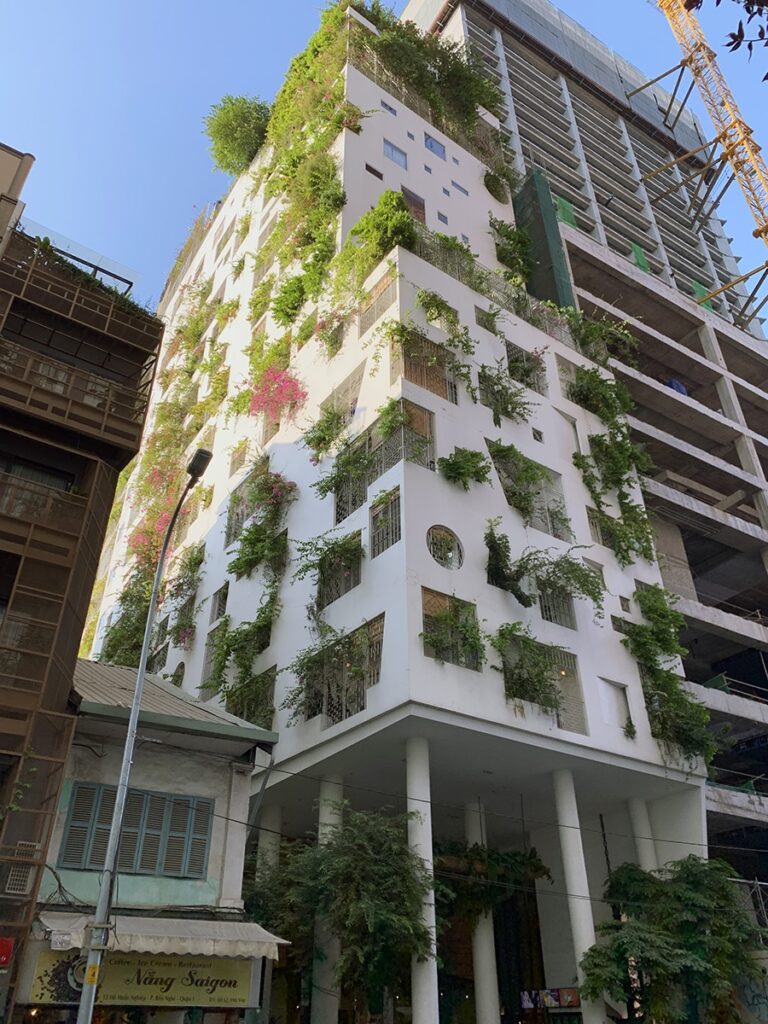
Some architects are experimenting with facades incorporating photosynthetic organisms, creating building skins that clean the air, produce oxygen, and reduce solar heat gain. This merges biomimicry with living systems in ways that could redefine sustainable architecture.
Why Biomimetic Design Matters Now
According to the Renewal Energy Institute, buildings account for nearly 40% of global energy consumption and carbon emissions. Biomimicry offers a proven path forward. Nature’s designs are inherently sustainable because organisms that waste energy don’t survive.
By learning from 3.8 billion years of evolution, architects create buildings that work with their environment. Biomimetic buildings often perform better than conventional ones while using fewer resources. For homeowners, this means lower energy bills, healthier indoor environments, and homes that remain comfortable as energy costs rise.
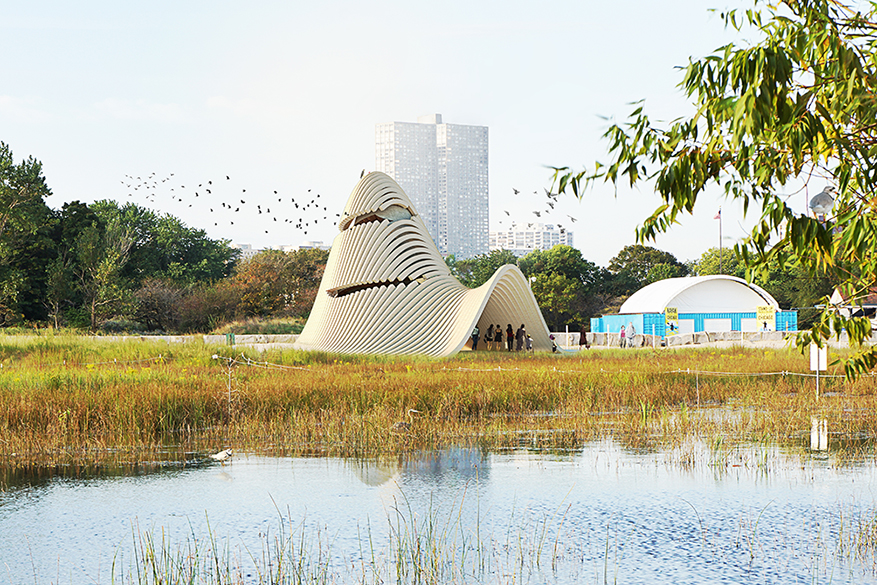

Implementing Biomimicry in Your Sustainable Architecture Project
Working with architects who can answer the question, “What is biomimicry?” means starting with different questions. Instead of immediately asking what style you want, the conversation begins with understanding your site, climate, and specific challenges. What direction does your lot face? How does water move across your property? Where does the sun enter at different times of year? These are undoubtedly the same questions nature asks.
At moss Design, we believe the best architecture learns from nature itself. Our approach combines biomimetic thinking with a deep understanding of Chicago-area conditions and residential living patterns.
Whether you’re planning a new home or renovation, nature-inspired architecture offers strategies that make your space more comfortable, efficient, and sustainable. Contact us today to discover how nature’s time-tested strategies can create a home that’s both beautiful and functional.