When homeowners in Chicago buy a 1920s bungalow in Oak Park, they often fall in love with the original hardwood floors and the way afternoon light pours through the living room windows.
The kitchen, though? That’s usually a different story. The sink sits awkwardly in one corner, the stove lives on the opposite wall, and the refrigerator somehow ends up near the back door. Making a simple breakfast means walking what feels like a marathon before the coffee even finishes brewing.
This is the reality for many Chicago-area homeowners who live in older homes with kitchens that weren’t designed with modern living in mind. The good news is that residential architectural design has evolved to solve exactly these kinds of problems — and it starts with understanding the kitchen triangle theory, the fundamental concept that’s been guiding residential building architects for decades.
What Makes Kitchen Design So Critical in Home Design
Your kitchen isn’t just where you cook. It’s where kids do homework at the counter, where friends gather during parties, where you grab your morning coffee before work, and where family conversations happen over meal prep. According to the National Kitchen and Bath Association, the average person spends nearly three hours a day in their kitchen. That’s more time than most of us spend in our living rooms.
When you’re planning a renovation or building a new home, the kitchen design becomes one of the most important decisions you’ll make. Poor kitchen layout in modern homes creates frustration every single day, and those negative emotions compound over months and years.
This is why experienced residential architect design services always start by understanding how you actually use your kitchen before drawing a single line.


What is the Kitchen Triangle Theory in Home Design?
The kitchen triangle theory emerged in the 1940s when researchers at the University of Illinois School of Architecture began studying kitchen efficiency and discovered that the three main work areas in any kitchen (the sink, the stove, and the refrigerator) should form a triangle. This isn’t just some arbitrary rule that residential building architects follow because everyone else does. It’s based on real data about how people move through kitchens.
What most people don’t know is that the roots of this thinking go back even further. The concept builds on groundbreaking work by Lillian Gilbreth, often called the “Mother of Modern Management.” Gilbreth was an industrial engineer who applied motion studies to household work in the 1920s.
Her research for the 1929 Practical Kitchen exhibit demonstrated that kitchen design could dramatically reduce the physical effort required for daily cooking tasks. She measured every step, every reach, every movement, and proved that thoughtful layout could save hours of work each week. It was science applied to real life, and it fundamentally changed how we think about residential architectural design.
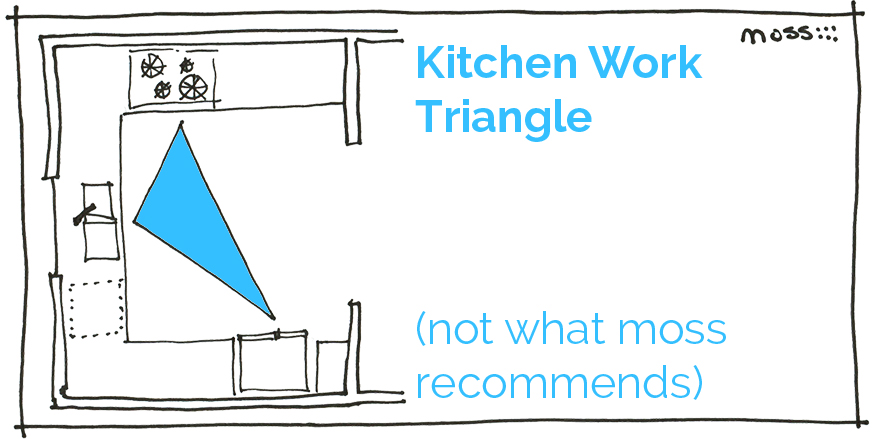
The research found that when these three points form a triangle with each side measuring between 4 and 9 feet, you minimize unnecessary walking while still giving yourself enough counter space to actually work. The total perimeter of the triangle should fall between 13 and 26 feet. Go smaller, and you’ll feel cramped. Go larger, and you’ll wear yourself out just trying to make dinner.
The sink typically anchors one point of the triangle because it’s the most-used station. The stove forms the second point where the actual cooking happens. The refrigerator creates the third point for ingredient storage. When these three elements work together in home design efficiently, cooking becomes easier and more enjoyable.
Why the Traditional Triangle Doesn’t Always Work in Modern Homes
Walk into any newly built modern home in the Chicago suburbs, and you’ll notice something interesting. Many kitchens don’t follow the strict triangle anymore. That’s not because residential architectural design has abandoned the concept. It’s because the way we use kitchens has evolved dramatically since the 1940s.
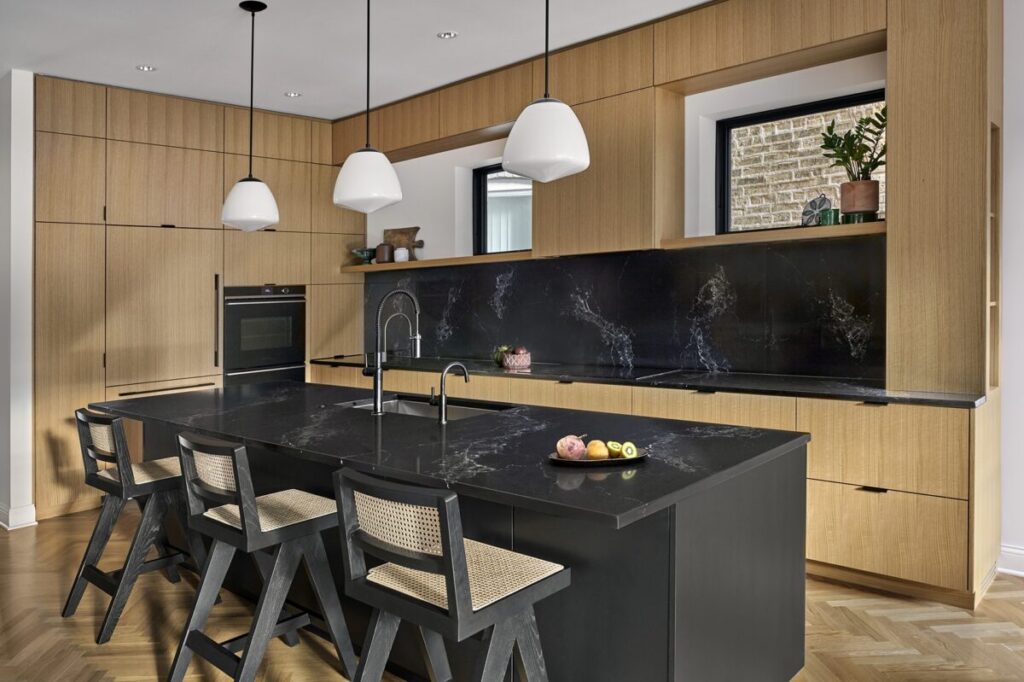
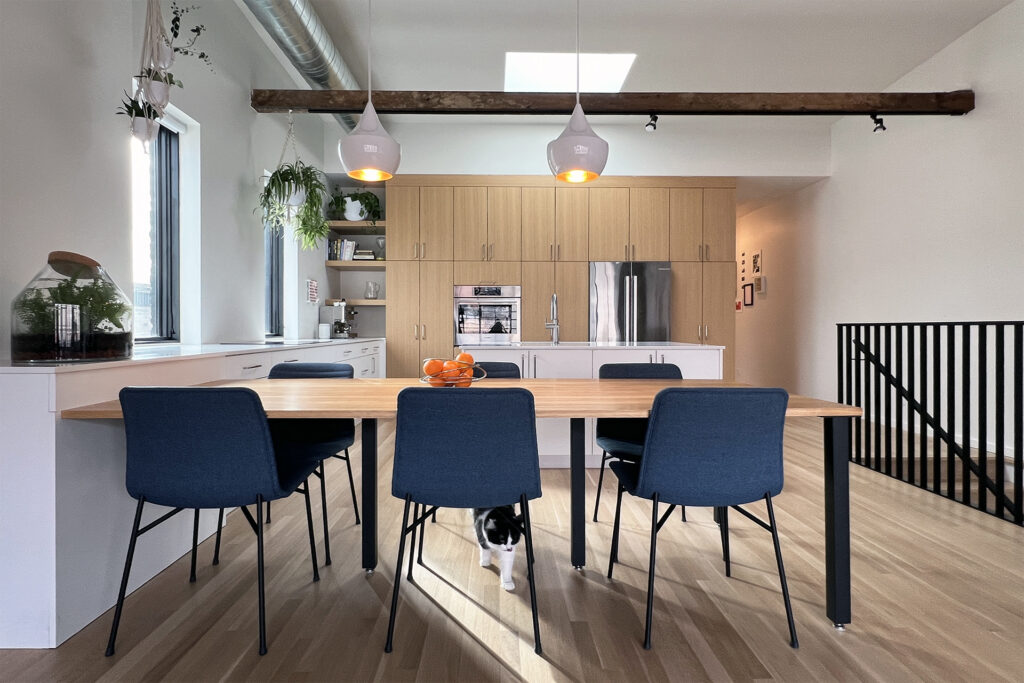
Today’s kitchens often include two cooks working simultaneously, large islands serving as both prep space and dining areas, and multiple appliances that weren’t even invented when the triangle theory first appeared. Wall ovens separate from cooktops, beverage fridges, and dedicated coffee stations have all changed how we use our kitchens.
Recent research shows exactly how kitchen priorities have shifted. Homeowners now want connections to the outdoors, innovative personalized designs, and minimalistic layouts that are easy to maintain.
A study conducted by the National Kitchen and Bath Association on future trends for kitchen design confirms what residential building architects are seeing: islands have become the heart of the kitchen, with increased focus on wellness, sustainability, and well-curated lighting.
This is where working with residential architect design services becomes valuable. A good residential building architect doesn’t just mechanically apply the triangle theory, they adapt it to how you actually live.
Modern home design often creates multiple work zones that each serve a specific purpose. You might have a baking zone with the wall oven, mixer, and baking supplies all within reach. A beverage zone near the refrigerator with the coffee maker and glassware. A cleanup zone around the sink with the dishwasher and trash bins nearby.
How to Apply the Kitchen Triangle Theory to Your Renovation
Let’s get practical. If you’re planning a kitchen renovation in your Chicago-area home, you might wonder if the kitchen triangle theory still matters. The answer is yes, but with an important update. The idea was originally conceived with small domestic kitchens and a single cook in mind.
These days, kitchens are far more than just a place to prepare food. They’re multipurpose family spaces used for everything from dinner parties to homeschool classrooms and arts and crafts stations. Kitchens have a bigger place in our lives, and they often take up a bigger percentage of our homes.
There’s also more to factor in. Modern homes now have islands, peninsulas, breakfast bars, dishwashers, microwaves, and wine fridges. Everyone uses their kitchen differently, and every family has unique needs. But all this extra functionality actually makes strategic planning more important than ever.
Using the core principles of the triangle can still help make navigating a busy family space more efficient and effective. Good residential architectural design eliminates the little daily irritations of frequently used items that are not quite within reach and maximizes the joy of working and living in your kitchen.
Start by mapping out your current kitchen workflow. Spend a few days paying attention to how you move when you cook. Do you constantly walk back and forth between the pantry and the stove? These patterns reveal where your current layout is failing you.
Think about who cooks in your household. If you’re usually the only cook, a traditional triangle works beautifully. But if you and a partner cook together regularly, you might need two partial triangles that don’t overlap too much. Someone who bakes frequently needs different residential architectural design solutions than someone who mostly makes simple meals.
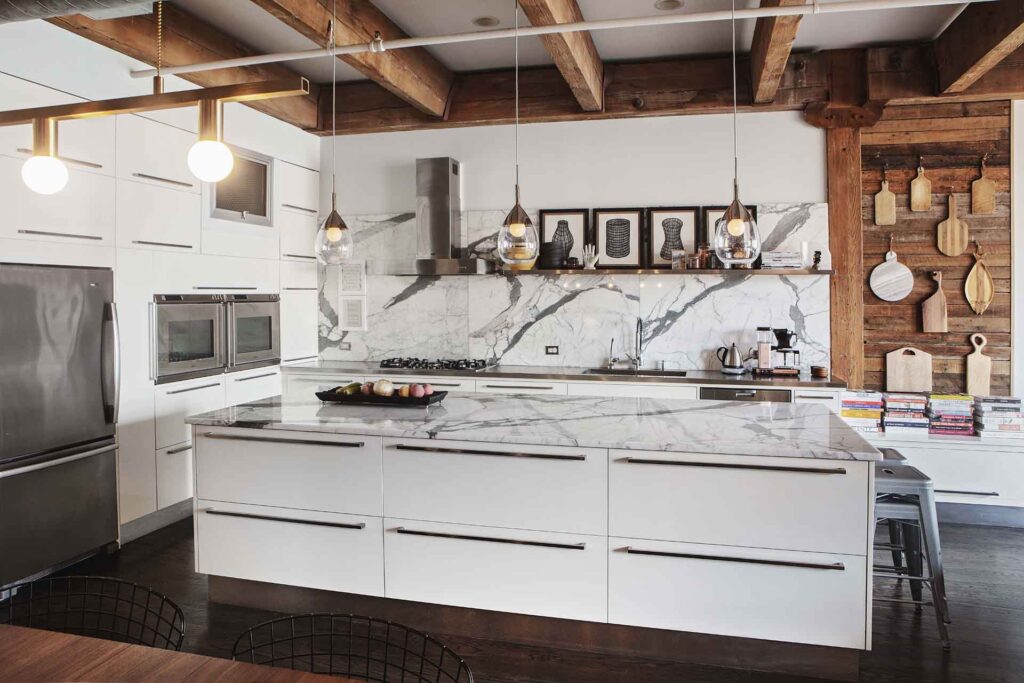
The island question comes up in almost every kitchen renovation discussion. Islands can enhance the triangle by providing additional workspace and storage, but they can also disrupt it if placed poorly. A well-designed kitchen island should support your workflow, not obstruct it. This means leaving at least 42 inches of clearance on all sides where people need to walk or work.
Real Problems That Good Residential Building Architects Solve
Something most homeowners don’t know is that the kitchen triangle is actually the easy part. The real challenge in residential architectural design comes from integrating that triangle with everything else. You need natural light, but windows take up cabinet space. You want an open floor plan, but removing walls affects structural support and plumbing.
This is exactly why experienced residential architect design services are worth the investment. They’ve solved these problems hundreds of times and can see possibilities you’d never notice.
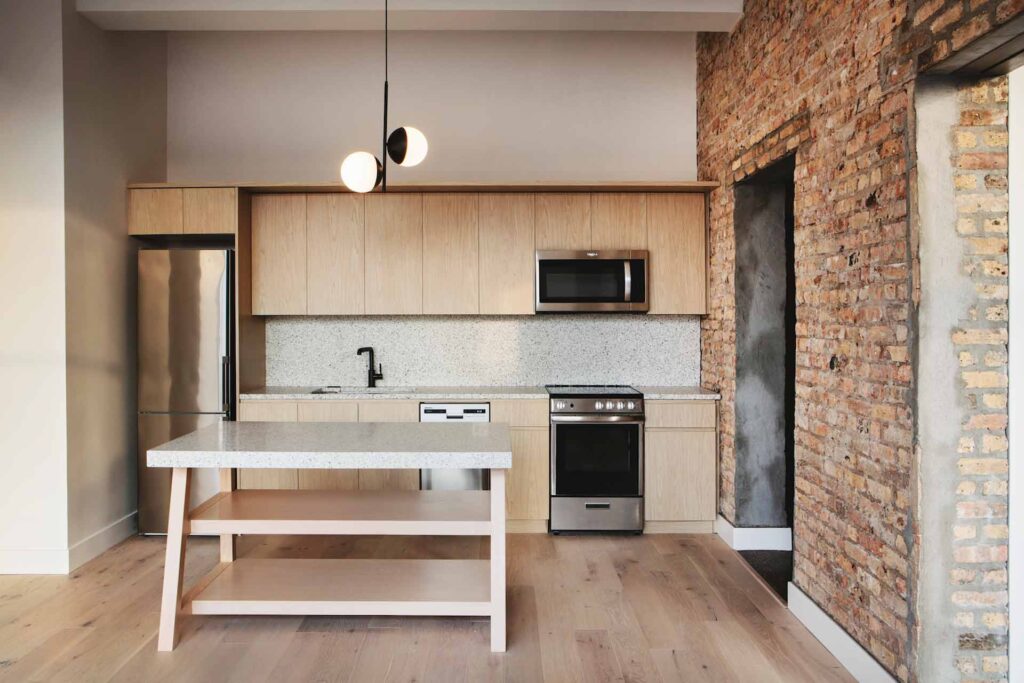
One common mistake is forgetting about landing zones. You need counter space beside your refrigerator and on both sides of your stove for a safe, efficient workflow.
Variations in Modern Homes That Make the Kitchen Triangle Theory Work Better
The kitchen triangle theory isn’t dead. It’s simply evolved. When it comes to older homes in Chicago, residential building architects have developed variations that address today’s needs. The work triangle with zones adds specialized areas around the basic triangle for specific tasks. And, the double triangle layout serves households with multiple cooks by creating two overlapping triangles, each with its own prep area.
What This Means for Your Chicago-Area Modern Home Design
Chicago-area homes present unique challenges for residential architectural design. Many older neighborhoods feature homes where kitchens were much smaller. Converting these vintage kitchens into modern, functional spaces requires understanding both the kitchen triangle theory and the architectural constraints of older construction. Residential building architects in the Chicago area, like those at moss Design, know which renovation approaches work well across different architectural styles.
How to Make a Kitchen Renovation Investment Count in Your Modern Home
Renovating a kitchen represents a significant investment. According to Remodeling Magazine’s Cost vs. Value Report, a major kitchen remodel in the Chicago area can cost $75,000 to $150,000 or more. Kitchen renovations typically return 50–60% of their cost when you sell, and the daily quality of life return is even more valuable.
The complexity of kitchen design in modern homes is exactly why the vast majority of homeowners turn to professionals. According to Houzz’s 2025 Kitchen Trends Study, 86% of homeowners work with a professional for their kitchen renovation. Among those professionals, architects are hired by 13% of homeowners, while kitchen designers account for 25%.
This makes sense when you consider integrating high-tech appliances with specialty features, planning for smart-home connectivity (now in 30% of renovated kitchens), and coordinating everything from sustainable LED lighting to energy-efficient fixtures.
Working with qualified residential architect design services like moss Design saves money by preventing expensive mistakes. The Houzz data shows that homeowners investing in professional expertise get kitchens that truly work for how they live, with thoughtful details like the kitchen triangle theory adapted for modern appliances and lifestyle needs.
You’ll want to interview residential building architects who understand both technical requirements and lifestyle factors. Ask to see previous kitchen projects and pay attention to how they listen to your needs.
The kitchen triangle theory, properly applied and adapted to your needs, forms the foundation of a kitchen that will serve you well for decades. It’s about understanding efficient movement and workspace organization, and applying these principles in ways that make sense for how you actually live.
When applied thoughtfully by experienced residential architect design services, it creates kitchens that are both beautiful and remarkably functional. That’s the kind of residential architectural design that transforms a house into a home you’ll love for years to come.


How moss Design Can Help You Get Started With Your Kitchen Renovation in Chicago
At moss Design, we specialize in bringing the kitchen triangle theory into the 21st century for Chicago-area homeowners. Our residential building architects understand the unique challenges of renovating older homes while incorporating modern appliances, smart technology, and today’s lifestyle needs.
Whether you’re working with a compact galley kitchen in a vintage bungalow or planning an open-concept renovation, we’ll create a design that’s both beautiful and brilliantly functional.
Our team is ready when you are. Contact our residential building architects to schedule a consultation and discover how thoughtful residential architectural design can transform your kitchen into the heart of your home.