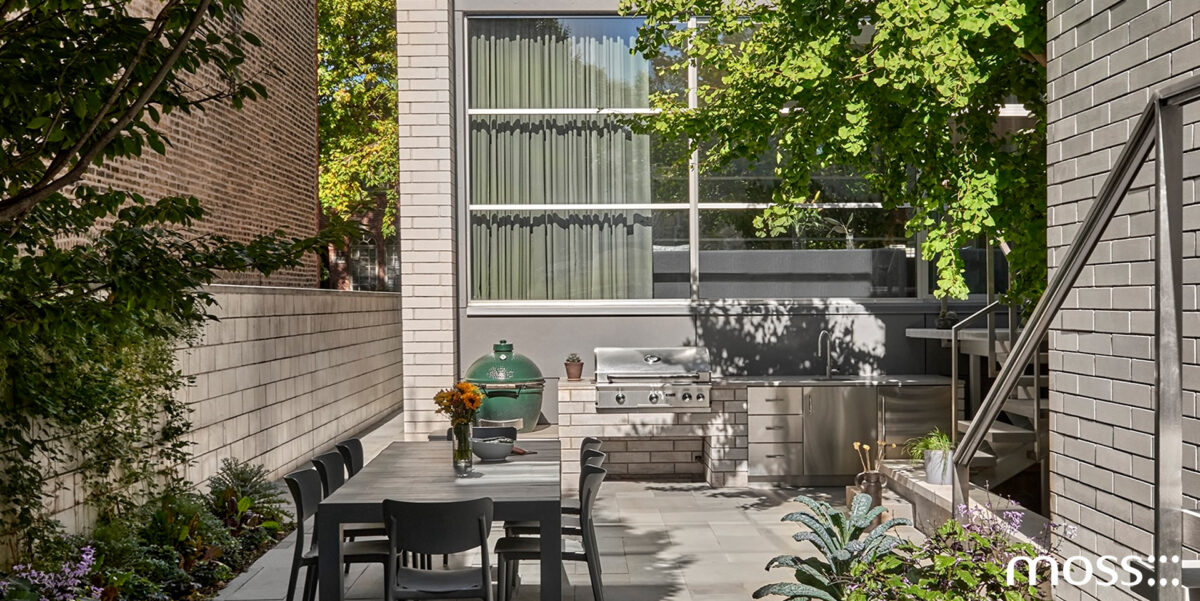
In a city that’s short on nice weather but full of outdoor enthusiasm, Chicago homeowners are known to do whatever it takes to maximize their time outside. Today’s modern home architects are being tasked with designing residences that maximize every square foot, including the ones on the roof. In dense neighborhoods where space is scarce, outdoor rooftop kitchens are highly sought after, creating functional entertaining areas where families and friends can enjoy Chicago’s sweeping skyline and fresh lake breezes.
At moss Design, creating elevated urban living experiences is central to our ethos. As experienced Chicago architects, our team knows how to combine aesthetics, functionality, and local building considerations into highly personalized homes. Whether incorporated into a new build or added during a remodel, a rooftop outdoor kitchen transforms the way homeowners entertain, relax, and interact with their city environment.
Why Rooftop Outdoor Kitchens Are Growing in Popularity
Urban homeowners are prioritizing outdoor living more than ever before. In neighborhoods where yard space may be limited, rooftops become valuable extensions of the home. A thoughtfully designed rooftop outdoor kitchen creates an inviting destination for cooking, dining, and gathering without sacrificing interior square footage.
For many homeowners, convenience is one of the biggest advantages. Without a kitchen on the roof, hosts often spend parties running up and down multiple flights of stairs carrying food, drinks, and utensils. A fully outfitted rooftop outdoor kitchen eliminates that problem by housing everything needed for entertaining upstairs, allowing hosts to enjoy their own party instead of constantly traveling between floors.
This functionality is especially important in multi-story city buildings. Experienced modern home architects carefully design rooftop layouts that encourage comfortable movement, utilize all the space, and create seamless indoor-outdoor transitions. Storage, refrigeration, prep areas, sinks, grills, and even pizza ovens can all be integrated into the rooftop environment.
As trusted local Chicago architects, the team at moss Design understands that rooftop spaces should feel like an intentional, organic part of the home. Every detail matters, from durable materials that withstand Midwest weather to strategic layouts that optimize comfort and circulation.


Choosing Materials and Appliances for a Rooftop Outdoor Kitchen
Designing an outdoor kitchen requires materials and appliances that perform as well as they look. Unlike indoor kitchens, rooftop installations must withstand year-round exposure to sun, rain, snow, wind, and dramatic temperature swings. Selecting durable, weather-resistant products is essential to maintaining both appearance and functionality over time.
Cabinetry is one of the most important considerations. Stainless steel has become the preferred choice for many modern outdoor kitchens because it resists corrosion, requires minimal maintenance, and complements contemporary architectural design. Powder-coated aluminum and marine-grade polymer cabinetry can also perform well in demanding environments while offering additional finish and color options.
Select appliances with the same long-term mindset. Built-in grills, refrigeration, sinks, beverage centers, storage drawers, and pizza ovens should be designed specifically for outdoor use, with construction that resists moisture, temperature fluctuations, and everyday wear. At moss Design, we’ve incorporated premium outdoor kitchen systems, including Kalamazoo Outdoor Gourmet products, on select projects to create highly functional spaces that blend seamlessly with the home’s architecture.
Material selection goes beyond durability. Cabinet finishes, countertops, hardware, and appliances should work together as part of the overall architectural composition, ensuring the rooftop kitchen feels like a natural extension of the home rather than a collection of standalone outdoor products. When thoughtfully integrated, these elements create an outdoor living space that is both beautiful and built to last.
Chicago’s Love for Rooftop Outdoor Living
Few cities appreciate al fresco hangs quite like Chicago. Residents embrace the warm weather months with open arms, making rooftop spaces highly desirable for both entertaining and real estate. The city’s architectural character and dramatic skyline create the perfect backdrop for dreamy outdoor evenings and calm mornings over coffee.
A rooftop lounge or dining space offers panoramic views of downtown towers, historic neighborhoods, and Lake Michigan sunsets. This strong connection between architecture and outdoor living is part of what defines modern urban luxury. It is no surprise that Chicago modern architecture increasingly incorporates rooftop amenities into residential design.
For homeowners, the rooftop becomes more than just an exterior platform. It functions as an outdoor living room, dining room, and favorite spot to socialize. A carefully planned rooftop outdoor kitchen enhances this experience by keeping gatherings fully self-contained upstairs.
Because Chicago weather changes dramatically throughout the year, successful rooftop design requires local expertise. Skilled residential architects Chicago residents trust must consider wind exposure, drainage, snow loads, privacy screening, and material durability. Pergolas, heaters, retractable covers, and integrated lighting systems can extend usability well into spring and fall.
At moss Design, our goal is to create rooftop environments that feel comfortable, luxurious, and connected to the home’s overall architectural vision. Leading modern home architects understand that these spaces should complement the residence rather than feel like an afterthought.

Designing a Functional Rooftop Outdoor Kitchen
A successful rooftop outdoor kitchen balances aesthetics with performance. Unlike a standard patio kitchen, rooftop installations involve additional structural, mechanical, and logistical considerations. This is where experienced Chicago architects provide critical value.
Structural support is a top priority. Rooftops must safely accommodate appliances, countertops, seating areas, and groups of people. Modern home architects work closely with structural engineers to ensure the roof system can handle these added loads without compromising safety or performance.
Ventilation and utility access are equally important. Gas lines, plumbing, electrical systems, and drainage all require careful coordination. The best residential architects Chicago homeowners hire approach these systems holistically, so the rooftop functions as naturally as the interior kitchen.
Material selection also plays a major role in long-term success. Chicago’s freeze-thaw cycles, snow, rain, and intense summer sun require durable finishes that maintain both performance and appearance over time. Stainless steel cabinetry, porcelain surfaces, weather-resistant woods, and high-performance composite decking are popular choices within Chicago modern architecture projects.
Beyond the technical elements, layout and user experience remain essential. A well-designed rooftop should encourage conversation, movement, and relaxation. Cozy seating areas, dining spots, cooking stations, and fire features should feel connected while maintaining clear circulation paths.
As innovative Chicago architects, moss Design prioritizes how people actually use these spaces during gatherings.
Structural support is one of the first priorities. Rooftops must safely accommodate appliances, countertops, seating areas, and groups of people. If an outdoor kitchen is added to a roof not originally designed as an occupiable space, additional structural evaluation and reinforcement may be required before construction can begin. Modern home architects work closely with structural engineers to assess existing conditions, determine load capacity, and ensure the roof system can safely support its new use without compromising long-term performance.
Seamless Indoor-Outdoor Integration
One hallmark of contemporary design is the blending of indoor and outdoor environments. The best modern home architects create homes where rooftop spaces feel like natural extensions of the interior rather than separate destinations.
Large sliding glass doors, rooftop penthouses, internal staircases, and coordinated material palettes help establish continuity between levels. This approach is central to many examples of Chicago modern architecture, where clean lines and open spatial relationships define the overall aesthetic.
Flooring plays an important role in creating a seamless transition between interior and exterior spaces. Continuing the same porcelain tile or complementary paving material from inside the home onto the rooftop helps visually extend the living area and reinforces the sense of connection. Many modern home architects achieve this using pedestal deck systems, such as those offered by Tile Tech, which allow large-format pavers or porcelain tiles to be installed over rooftop waterproofing while accommodating drainage, leveling, and future maintenance access. The result is a refined architectural finish that performs well in Chicago’s climate while maintaining a continuous design language from the interior to the outdoors.
Lighting design is another key factor. Layered illumination keeps rooftop spaces functional after sunset while enhancing ambiance and safety. Accent lighting, under-counter fixtures, pathway lighting, and integrated architectural lighting all contribute to a polished final result.
Privacy also deserves careful consideration. Urban rooftops often overlook neighboring buildings, making screening elements essential. Green walls, planters, slatted partitions, and pergolas can create a sense of enclosure without sacrificing views or openness.
Experienced residential architects Chicago homeowners rely on understand how to balance privacy with visibility, ensuring rooftop spaces remain both comfortable and visually connected to the city.
Rooftop Kitchens Add Long-Term Value
Beyond lifestyle benefits, rooftop outdoor living spaces can significantly enhance property value. Buyers increasingly prioritize homes with functional outdoor amenities, especially in urban environments where exterior space is limited.
A professionally designed rooftop outdoor kitchen creates a strong visual impression while improving the home’s usability and entertainment potential. In competitive housing markets, unique outdoor amenities often help distinguish one property from another.
Forward-thinking modern home architects recognize that today’s homeowners want flexibility. Rooftop spaces can support quiet family dinners, large social gatherings, remote work sessions, or personal relaxation. The adaptability of these environments makes them highly attractive investments.
As respected Chicago architects, moss Design approaches every project with long-term livability in mind. The firm understands how thoughtful design decisions today can continue to benefit homeowners for years to come.
The Future of Chicago Rooftop Design
As urban living continues evolving, rooftops will play an increasingly important role in residential architecture. Limited lot sizes and growing demand for outdoor experiences make elevated living spaces one of the most exciting opportunities in modern home design.
Innovative Chicago modern architecture is already embracing this shift. Rooftops are no longer secondary spaces reserved for mechanical equipment or occasional use. They are becoming fully integrated lifestyle environments designed for comfort, entertainment, and daily living.
The most successful projects combine architectural creativity with technical precision. Skilled modern home architects understand how to transform underutilized rooftops into sophisticated extensions of the home. Through careful planning, durable materials, and personalized layouts, these spaces become defining features of urban residences.
For homeowners looking to maximize both lifestyle and property value, a custom rooftop outdoor kitchen offers a compelling solution. With expertise in high-end residential design and urban living environments, moss Design continues to help clients create rooftop spaces that capture the very best of Chicago living.
From skyline cocktails to effortless entertaining, thoughtfully designed rooftops represent the best of elevated city life, and moss Design is helping lead the way. Contact us today to start planning your outdoor space.


Frequently Asked Questions
Why are rooftop outdoor kitchens becoming popular in Chicago?
Rooftop outdoor kitchens are growing in popularity because they allow homeowners to maximize limited outdoor space in dense urban neighborhoods. They create a convenient area for cooking, dining, and entertaining while taking advantage of Chicago’s skyline views and seasonal outdoor weather.
What features can be included in a rooftop outdoor kitchen?
A rooftop outdoor kitchen can include grills, refrigerators, sinks, storage cabinets, prep stations, pizza ovens, and dining areas. Modern home architects customize these features to fit the homeowner’s lifestyle while ensuring the space remains functional and visually cohesive.
What challenges do architects consider when designing rooftop kitchens in Chicago?
Chicago architects must address structural support, utility access, drainage, wind exposure, and weather durability when designing rooftop kitchens. They also select materials and systems that can withstand the city’s freeze-thaw cycles, heavy snow, and summer heat.
How can a rooftop outdoor kitchen increase home value?
A professionally designed rooftop outdoor kitchen can make a property more appealing to buyers by adding functional outdoor living space. In urban markets where yard space is limited, unique rooftop amenities can help a home stand out and enhance its long-term value.
How do modern home architects create seamless rooftop living spaces?
Modern home architects use design elements such as sliding glass doors, coordinated materials, integrated lighting, and interior stair access to connect rooftop areas with the rest of the home. This approach helps the rooftop feel like a natural extension of the living space rather than a separate outdoor area.